 Pin It
 The first time I made manti, my hands were shaking. Not from nerves, but from the sheer delicacy of it all—these tiny squares of dough that had to be pinched just right, holding a whisper of creamy cheese inside. My grandmother had described them once as "bites of clouds," and I finally understood what she meant when I watched them float to the surface of boiling water like little edible wishes. There's something almost meditative about making them, especially when you realize that all that effort pays off in the most unassuming comfort food.
I made this for my partner on a cold evening when the kitchen smelled like butter and possibility. He watched me fold each tiny dumpling, and halfway through he asked if he could help—so we sat together at the kitchen table, fingers moving in the same rhythm, not saying much. When we finally sat down to eat, the yogurt sauce pooling around those little pockets of cheese, he said it was the best thing I'd made. Sometimes the cooking matters as much as the eating.
Ingredients
- All-purpose flour: This is your foundation—it needs to be strong enough to hold the filling but tender enough to cook through in minutes.
- Turkish white cheese or feta: Don't skip this; it's what gives manti its characteristic sharp-creamy bite that yogurt sauce plays off so beautifully.
- Ricotta cheese: This rounds out the filling, making it lighter and less grainy than cheese alone.
- Plain Greek yogurt: The tang is essential—it cuts through the richness like a well-placed punctuation mark.
- Garlic: Just one clove keeps it subtle; manti is delicate, and garlic should whisper, not shout.
- Unsalted butter: This carries the spices directly to your tongue, so it needs to be good butter.
- Aleppo pepper: If you can find it, use it—the fruity heat is different from regular chili flakes and worth the hunt.
Tired of Takeout? 🥡
Get 10 meals you can make faster than delivery arrives. Seriously.
One email. No spam. Unsubscribe anytime.
Instructions
- Make your dough base:
- Combine flour and salt, then create a small well in the center like you're cradling something precious. Add the egg and water gradually, mixing until the dough comes together smooth and slightly elastic. Knead for just a minute or two until it feels alive in your hands, then cover and let it rest for twenty minutes—this rest is crucial, giving the gluten time to relax so your dough will be easier to work with.
- Prepare the filling:
- While the dough naps, crumble both cheeses together and fold in the parsley and black pepper with a gentle hand. Taste it if you like; it should taste good on its own, because that's what your guests will remember.
- Make the yogurt sauce:
- Stir together yogurt, garlic, and salt until smooth. This is best made just before serving, so the garlic stays bright and the yogurt doesn't separate.
- Roll and cut:
- On a lightly floured surface, roll the dough thin—about the thickness of a dime. If it keeps springing back, let it rest for a minute and try again. Cut into small squares, roughly 1.5 inches; they should look almost fragile.
- Fill and fold:
- Place just a tiny amount of filling in the center of each square—less than you think you need. Pinch the four corners together to seal, creating a little pouch that will hold the cheese as it cooks. Don't worry if a few don't look perfect; they'll taste just as good.
- Cook in boiling water:
- Work in batches so the manti isn't crowded, and cook for about five to seven minutes until they float and the dough is tender. The moment they float is magical—that's when you know they're ready.
- Finish with butter and spices:
- Melt the butter gently and stir in the paprika and Aleppo pepper until the spices bloom and fill the pan with warmth. Don't let it brown; you want the spices to whisper, not burn.
- Plate and serve:
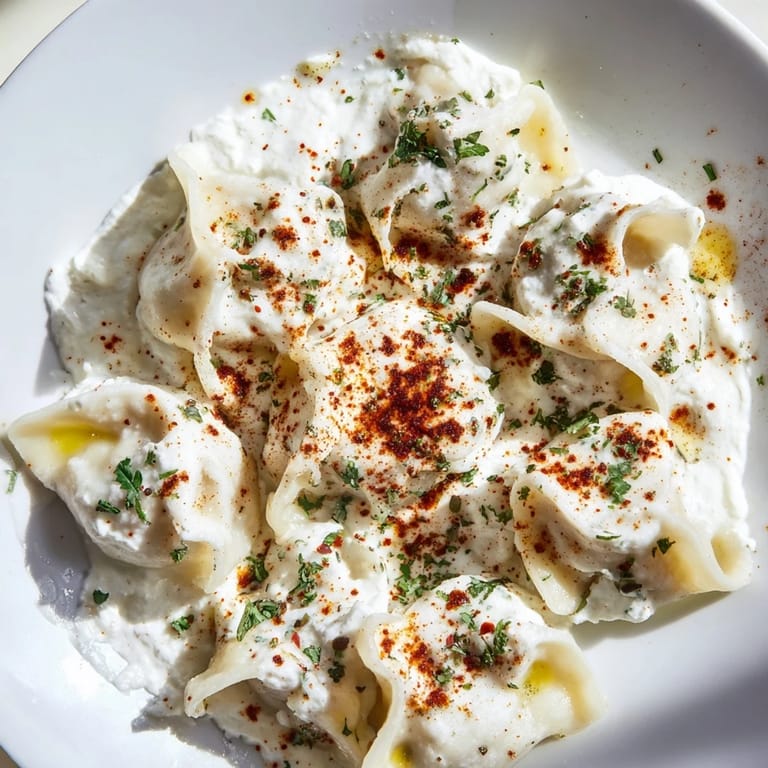
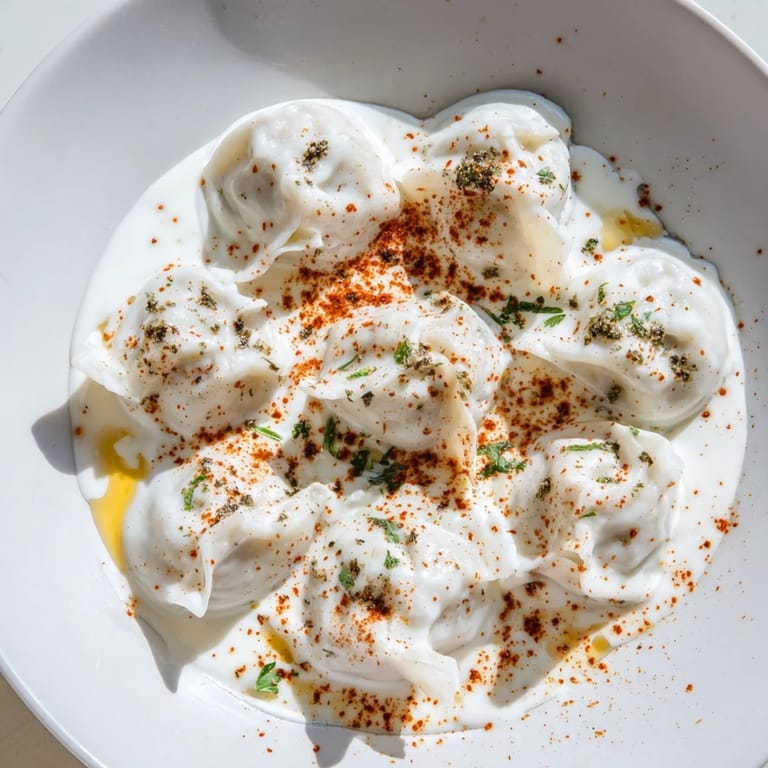
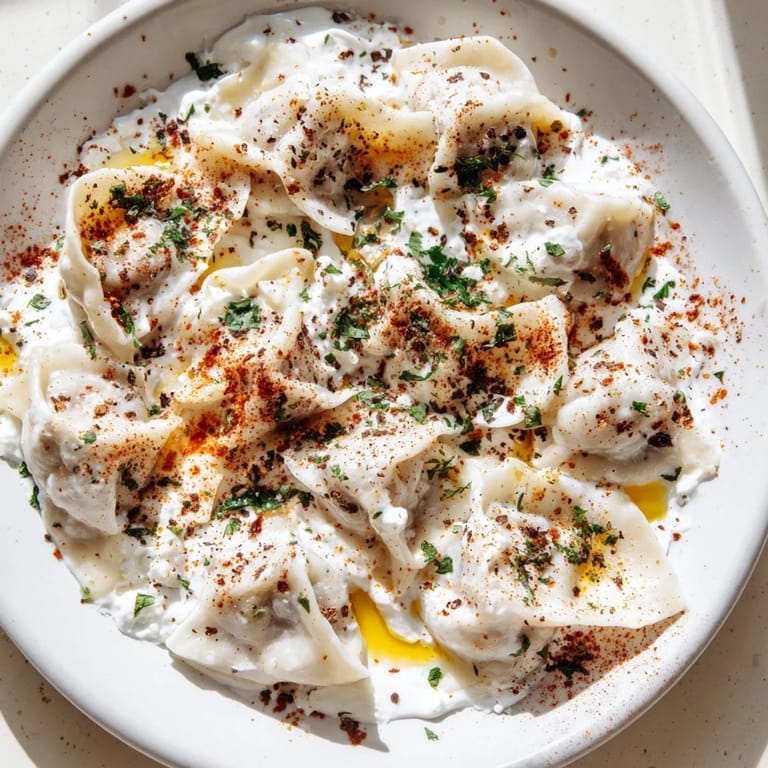
- Arrange the manti on warm plates, spoon the yogurt sauce generously over top, then drizzle the spiced butter in thin threads. The contrast of cool yogurt and warm butter is where the magic happens.
 Pin It
 Years ago I brought a batch of these to a potluck where nobody knew what they were. A quiet woman in the corner ate five of them without saying anything, and afterward she found me to ask for the recipe. We've been friends ever since, and every time she makes them, she tells people I taught her. That's when I realized these dumplings are more than food—they're a way of saying you care enough to sit at a table and fold something with your hands.
The Dough That Matters
The dough is where most people stumble, but it's actually forgiving once you understand it. It needs water and time, not aggressive kneading. If it tears when you roll it, let it rest for five minutes under a towel and try again—dough has a memory, and sometimes it needs to remember how to relax. I learned this by making it wrong at least four times, pushing too hard, rolling too fast, refusing to give it space. Now I approach the dough like I'm talking someone down from ledge: with patience and faith that it will cooperate if I just give it what it needs.
Why Cheese Matters Here
Turkish white cheese has a specific sharpness that other cheeses don't quite replicate, but if you can't find it, feta works reasonably well. What matters is that the cheese should taste almost too strong on its own, because the yogurt sauce will balance it. I've seen people try to make this with mild cheeses and wonder why it tastes flat. The contrast is the whole point—sharp against cool, tangy against creamy, and butter threading through it all like a connective thought.
The Moment Everything Comes Together
There's a specific second when you plate these where it all clicks. The manti sits on the plate still steaming slightly, the yogurt goes down cool and white, and then that butter—the spiced, toasted, fragrant butter—hits the top and everything harmonizes.
- If you're cooking for someone special, take a moment to plate it nicely; manti deserves that respect.
- Have extra Aleppo pepper at the table so people can adjust the heat to their own preference.
- Serve immediately, because manti's best quality is that brief window between cooking and cooling, when everything is still alive.
 Pin It
 These dumplings teach you something about patience and care, and then they disappear in three bites. Make them when you have time and company that matters.
Recipe Questions & Answers
- → What type of cheese works best for the filling?
Turkish white cheese or feta combined with ricotta creates a creamy and flavorful filling with the right texture.
- → How thin should the dough be rolled?
Roll the dough about 2 mm thick to ensure delicate, tender dumplings that cook evenly.
- → What is the purpose of the spiced butter?
The spiced butter adds a warm, aromatic finish to the dish with paprika and Aleppo pepper enhancing the flavor.
- → Can these dumplings be frozen before cooking?
Yes, after shaping and sealing, the dumplings can be frozen on a tray and stored in an airtight container for later use.
- → How long should the dumplings be cooked?
Boil the dumplings for 5 to 7 minutes until they float and are tender to the bite.
- → Are there any recommended garnishes?
A pinch of sumac, dried mint, or extra chopped parsley can be added for bright flavor and presentation.