 Pin It
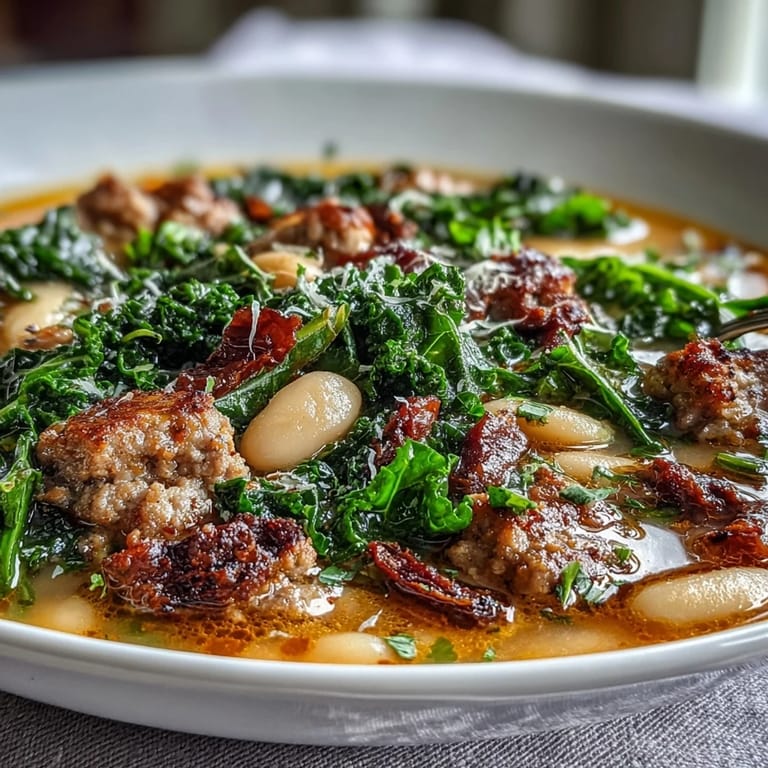
 My neighbor Marco stopped by on a chilly October evening with a container of homemade soup, and I watched the steam curl off the surface like it was telling its own story. The aroma hit me first—roasted garlic, warm herbs, and something deeply savory that made me want to pull up a chair immediately. He explained it was his nonna's recipe, passed down with one key twist: roasting the garlic whole until it melted into the broth like liquid gold. That night, I realized soup wasn't just comfort food, it was a conversation between ingredients, and this one had plenty to say.
I made this for my book club last month, and something unexpected happened—nobody wanted to leave. We sat at the table for three hours, soup getting cold in our bowls, just talking. The kale was still somehow tender and vibrant, the beans had softened into the broth without falling apart, and there was this underlying heat from the sausage that made everyone keep coming back for more. One friend asked for the recipe before dessert was even served, which basically never happens.
Ingredients
- Spicy Italian sausage (1 lb): Look for sausage with fennel and a real kick of heat—the spice balances the earthiness of the beans and kale beautifully.
- Olive oil (2 tbsp): Use good quality oil for browning the sausage and softening the vegetables; it's the foundation of flavor.
- Yellow onion, carrots, and celery (diced): This holy trinity is where the soup's backbone comes from, and dicing them roughly the same size ensures they cook evenly.
- Garlic cloves (6, whole and peeled): Roasting them first turns them into sweet, mellow paste that infuses the entire pot with depth.
- Tuscan kale (1 bunch, stems removed): Cavolo nero has a slightly sweeter, less bitter flavor than curly kale and holds its shape better in broth.
- Cannellini beans (2 cans, drained and rinsed): Rinsing them removes excess starch and prevents the soup from becoming gluey.
- Chicken broth (6 cups) and water (1 cup): Low-sodium broth lets you control the salt, and the water keeps the flavor clean without being too intense.
- Dried thyme and oregano (1 tsp each): These dried herbs are more concentrated than fresh, so they won't get lost in the liquid.
- Crushed red pepper flakes (1/2 tsp, optional): Add these if you want warmth building through the soup; leave them out if you prefer mild.
- Salt and black pepper: Taste as you go and season at the end when you can actually see what you're working with.
- Parmesan cheese, extra virgin olive oil, and crusty bread (for serving): These finishing touches are where the magic happens—they turn a bowl of soup into an experience.
Tired of Takeout? 🥡
Get 10 meals you can make faster than delivery arrives. Seriously.
One email. No spam. Unsubscribe anytime.
Instructions
- Roast the garlic while you prep:
- Set your oven to 400°F and wrap those whole peeled garlic cloves in foil with a little olive oil. Let them roast for about 20 minutes—they should feel soft and smell incredible when you open that foil. This is the move that makes the whole soup taste like it's been simmering for hours.
- Brown the sausage first:
- Heat 1 tablespoon of olive oil in your pot over medium heat and crumble the sausage in, breaking it into small pieces with your spoon as it cooks. You're looking for about 6 to 8 minutes of browning—this develops all the savory flavors that will anchor the entire soup. Don't rush this step; it's worth the wait.
- Build the flavor base:
- Add the remaining tablespoon of oil and toss in your diced onion, carrots, and celery. Let them soften for about 6 minutes, stirring occasionally until the onion becomes translucent and everything starts smelling like a real kitchen.
- Stir in the aromatics:
- Mash your roasted garlic into a paste and add it to the pot along with the thyme, oregano, and red pepper flakes if you're using them. Cook for just a minute—you want the herbs to wake up and release their oils into the oil, not burn.
- Bring it all together:
- Add the drained beans, the browned sausage, chicken broth, and water. Bring the whole thing to a boil, then lower the heat and let it simmer uncovered for 15 minutes—this gives everything time to get acquainted.
- Finish with the kale:
- Stir in your chopped kale and keep simmering for another 10 to 12 minutes until the leaves are tender but still holding their color. If the kale looks dark and muddy, you've overcooked it, so watch for that bright green moment.
- Taste and season:
- This is your moment to taste and adjust—salt, pepper, maybe a pinch more red pepper flakes if you want more heat. Trust your palate here.
 Pin It
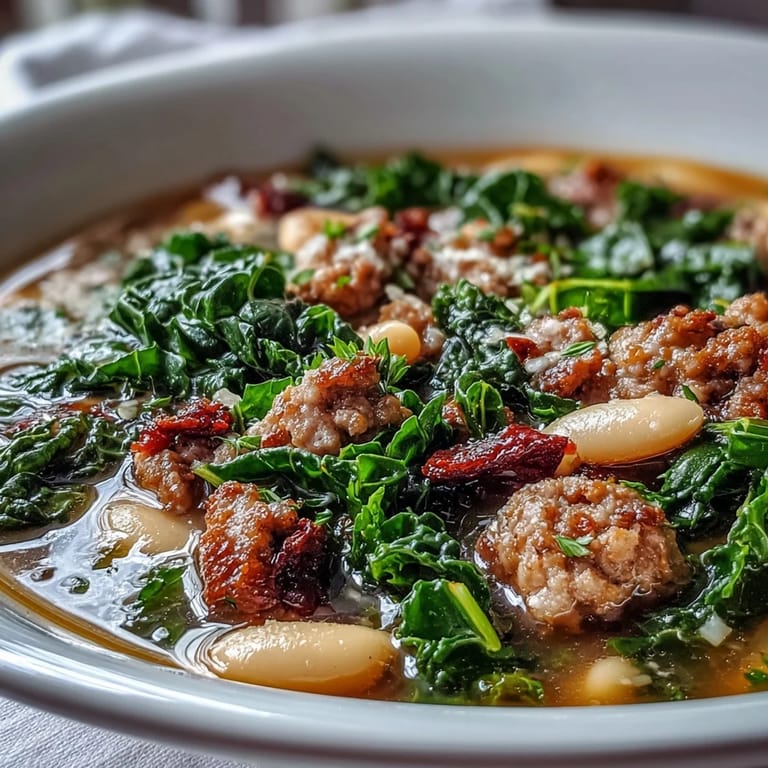
 There's a quiet moment when you're standing at your stove and you've just added the kale, and the whole pot smells like an Italian countryside kitchen—that's when you know you've made something real. This soup has a way of making people feel taken care of.
The Magic of Roasted Garlic
I used to throw garlic in raw, wondering why my soups never had that deep, mellow richness I remembered from restaurants. Roasting the garlic whole changes everything—it becomes creamy and sweet instead of sharp and aggressive. The cloves soften until you can practically mash them with the back of a spoon, and when they hit the broth, they dissolve into it completely. Once you do this once, you'll start roasting garlic for everything.
Variations That Actually Work
This soup is flexible in ways that matter. I've swapped the kale for spinach on nights when that's what I had on hand, and it comes together in about five minutes less because spinach wilts faster. Swiss chard works beautifully too, though it has a slightly earthier flavor. For a vegetarian version, use a quality plant-based sausage and swap the chicken broth for vegetable broth—the roasted garlic does enough heavy lifting that you won't miss the meat.
Storage and Make-Ahead Tips
This soup freezes like a dream, staying good for up to two months if you let it cool completely first. I usually freeze it in single-serving containers so I can grab a piece of comfort on rough mornings. If you're making it ahead, slightly undercook the kale because it'll soften more when you reheat it. For a secret richness, drop a Parmesan rind into the pot while it simmers—the cheese slowly releases into the broth and makes everything taste like you actually know what you're doing in the kitchen.
- Cool the soup completely before freezing to preserve the kale's color.
- If the soup thickens in the fridge, just add a splash of broth or water when you reheat it.
- Serve it with good crusty bread to soak up every last drop.
 Pin It
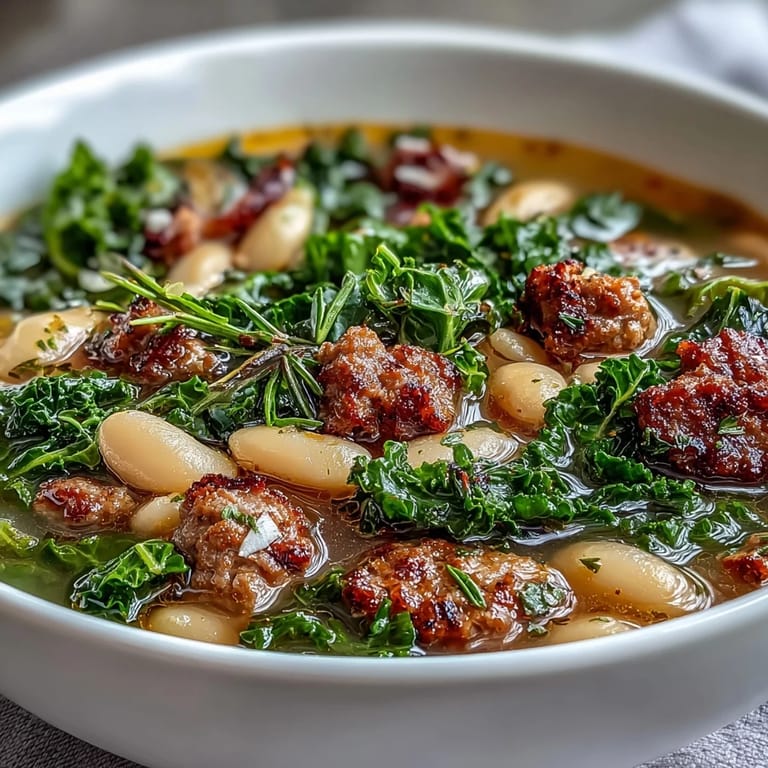
 There's something about ladling a bowl of this soup that makes the whole day feel a little gentler. Serve it hot, with a shower of Parmesan, a drizzle of good olive oil, and someone you care about sitting across from you.
Recipe Questions & Answers
- → Can I make this soup vegetarian?
Yes, substitute plant-based Italian sausage for the pork sausage and use vegetable broth instead of chicken broth. The soup will still be hearty and flavorful.
- → What's the purpose of roasting the garlic?
Roasting garlic mellows its sharpness and brings out natural sweetness, adding depth to the soup's flavor profile. This extra step makes a noticeable difference in the final taste.
- → Can I use fresh beans instead of canned?
Absolutely. Use about 3 cups of cooked white beans if starting from dried. You may need to adjust the cooking time slightly and add more broth if the beans absorb more liquid.
- → How long does this soup keep?
The soup stores well in the refrigerator for 4-5 days. It also freezes beautifully for up to 2 months. The flavors often develop further after a day or two.
- → What other greens can I use?
Spinach or Swiss chard work well as substitutes for Tuscan kale. Spinach cooks faster, so add it during the last 3-5 minutes of simmering to prevent overcooking.
- → Do I need to remove the sausage casings?
Removing casings allows the sausage to crumble and brown evenly, distributing the meat and spices throughout the soup. This creates better texture and flavor integration.