 Pin It
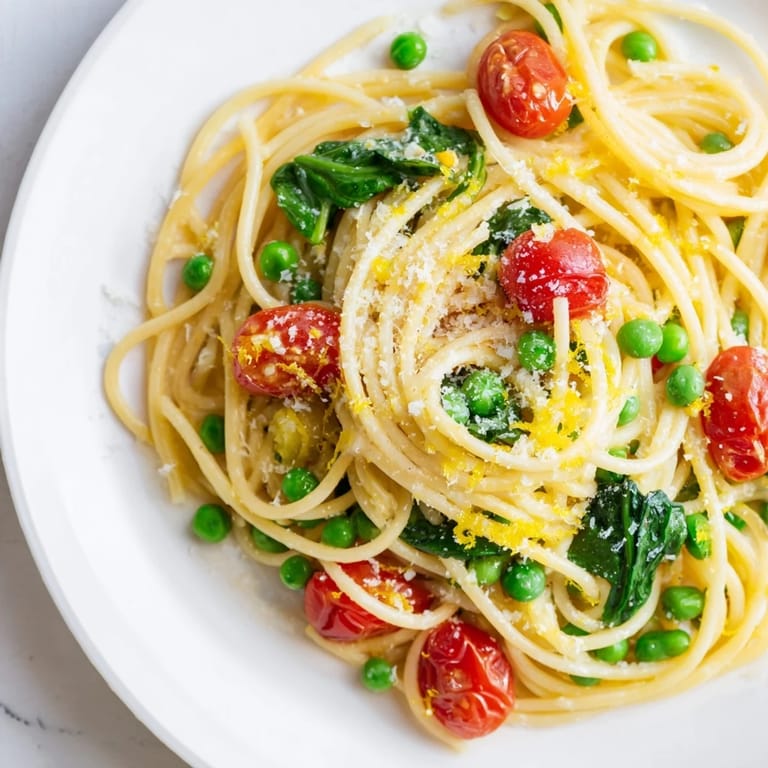
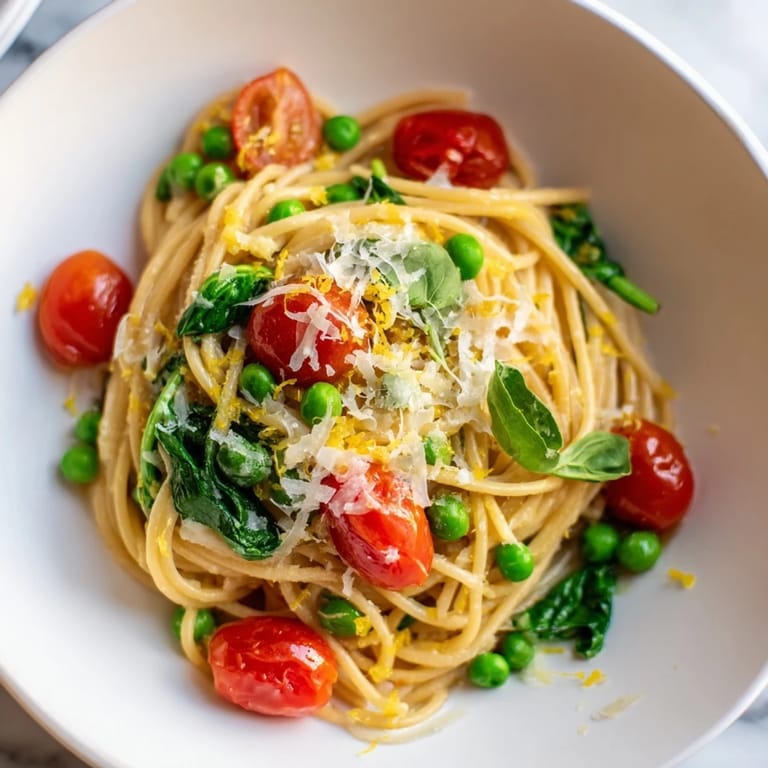
 My friend Anna showed up at my door last April with armfuls of vegetables from her garden and nothing but time on her hands. She insisted we could turn everything into dinner using just one pot, and honestly, I was skeptical about spaghetti cooking directly in broth. But watching those bright green peas and red tomatoes cook down into something almost creamy changed my whole perspective on weeknight pasta.
Last Tuesday I made this for my sister who swore she hated cooked spinach. She ate three bowls and asked if there were seconds, never realizing she had happily devoured two big handfuls of the green stuff. Sometimes the best way to get people to love vegetables is to let them get cozy with pasta and good olive oil.
Ingredients
- 350 g dried spaghetti: Breaking it in half helps it fit in the pot, though my grandmother would probably disapprove
- 150 g frozen or fresh peas: Frozen ones actually work great here since they cook right along with the pasta
- 100 g baby spinach: It wilts down so much you can add way more than you think
- 200 g cherry tomatoes, halved: They burst and release their juices into the broth as they cook
- 2 cloves garlic, thinly sliced: Thin slices mellow out better than minced garlic in this long cook
- 1 small red onion, thinly sliced: The sweetness balances the slight bitterness of the spinach
- 1 L vegetable broth: Good quality broth makes a huge difference since the pasta drinks it all up
- 2 tbsp olive oil: Do not skip this, it helps coat the pasta and prevents sticking
- 1/2 tsp salt: Start with less and add more at the end since broth brands vary in saltiness
- 1/4 tsp black pepper: Freshly cracked makes a real difference here
- 1/4 tsp red pepper flakes: Optional, but a little heat cuts through the sweetness of the vegetables
- Zest of 1 lemon: This brightens everything up right at the end
- 30 g grated Parmesan cheese: The umami bomb that ties all the vegetables together
- Fresh basil leaves: Tear them with your hands right before serving for the best aroma
Tired of Takeout? 🥡
Get 10 meals you can make faster than delivery arrives. Seriously.
One email. No spam. Unsubscribe anytime.
Instructions
- Build your flavor foundation:
- Heat the olive oil in a large pot over medium heat, then add the sliced garlic and onion. Cook them gently for 2 to 3 minutes until they are soft and fragrant but not browned. The onions should become translucent and sweet smelling.
- Add everything but the finish:
- Pile in the spaghetti, peas, spinach, and tomatoes, then pour in the vegetable broth. Bring it to a boil while you give everything a stir to settle the pasta into the liquid.
- Season and simmer:
- Add the salt, pepper, and red pepper flakes if using them. Stir occasionally to keep the pasta from sticking together and help it cook evenly.
- Let it become sauce:
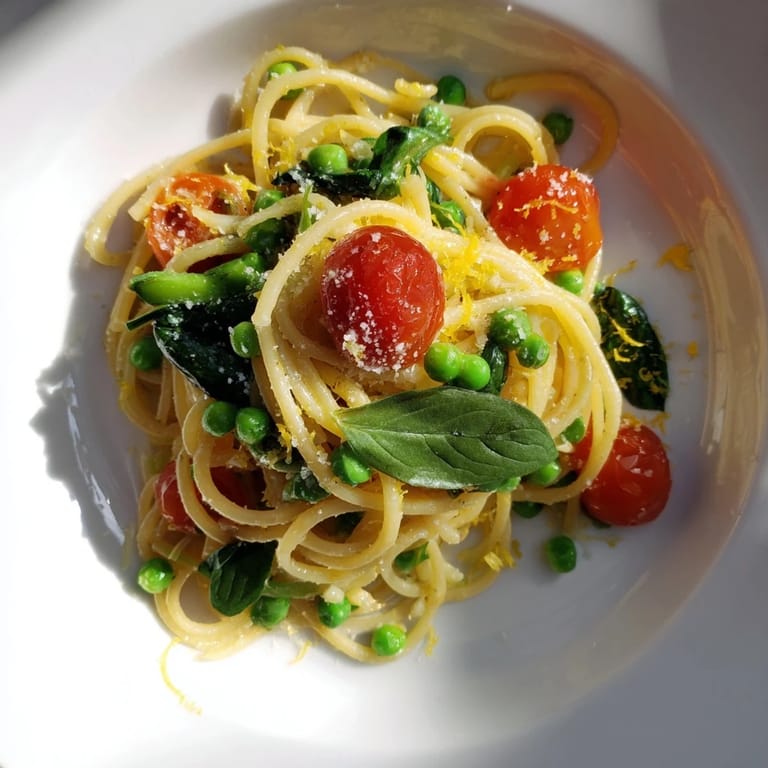
- Cook uncovered for 10 to 12 minutes until the pasta is al dente and most of the liquid has thickened into a glossy coating. Stir in the lemon zest right at the end for a burst of brightness.
- Finish and serve:
- Remove from heat immediately so the pasta does not overcook. Divide among bowls and top generously with Parmesan and fresh basil leaves.
 Pin It
 This recipe became my go to for impromptu dinner parties after the time six of us ended up eating it straight from the pot with wooden spoons. Sometimes the simplest meals are the ones people remember most.
Making It Your Own
I have made countless variations depending on what is in season or languishing in my crisper drawer. Asparagus in spring works beautifully, and in autumn I swap the spinach for chopped kale. The method stays the same regardless of what vegetables you use.
Protein Additions
When my vegetarian friend Sarah comes over, I add a drained can of chickpeas in step two. They absorb the same flavors as the pasta and make the dish substantial enough that nobody misses meat. Shelled edamame works too if you want something different.
Perfecting The Technique
The key is trusting that the liquid will reduce properly. The first few times I made this, I kept wanting to add more broth or drain some off. Now I know that starchy, slightly thickened liquid is exactly what gives the pasta its incredible texture and flavor.
- Break spaghetti in half if your pot is not tall enough
- Taste a piece of pasta to check doneness rather than relying on time
- Have your lemon zested before you start cooking so you can add it immediately
 Pin It
 Serve this with nothing more than a green salad and good bread. Sometimes the easiest meals are the ones worth remembering.
Recipe Questions & Answers
- → Can I use fresh vegetables instead of frozen peas?
Yes, fresh peas work wonderfully and may cook slightly faster. Shell them just before cooking. Adjust cooking time by a minute or two, checking that the pasta reaches al dente before the liquid fully absorbs.
- → What if the pasta absorbs all the liquid too quickly?
Stir occasionally during cooking to distribute heat evenly. If liquid evaporates too fast, add vegetable broth in small increments. The pasta should finish cooking with just a light coating of liquid remaining.
- → How do I achieve al dente pasta in this one-pot method?
Stir frequently throughout cooking and start checking the pasta around the 10-minute mark. The key is finding the balance between pasta tenderness and liquid absorption. Taste a piece to confirm doneness before removing from heat.
- → Can I prepare ingredients in advance?
Chop vegetables and measure ingredients up to 4 hours ahead, storing them in separate containers. Keep them refrigerated. Assembly happens quickly when cooking, so having everything prepped streamlines the process considerably.
- → What vegetables work well as substitutes?
Asparagus, zucchini, mushrooms, broccoli, and bell peppers all adapt beautifully to this method. Cut them into uniform small pieces for even cooking. Heartier vegetables may need slightly longer cooking times than tender spring greens.
- → Is this dish suitable for meal prep?
This dish tastes best fresh but stores well in airtight containers for up to three days refrigerated. Reheat gently on the stovetop with a splash of vegetable broth to restore the creamy consistency. Add fresh basil after reheating.