 Pin It
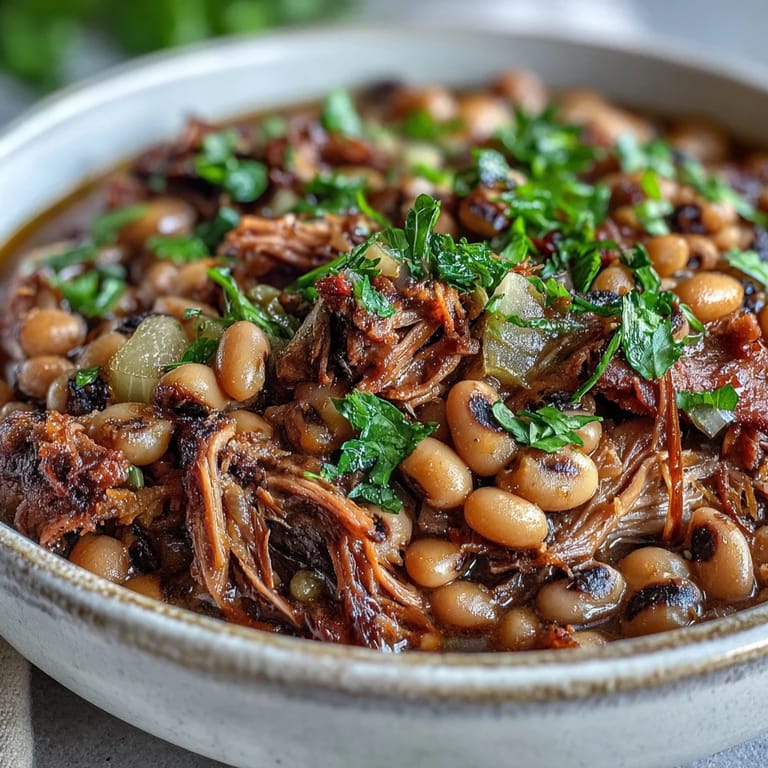
 My grandmother used to say that black-eyed peas on New Year's Day weren't just tradition—they were insurance. She'd start her pot before dawn, letting the pork neck bones render their smoky promise into the broth while the rest of the house slept. Years later, I realized she was teaching me about patience, about how some dishes demand time to become themselves. This version captures that exact feeling: unhurried, deeply flavored, and somehow both simple and ceremonial at once.
I made this for the first time on a cold January evening when my neighbor dropped by unexpectedly. She took one taste and got quiet in that way people do when food hits something true inside them. We ended up sitting at my kitchen table for hours, talking about her mother's kitchen in Louisiana and mine in South Carolina, realizing that some dishes carry memory across generations without losing their warmth. That's when I understood why this bowl of peas matters so much.
Ingredients
- Black-eyed peas: Dried peas work far better than canned here—they absorb the smoky broth without turning to mush, and you can feel the care it takes to prepare them.
- Smoked pork neck bones or ham hocks: This is where the soul lives; the slow cooking pulls every bit of smoke and salt into the liquid, creating something you simply cannot replicate with vegetable broth alone.
- Onion, celery, and bell pepper: The holy trinity of Southern cooking builds flavor from the ground up, creating a subtle sweetness that balances the pork's smokiness.
- Garlic: Just a minute of cooking time here mellows it into a background note rather than a shout.
- Water or low-sodium chicken broth: Broth adds richness, but water lets the pork and spices do all the talking if that's your preference.
- Creole seasoning: This blend carries cayenne, paprika, garlic, and thyme all at once—it's the backbone that makes the dish sing without feeling overly complicated.
- Bay leaf, thyme, and smoked paprika: These aromatics work together to deepen the smoky notes without overpowering the tender peas.
Tired of Takeout? 🥡
Get 10 meals you can make faster than delivery arrives. Seriously.
One email. No spam. Unsubscribe anytime.
Instructions
- Soak your peas the night before:
- Cover them with cold water and let them sit overnight, or use the quick-soak method with boiling water if you're short on time. Either way, draining and rinsing them removes compounds that can make the broth cloudy.
- Build your flavor base:
- Heat a splash of oil in your Dutch oven and sauté the onion, celery, and bell pepper until they soften and release their sweetness, about five minutes. You'll notice the kitchen smelling suddenly alive and ready.
- Add the garlic:
- One minute is all it needs—just enough time for the raw edge to mellow into something warm and subtle.
- Combine everything:
- Add the smoked pork, drained peas, your liquid, and all the spices. The mixture should look like it's ready for a long, slow transformation.
- Simmer low and slow:
- Bring it to a boil, then drop the heat way down, cover, and let it bubble gently for about ninety minutes. Stir occasionally and listen—you'll hear the peas beginning to soften, the pork beginning to surrender.
- Finish the pork:
- Remove the bones, shred any meat clinging to them, and return just the meat to the pot. Discard the bones and any excess fat that rises to the surface.
- Taste and adjust:
- Salt is crucial at the end because it awakens everything that's been cooking. Remove the bay leaf and taste—this is your moment to decide if it needs more spice or more salt.
- Serve with intention:
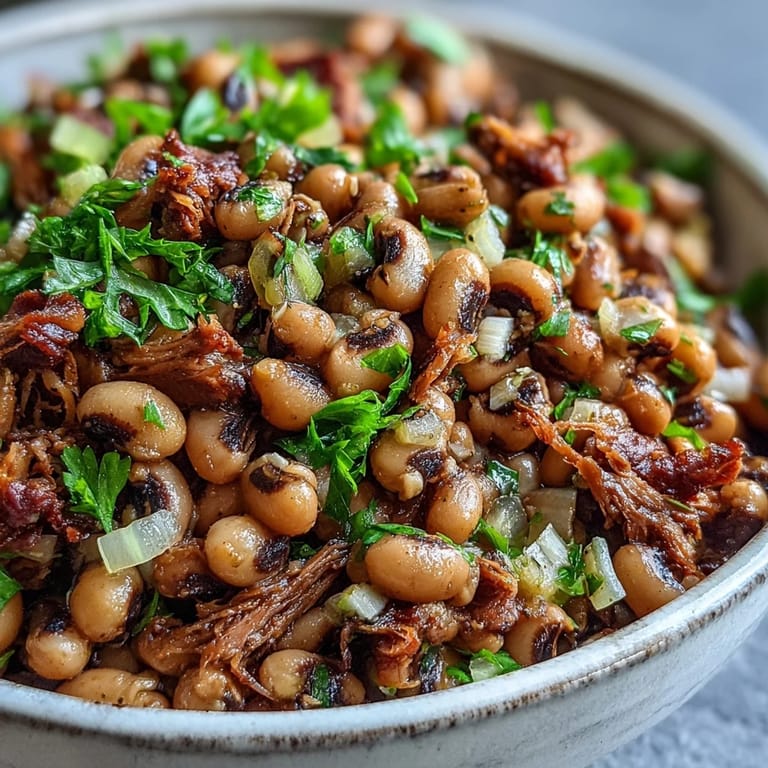
- Ladle into bowls, top with fresh parsley if you have it, and set out hot sauce for anyone who wants to push the heat further.
 Pin It
 There's a moment, usually around the ninety-minute mark, when the pot stops smelling like separate ingredients and starts smelling like home. That's when you know the work is done and the magic has taken over. Everything becomes permission to sit down, to breathe, to know that something good is happening whether you're watching it or not.
Why This Dish Carries Weight
Black-eyed peas aren't fancy, but they've traveled through time with intention. Enslaved African Americans in the South transformed the peas from animal feed into sacred food, creating a tradition that now belongs to the whole South and beyond. Eating them on New Year's Day isn't superstition—it's gratitude, resilience, and hope all in one bowl. When you cook this, you're participating in something larger than yourself, something that has fed generations and will feed generations to come.
The Art of the Slow Simmer
Rushing this dish defeats the purpose entirely. The slow heat gives the pork time to release its fat, which carries flavor into every pea. It allows the aromatics to mellow rather than assert themselves. It transforms the broth from water into something silky and rich. This is a dish that teaches patience simply by existing—you cannot hurry it, and once you understand that, it becomes a gift instead of a chore.
Serving and Making It Your Own
Serve this over rice, with cornbread on the side, or with collard greens as your traditional Southern New Year's meal. Some families add a splash of hot sauce at the table; others add it during cooking. You might discover you like yours with a squeeze of lemon, or you might keep it exactly as it comes from the pot. This is the beauty of a foundational recipe—it gives you permission to make it personal.
- Leftovers taste even better the next day once the flavors have settled and deepened.
- Freeze portions in containers for up to three months, thawing in the refrigerator overnight before reheating gently on the stove.
- For a vegetarian version, skip the pork and use a splash of liquid smoke plus extra smoked paprika to capture that depth.
 Pin It
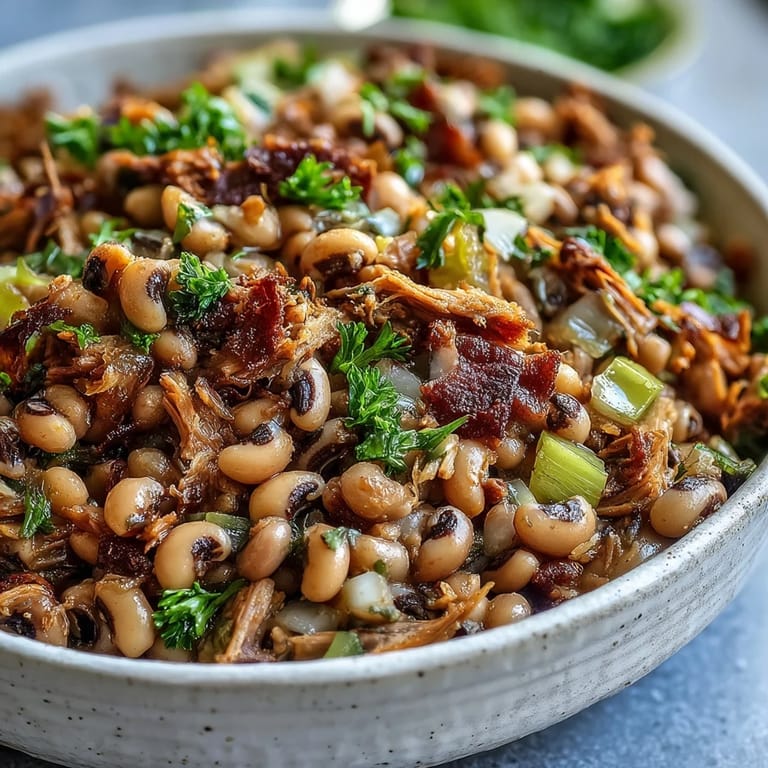
 This is the dish you make when you want to feed people something real. It's the bowl that says you took time, you cared about flavor, and you believe that some moments deserve a table where everyone sits down together.
Recipe Questions & Answers
- → Why are black-eyed peas eaten on New Years?
Black-eyed peas symbolize luck and prosperity in Southern tradition. Eating them on January 1st is believed to bring good fortune and financial success for the coming year.
- → Do I need to soak the peas first?
Yes, soak dried black-eyed peas overnight in water, then drain and rinse. For a faster method, cover with boiling water for one hour before proceeding with the dish.
- → What can I substitute for smoked pork neck bones?
Smoked ham hocks work equally well. For a vegetarian option, omit the pork entirely and add extra smoked paprika plus a splash of liquid smoke for that traditional smoky depth.
- → How do I know when the peas are done cooking?
The peas are ready when they're tender and creamy, not mushy. This typically takes about 1½ hours of simmering. The pork should be falling off the bone easily.
- → Can I make this in advance?
Absolutely. This dish actually tastes better the next day as flavors meld. Store in the refrigerator for up to 5 days or freeze for 3 months. Reheat gently with a splash of broth.
- → What should I serve with black-eyed peas?
Traditionally served over steamed white rice with cornbread and collard greens. Hot sauce and fresh parsley make excellent garnishes for added brightness and heat.