 Pin It
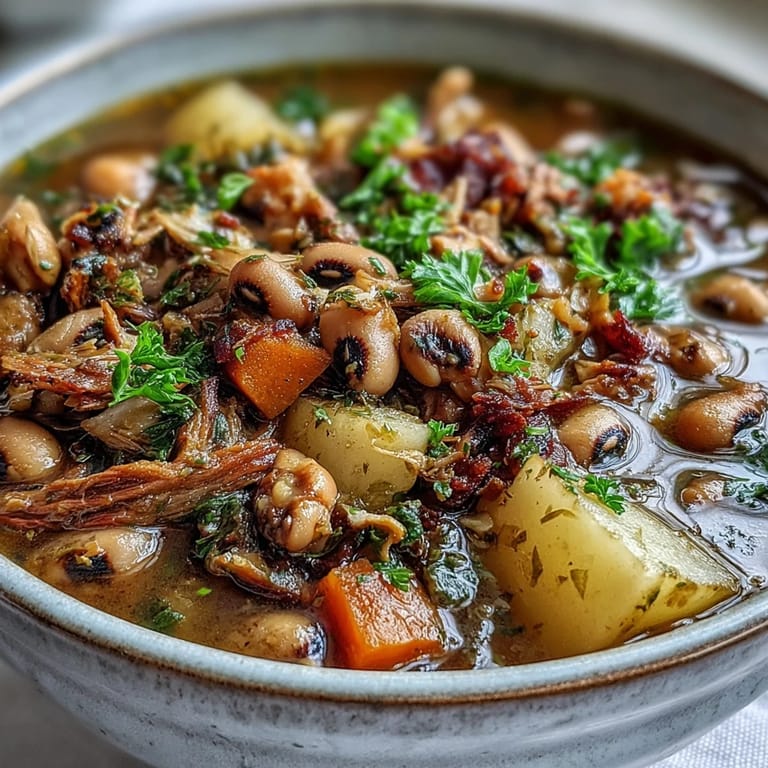
 My grandmother used to make this stew every New Year's Day, and the smell of it simmering would fill the house by noon, drawing everyone to the kitchen whether they planned to be there or not. There's something about black-eyed peas and ham that feels like tradition made edible, like you're cooking something that matters. The first time I tried making it myself, I underestimated how much love goes into those long, slow hours of simmering, but once I tasted that rich, smoky broth, I understood why she never rushed it. Now I make it whenever I need to feed people something that feels like a warm hug in a bowl.
I made this for my neighbors after they helped us move, and watching them come back the next day asking for the recipe told me everything I needed to know about whether it was worth the effort. There's a particular joy in serving something that demands to be savored slowly, where people linger at the table just talking instead of rushing through dinner.
Ingredients
- Smoked ham hocks (2, about 1.5 lbs): These are the soul of the stew, giving you that authentic smoky flavor and creating a collagen-rich broth that's silky without any cream needed.
- Dried black-eyed peas (2 cups, soaked overnight): Soaking overnight prevents that grainy texture and helps them cook evenly, though canned works in a pinch if you rinse them really well.
- Onion, carrots, and celery (1 onion, 2 carrots, 2 stalks): This aromatic base is your foundation, and taking five minutes to dice them properly makes the whole stew cook more evenly.
- Potatoes (2 medium, cubed): They absorb all that smoky broth and become tender little flavor sponges, plus they help thicken the stew naturally.
- Diced tomatoes (1 can, 14.5 oz with juice): The acidity cuts through the richness and adds a subtle sweetness that balances the smoke perfectly.
- Garlic (3 cloves, minced): A quick minute in the hot pan releases its fragrance and softens its bite into something mellow and warm.
- Broth (6 cups): Use low-sodium so you control the salt level, and chicken or vegetable both work beautifully depending on what you have on hand.
- Bay leaves, thyme, smoked paprika, black pepper, cayenne: These aren't just seasonings, they're the whispers that make people ask what your secret ingredient is.
Tired of Takeout? 🥡
Get 10 meals you can make faster than delivery arrives. Seriously.
One email. No spam. Unsubscribe anytime.
Instructions
- Soak your peas if you haven't already:
- If you're using dried peas, let them sit in plenty of cold water overnight, then drain and rinse them really well the next morning. This step matters more than you'd think for texture.
- Build your aromatic base:
- Heat a splash of oil in your Dutch oven over medium heat, then add the diced onion, carrots, and celery, letting them soften for about five minutes until they start to turn golden at the edges. You'll know it's ready when the kitchen smells sweet and vegetable-forward.
- Wake up the garlic:
- Stir in your minced garlic and let it cook for just one minute, stirring constantly so it doesn't catch and turn bitter. That's when you'll smell the shift from vegetables to something deeper and more aromatic.
- Gather everything into the pot:
- Add the ham hocks, drained peas, cubed potatoes, tomatoes with their juice, all the broth, bay leaves, thyme, smoked paprika, black pepper, and cayenne if you want heat. Give it a good stir so nothing sticks to the bottom.
- Bring to a boil, then settle in for the long simmer:
- Let it reach a full boil for just a minute or two, then lower the heat to low and cover it, leaving the lid slightly ajar if your pot tends to boil over. Set a timer for two hours and resist the urge to peek constantly, though stirring every thirty minutes or so helps everything cook evenly.
- Free the meat from the bone:
- After two hours, the ham hocks should be so tender the meat falls away from the bone with barely a touch. Pull them out, let them cool just enough to handle, then shred the meat and return it to the pot, leaving behind the skin, bone, and any excess fat.
- Taste and adjust:
- This is crucial: taste the stew and add salt gradually, because the ham hocks have already contributed quite a bit. If you want it thicker, simmer uncovered for another ten to fifteen minutes to reduce the liquid slightly.
- Finish and serve:
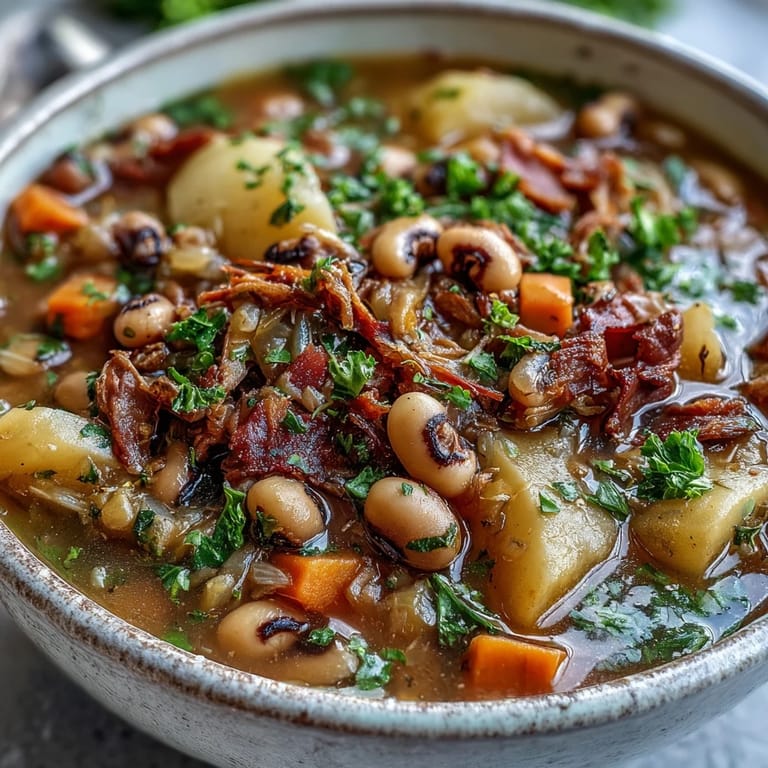
- Remove the bay leaves, ladle the stew into bowls, scatter with fresh parsley if you have it, and set out hot sauce for anyone who wants an extra kick. Serve it with cornbread or over rice depending on your mood.
 Pin It
 My five-year-old once asked why this stew tasted like "happy," and I realized that's exactly what happens when you cook something slowly with intention, when you're not fighting the clock but working with it. It's the kind of dish that turns a regular Tuesday into something worth remembering.
Why This Stew Works Better Than You'd Expect
The secret lies in respecting the time, not trying to shortcut it. The longer those ham hocks sit in the broth, the more they give to it, and the black-eyed peas absorb all of that richness until they're not just legumes anymore but part of something bigger. I learned this the hard way by trying to speed things up with higher heat, which only made the peas break apart instead of staying tender.
Customizing Without Losing the Soul
If ham isn't your thing, you can swap it for smoked turkey legs or even just add a teaspoon of liquid smoke and skip the meat entirely, though the broth won't have quite the same depth. The vegetables are flexible too, so if you hate celery or have extra bell peppers, make it yours. The one thing I'd never change is the bay leaves and thyme combination, because those two together are what makes this taste like the South.
Storage, Serving, and Life After the First Bowl
This stew improves on day two and is honestly even better on day three, so make it without guilt about leftovers, because you're actually giving yourself a gift for later in the week. Reheat it gently on the stove with a splash of broth if it's gotten thick, and it tastes almost as good as the first time. Cornbread is the traditional pairing, but I've also served it over rice, with oyster crackers on the side, and even on toast for a very unconventional breakfast that somehow works.
- Leftovers keep refrigerated for up to three days, or freeze them for up to three months in airtight containers.
- Reheat slowly on the stove rather than in the microwave to keep the peas from toughening.
- If you're making this for a crowd, double the recipe because it somehow tastes even better in bigger batches.
 Pin It
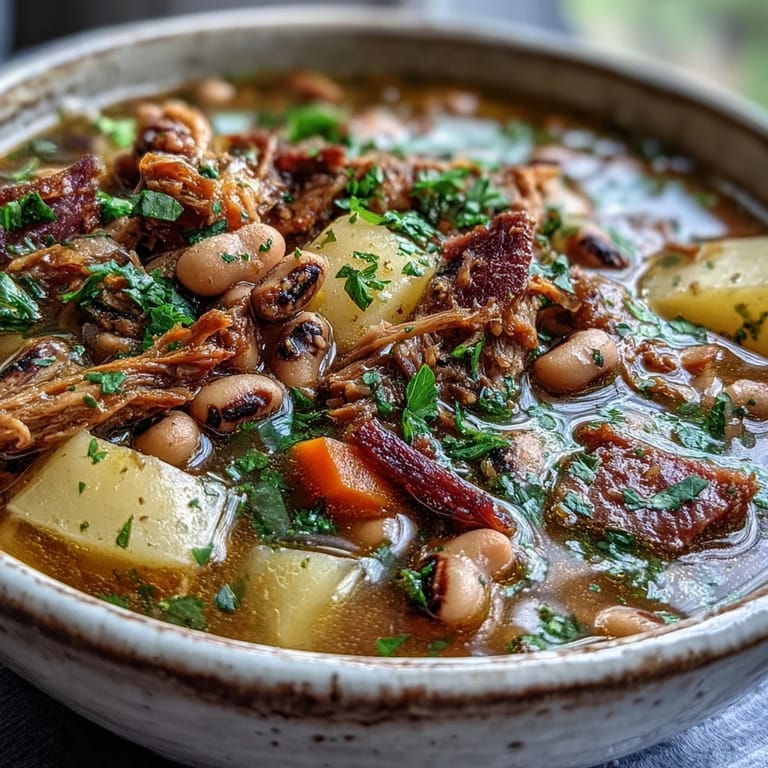
 This stew has a way of becoming part of your cooking rhythm once you make it, the kind of thing you return to when you want to feed people something that matters. There's wisdom in these slow hours at the stove, and every bowl proves it.
Recipe Questions & Answers
- → Do I need to soak dried black-eyed peas before cooking?
Yes, dried black-eyed peas should be soaked overnight in plenty of water. This softens them and reduces cooking time. Alternatively, you can use canned black-eyed peas to skip the soaking step entirely.
- → Can I make this stew vegetarian?
Absolutely. Simply omit the ham hocks and use vegetable broth instead of chicken broth. Add extra smoked paprika or a few drops of liquid smoke to maintain that smoky depth of flavor.
- → How long will leftovers keep in the refrigerator?
This stew actually improves in flavor after a day or two. Store in an airtight container in the refrigerator for up to 3 days. Reheat gently on the stovetop, adding a splash of broth or water if needed.
- → What should I serve with black-eyed pea stew?
Cornbread is the classic Southern pairing and perfect for soaking up the flavorful broth. You can also serve it over steamed white rice, with crusty bread, or alongside a simple green salad for a complete meal.
- → Can I freeze this stew?
Yes, this stew freezes beautifully. Let it cool completely, then transfer to freezer-safe containers leaving some space for expansion. It will keep well frozen for up to 3 months. Thaw overnight in the refrigerator before reheating.
- → How do I know when the ham hocks are done?
The ham hocks are ready when the meat is falling off the bone easily. This typically takes about 2 hours of simmering. You should be able to shred the meat with a fork without much resistance.