 Pin It
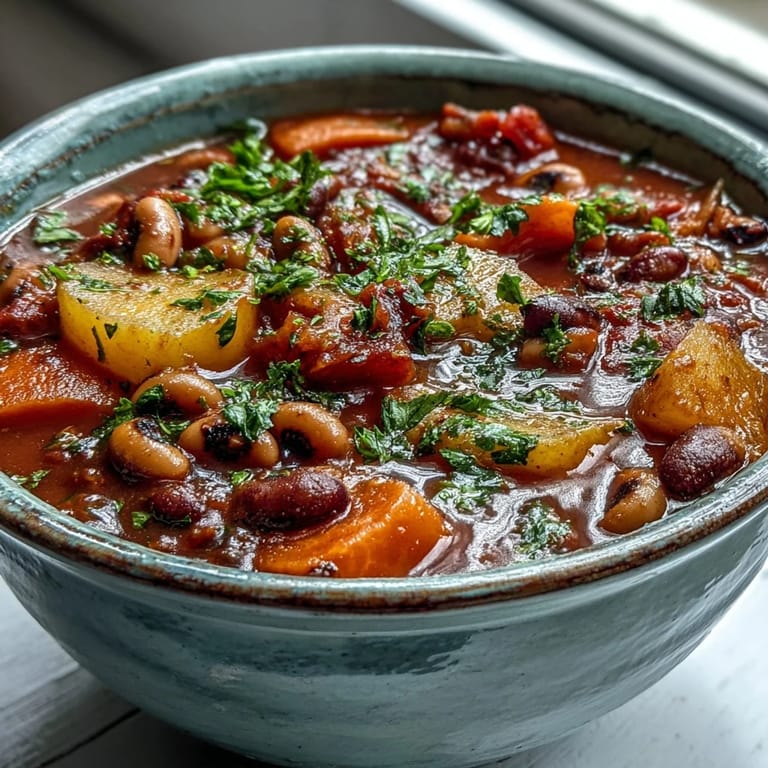
 There's something about the smell of onions hitting hot olive oil that makes you stop whatever you're doing and pay attention. I was rushing through a weeknight, mentally cataloging what was in the pantry, when I spotted a bag of black-eyed peas I'd forgotten about. That single ingredient sparked the whole thing, and before I knew it, my kitchen was filled with the kind of warmth that only a simmering stew can bring. This isn't a recipe I learned from someone's grandmother—it's one I pieced together from instinct and happy accidents, and it's become my go-to when I need something that feels both simple and deeply satisfying.
I made this for a small dinner party last fall, and my friend Sarah arrived early looking completely frazzled from work. She sat at the kitchen counter while I chopped vegetables, and by the time the stew was simmering, her shoulders had actually relaxed—just from the smell alone. We barely talked about anything important that night, but somehow the meal did all the conversing for us. That's when I realized this stew isn't just food; it's the kind of dish that quietly takes care of people.
Ingredients
- Extra virgin olive oil: Use a good quality one here since it's a foundational flavor—it'll make the sauté taste richer without any effort on your part.
- Sweet onion: A large one diced small means it softens completely into the broth, creating a gentle sweetness that balances the earthiness of the peas.
- Carrots and celery: These two are the backbone of flavor; don't skip them or rush their cooking time.
- Potatoes: Peel and dice them into roughly the same size so everything cooks evenly and you avoid mushy or crunchy bites.
- Canned diced tomatoes: The acidity brightens the whole pot and prevents the stew from feeling too heavy.
- Garlic cloves: Mince them fine so they distribute throughout, giving every spoonful a whisper of flavor.
- Black-eyed peas: Canned works beautifully here, but if you cook them from dried, you'll get an even creamier texture that feels luxurious.
- Vegetable broth: The quality of this matters more than you'd think—use low-sodium so you can control the salt level yourself.
- Bay leaf: It's subtle but unmistakable; remove it before serving because biting into one is genuinely unpleasant.
- Smoked paprika: This is what elevates the stew from ordinary to memorable—don't substitute regular paprika or the whole dish tastes different.
- Thyme, black pepper, and salt: Layer these carefully, tasting as you go, because every pot of broth has its own personality.
- Fresh parsley: Add it at the very end so it stays bright green and doesn't turn muddy or lose its freshness.
Tired of Takeout? 🥡
Get 10 meals you can make faster than delivery arrives. Seriously.
One email. No spam. Unsubscribe anytime.
Instructions
- Get your mise en place ready:
- Dice everything before you turn on the heat—there's nothing worse than scrambling to chop while something's already cooking. Line them up in small bowls if you want to feel a little fancy.
- Start with the foundation:
- Heat the olive oil over medium heat and let it warm for about a minute before adding your diced onion. You'll know it's ready when a piece of onion sizzles immediately, and you want to sauté until translucent—that takes about 3 to 4 minutes and your kitchen will smell incredible.
- Build the base vegetables:
- Add carrots and celery together and let them soften for 4 minutes, stirring now and then so nothing sticks. This is when the magic starts—those three vegetables together create the flavor foundation that makes people ask for the recipe.
- Layer in the potatoes and garlic:
- Add the potatoes next and cook for just 2 minutes, then add your minced garlic and sauté for about a minute until it's fragrant. Don't let the garlic brown or it'll taste bitter and ruin the whole pot.
- Create the broth:
- Pour in your tomatoes with all their juices, then add the vegetable broth. Stir in the bay leaf, thyme, smoked paprika, black pepper, and salt—this is where the stew really comes alive.
- First simmer:
- Bring everything to a gentle boil, then reduce the heat and let it simmer uncovered for 15 minutes. The potatoes and carrots should be nearly tender; if you can pierce them with a fork easily, you're good to move forward.
- Add the black-eyed peas:
- Stir in the peas and simmer for another 10 minutes, which gives them time to warm through and absorb all those savory flavors around them. All your vegetables should be soft now, and the whole pot should smell like comfort.
- Final adjustments:
- Remove the bay leaf—seriously, don't forget this or someone will eventually bite into it and be confused. Taste the stew and adjust salt and pepper if needed; trust your palate here because seasoning is so personal.
- Finish and serve:
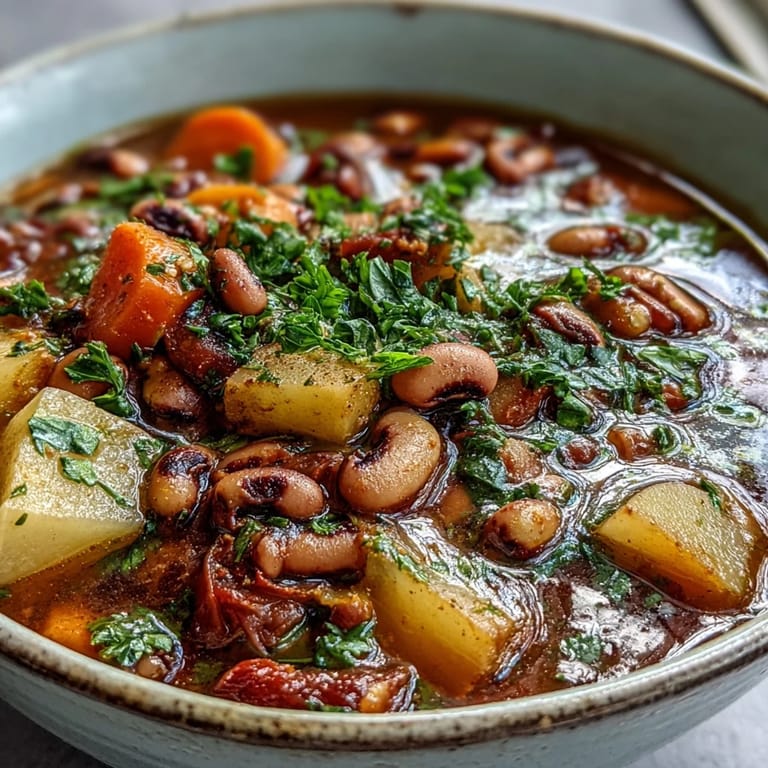
- Stir in the fresh parsley just before serving so it stays bright, then ladle into bowls and add a sprinkle of extra parsley on top if you want it to look as good as it tastes.
 Pin It
 My neighbor once told me that watching someone make stew was like watching them think out loud, and I've never forgotten that. There's something deeply human about standing over a pot, adjusting seasoning, watching vegetables soften, and knowing that in about an hour, that same pot is going to nourish everyone around your table.
Variations to Explore
This stew is forgiving enough that you can make it your own without breaking anything. I've added fresh spinach or kale in the last 5 minutes of cooking and watched it wilt into something beautiful; I've also experimented with a dash of liquid smoke for a deeper, more complex flavor that reminds people of slow-cooked Southern cooking. If you want to push it toward something smokier and spicier, a chopped chipotle pepper stirred in right before serving gives each spoonful a little kick and a hint of heat.
Serving Suggestions
This stew shines on its own, but it becomes a completely different meal when you serve it with something to absorb the broth. Thick, crusty bread is my instinct—something you can use to wipe your bowl clean at the end—but it's equally wonderful spooned over rice or even over creamy polenta if you're feeling a little fancier than usual. Some nights I serve it in shallow bowls with a simple green salad on the side, and other nights it's the whole meal and nothing else is needed.
Storage and Make-Ahead Notes
This stew actually tastes better the next day once the flavors have had time to get to know each other, so don't hesitate to make it ahead and reheat it gently on the stove. It keeps in the refrigerator for about 4 days and freezes beautifully for up to 3 months, though I'd recommend leaving it slightly less cooked if you're planning to freeze it since the vegetables will soften a bit more when you reheat. If the stew thickens too much in storage, just add a splash of broth or water when you warm it up.
- Let it cool completely before storing so condensation doesn't make everything watery.
- Freeze it in flat containers or bags so it takes up less space and thaws more evenly.
- If you're reheating from frozen, give yourself time to let it thaw in the refrigerator overnight or thaw it slowly on the stove—rushing will make the vegetables mushy.
 Pin It
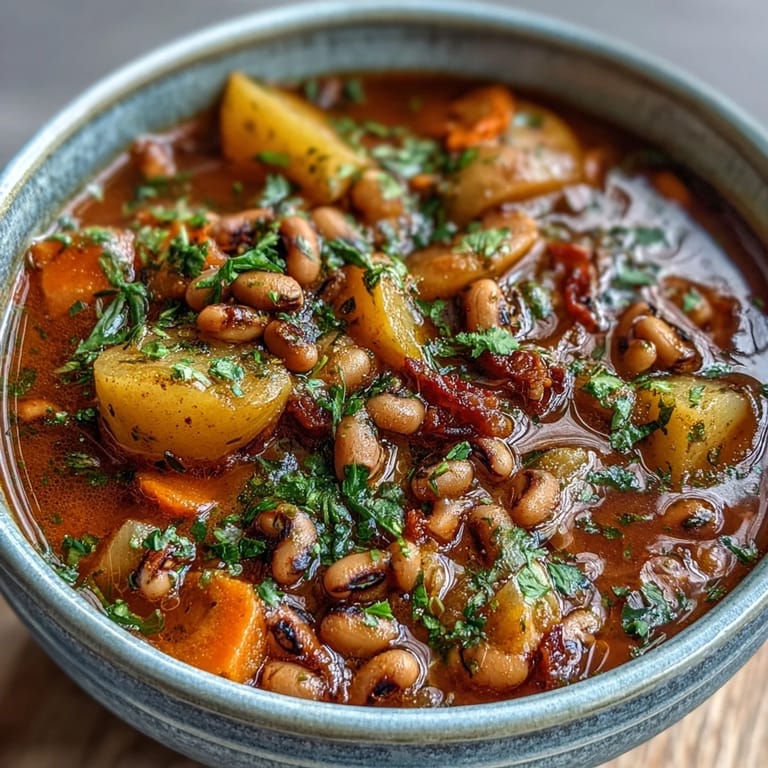
 This stew is proof that the simplest dishes are often the ones that matter most. Make it when you need comfort, serve it when someone needs nourishment, and don't be surprised when it becomes the recipe people ask you for again and again.
Recipe Questions & Answers
- → Can I use dried black-eyed peas instead of canned?
Yes, soak 1 cup dried black-eyed peas overnight, then cook for 45-60 minutes until tender before adding to the stew. Adjust cooking time accordingly.
- → How long does this stew keep in the refrigerator?
Store in an airtight container for up to 4-5 days. The flavors actually improve after a day or two as the ingredients continue to meld together.
- → Can I freeze this stew?
Absolutely. Cool completely, then freeze in portions for up to 3 months. Thaw overnight in the refrigerator and reheat gently on the stovetop.
- → What can I serve with this stew?
Crusty bread for dipping, over steamed rice, or with a simple green salad. For extra protein, add cooked kale or spinach during the last 5 minutes of simmering.
- → How can I make this stew more smoky?
Add a teaspoon of liquid smoke, a chopped chipotle pepper in adobo sauce, or increase the smoked paprika to 2 teaspoons for a deeper smoky flavor profile.