 Pin It
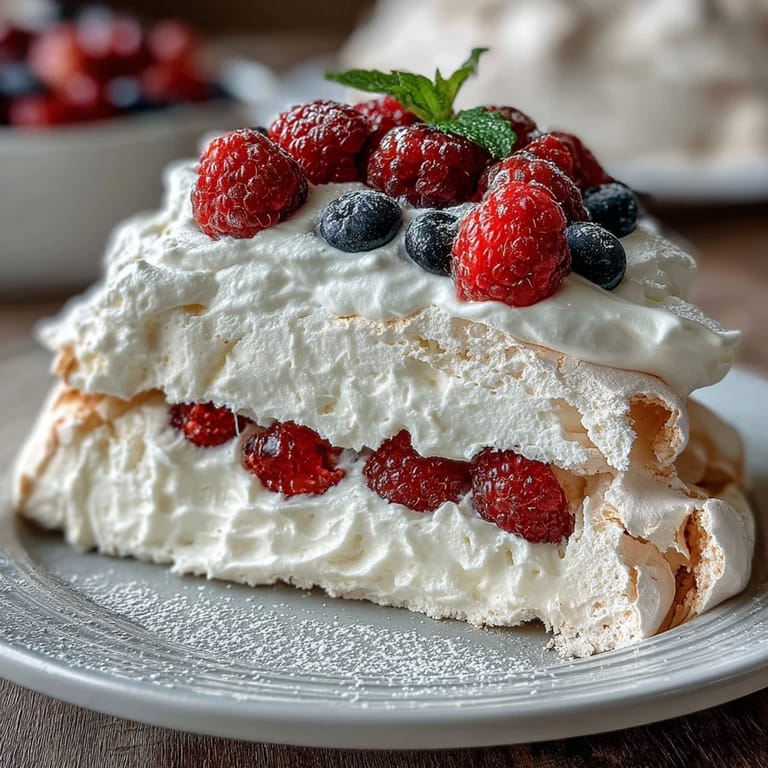
 My mum always said pavlova was her secret weapon for impressing guests, though she'd never admit how nervous she felt waiting for it to bake. One Mother's Day, I decided to surprise her by making it myself, and as I watched that glossy meringue transform into a crispy cloud in the oven, I finally understood why she loved it so much—it felt like edible magic, the kind that makes people pause mid-conversation and ask for another slice. The combination of that delicate crunch against a soft center, cushioned by clouds of cream and jeweled with fresh berries, makes this dessert feel both elegant and utterly joyful.
I'll never forget my brother's face when he bit into my first attempt—his eyes went wide, then he said, "Did you really make this?" There's something about presenting a pavlova that transforms the whole meal into an event, and that moment reminded me why people have been making this dessert for generations. It's the kind of dish that deserves a little ceremony.
Ingredients
- Egg whites (4 large, room temperature): Room temperature is crucial because they whip up faster and create more stable peaks—cold eggs from the fridge take longer and won't reach the same glossy perfection.
- Superfine sugar (1 cup / 200 g): The fine granules dissolve completely into the egg whites, creating that signature glossy finish that tells you the meringue is ready.
- Cornstarch (1 tsp): This magical ingredient is what creates that marshmallow-soft center while keeping the outside crispy—don't skip it.
- White vinegar (1 tsp): It stabilizes the meringue and adds a subtle tang that balances the sweetness beautifully.
- Pure vanilla extract (1 tsp): Use the real stuff here; it makes a noticeable difference in the flavor profile.
- Salt (pinch): Enhances the meringue's stability and deepens the sweetness perception.
- Heavy whipping cream (1 cup / 240 ml, chilled): Cold cream whips faster and holds its shape longer, so chill your bowl too if you have time.
- Powdered sugar (2 tbsp, plus more for dusting): It dissolves seamlessly into cream without the graininess of granulated sugar.
- Mixed berries (strawberries, raspberries, blueberries, blackberries—4 cups total): Fresh, ripe berries are non-negotiable; their juice and tartness cut through the sweetness perfectly.
- Fresh mint leaves (1 tbsp, optional): A few delicate leaves add color and a hint of freshness that makes the whole dessert feel summery.
Tired of Takeout? 🥡
Get 10 meals you can make faster than delivery arrives. Seriously.
One email. No spam. Unsubscribe anytime.
Instructions
- Set the stage:
- Preheat your oven to 250°F (120°C) and line a baking sheet with parchment paper, then lightly trace a 9-inch circle as your guide—this doesn't need to be perfect, just a gentle outline. Having everything ready before you start beating eggs means you won't waste precious time and the meringue won't deflate while you fumble around.
- Beat the whites until they're fluffy clouds:
- In a bowl that's been wiped clean and dry, begin beating your egg whites with a tiny pinch of salt, watching them transform from clear liquid into soft, billowing peaks within a couple of minutes. Once you see those soft peaks forming, you're ready for the next step.
- Gradually add sugar and watch the magic happen:
- Add the superfine sugar one tablespoon at a time while beating continuously, and you'll see the meringue shift from fluffy to glossy and thick—this takes about 5 to 6 minutes total, but patience here is worth every second. When you lift the beaters, the peaks should stand tall and firm, almost like shiny marshmallow frosting.
- Fold in the secret ingredients:
- Gently fold in the cornstarch, vinegar, and vanilla using a spatula, being careful not to overmix and deflate all that hard-won airiness. A few gentle turns should do it—you want everything just barely combined.
- Shape your meringue nest:
- Spoon the meringue onto your parchment circle, using the back of a spatula to create slightly raised edges all around, leaving the center a bit lower—this gives it that classic nest shape that holds the cream beautifully. Don't stress about perfection; any slight cracks or uneven edges add to its charm.
- Let the oven do its thing:
- Bake for 1 hour and 15 minutes at low heat, which is the gentle approach that creates that signature contrast between crispy exterior and soft center. Once time's up, turn off the oven and crack the door open just slightly, allowing the pavlova to cool slowly and completely inside—this prevents cracking from temperature shock.
- Whip your cream while waiting:
- As the meringue cools, chill a bowl and whisk, then beat your cold heavy cream with powdered sugar and vanilla until you get soft peaks—it should be fluffy but still hold a gentle peak. Overbeat it and you'll have a grainy, separated mess, so watch it closely.
- Assemble your masterpiece:
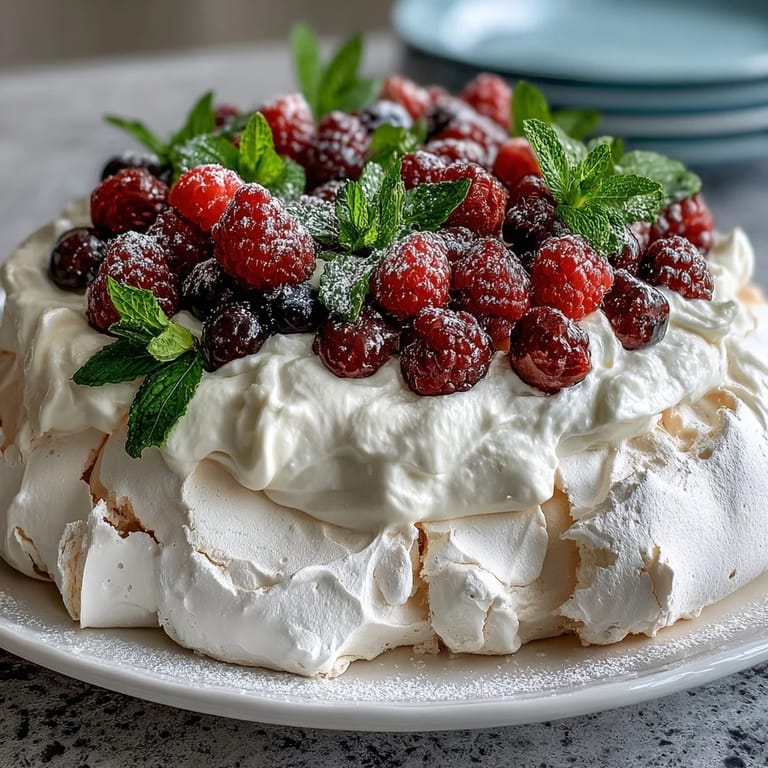
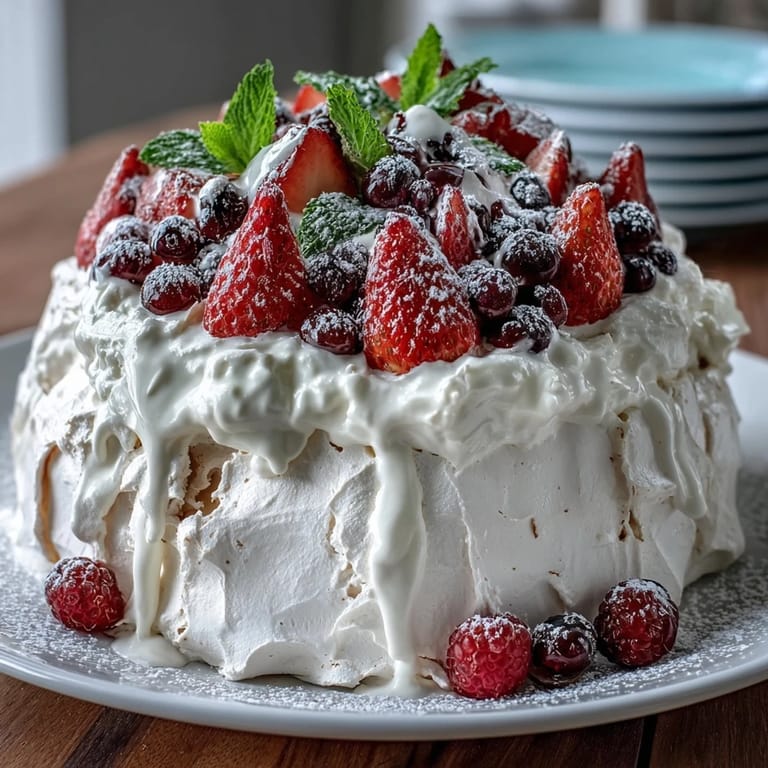
- Once everything is cool, carefully transfer the pavlova to your serving platter, then spread or dollop the whipped cream over the top, leaving some meringue edges visible for that beautiful contrast. Scatter your fresh berries across the cream in whatever arrangement makes you happy—there's no wrong way here.
- Finish with a final dusting:
- Just before serving, lightly dust the whole thing with powdered sugar if you like, and tuck a few mint leaves between the berries for color and a fresh touch. This is your moment to make it feel special.
 Pin It
 What I love most is watching someone's face when they break through that crispy shell for the first time and discover the marshmallow center—it's a small pleasure, but a genuine one. This dessert has a way of turning ordinary moments into something memorable, which is exactly what celebrating the people we love should feel like.
The Science Behind the Texture
The cornstarch and vinegar are what separate a good pavlova from a great one, and understanding their roles makes you a smarter baker. The cornstarch slows the gelatinization of the egg whites' proteins, which is fancy talk for why your meringue gets that soft, marshmallow center instead of becoming rock-hard throughout. The vinegar, meanwhile, is a secret weapon that stabilizes the foam and adds a subtle tang that keeps the sweetness from becoming cloying.
Timing and Preparation Tips
The beauty of pavlova is that you can actually bake it a day or two ahead, which takes so much pressure off if you're serving it for a special occasion. Once it's completely cooled and you're confident the kitchen is dry, store it in an airtight container at room temperature, and it'll stay crispy and lovely. The only part you'll do fresh is the cream and berries, which means you can focus on enjoying your guests rather than panicking in the kitchen at the last moment.
Creative Variations and Flavor Ideas
While berries are the classic choice, I've experimented with swapping in seasonal fruits like sliced peaches, kiwi, passionfruit, or even a combination of tropical fruits when strawberries are expensive. For a chocolate lover's version, sift 2 tablespoons of cocoa powder into the meringue before folding in the other ingredients—it gives you this gorgeous dark meringue that looks absolutely stunning. You could also try adding a tablespoon of chopped pistachios sprinkled between the cream and berries, or even a drizzle of honey for extra sweetness, though honestly, the fruit does all the talking you need.
- Dark chocolate meringue pairs beautifully with raspberries and a touch of white chocolate shavings.
- Lemon zest folded into the meringue adds brightness that elevates the whole dessert.
- A thin layer of jam spread on the meringue before the cream creates a flavor bridge between the crispy shell and the fruit.
 Pin It
 Pavlova is one of those desserts that feels fancy enough for special occasions but easy enough that you won't regret attempting it, and that's a rare combination worth celebrating. Make it with love, serve it with confidence, and watch how quickly it becomes someone's favorite memory of the day.