 Pin It
 I discovered these bagels by accident on a Sunday morning when I realized I'd forgotten to buy bagels for breakfast. My teenager was already awake, hovering around the kitchen with that particular kind of hunger only teenagers have, and I had Greek yogurt and self-rising flour staring at me from the pantry. Within minutes, we had soft, chewy bagels coming out of the oven, and the look on their face when they bit into something that tasted bakery-fresh but came from our own kitchen was worth every bit of improvisation.
The real magic moment came when I made a batch for my neighbor who'd been going on about missing real bagels since moving away from the city. She stood at my kitchen counter, steam still rising from the cooling rack, and asked where I'd bought them. When I told her they were homemade, she actually laughed—like I'd just revealed some kind of kitchen secret.
Ingredients
- Self-rising flour (1 cup, 130 g): This is the backbone of the whole operation; it already has baking powder and salt mixed in, which means your bagels rise beautifully without any yeast waiting period.
- Plain Greek yogurt (1 cup, 230 g): Full-fat or low-fat both work, and the moisture and protein create that signature chewy texture that makes these feel legitimate.
- Large egg (1): The egg wash gives you that gorgeous golden-brown shine and helps the seasoning stick.
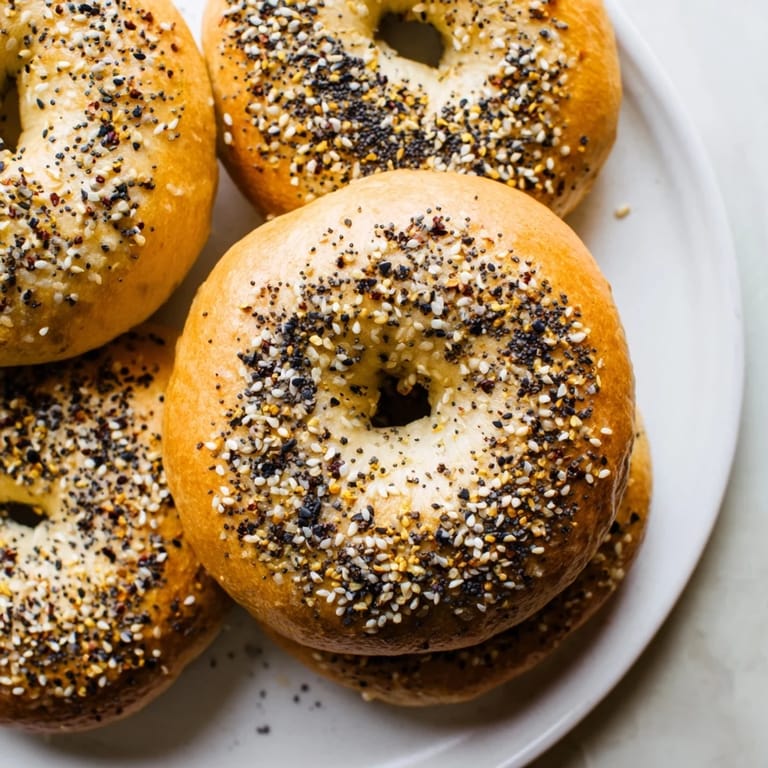
- Everything bagel seasoning (2 tablespoons): This is worth buying the good stuff for; cheap versions taste a bit dusty compared to fresh blends with visible sesame seeds and poppy seeds.
Tired of Takeout? 🥡
Get 10 meals you can make faster than delivery arrives. Seriously.
One email. No spam. Unsubscribe anytime.
Instructions
- Heat and prep:
- Set your oven to 375°F and line a baking sheet with parchment paper. This matters because it prevents sticking and makes cleanup feel civilized.
- Make the dough:
- Combine the flour and Greek yogurt in a bowl and stir until you've got something shaggy and rough-looking. It'll seem almost too wet at first, but that's exactly right—you want it soft.
- Knead gently:
- Turn the dough onto a lightly floured surface and knead just for 2 to 3 minutes until it smooths out. Over-kneading makes them tough, so resist the urge to work it like you're angry at it.
- Divide and shape:
- Cut the dough into 4 pieces, roll each into a 7 to 8-inch rope, then pinch the ends together to form that classic bagel ring. If the dough resists, let it rest for a minute and try again.
- Egg wash:
- Beat the egg in a small bowl and brush it all over each bagel with a pastry brush. Don't skip this step; it's what makes them shine.
- Season generously:
- Sprinkle the everything bagel seasoning over the top of each one while the egg wash is still wet so it clings properly.
- Bake until golden:
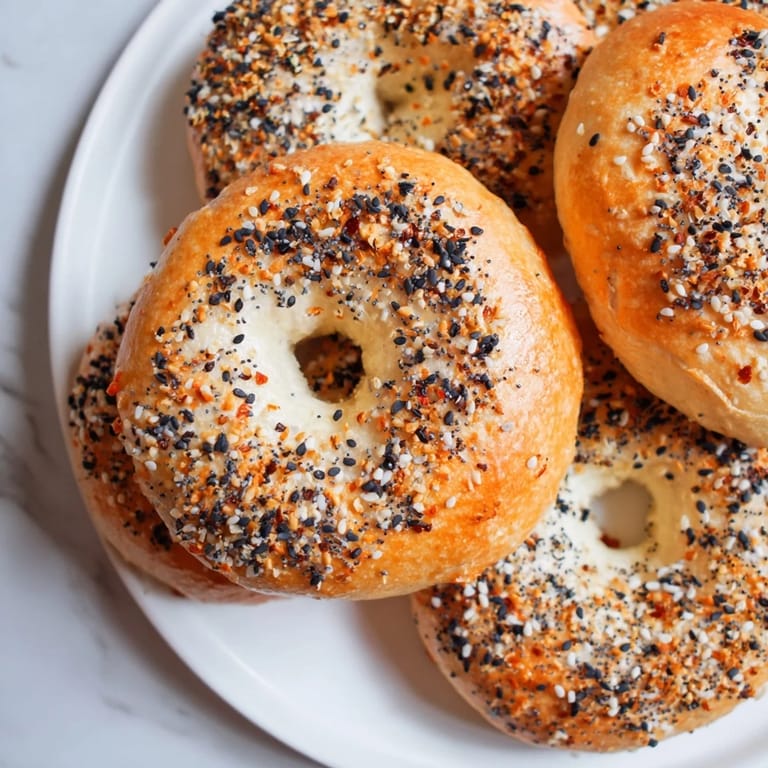
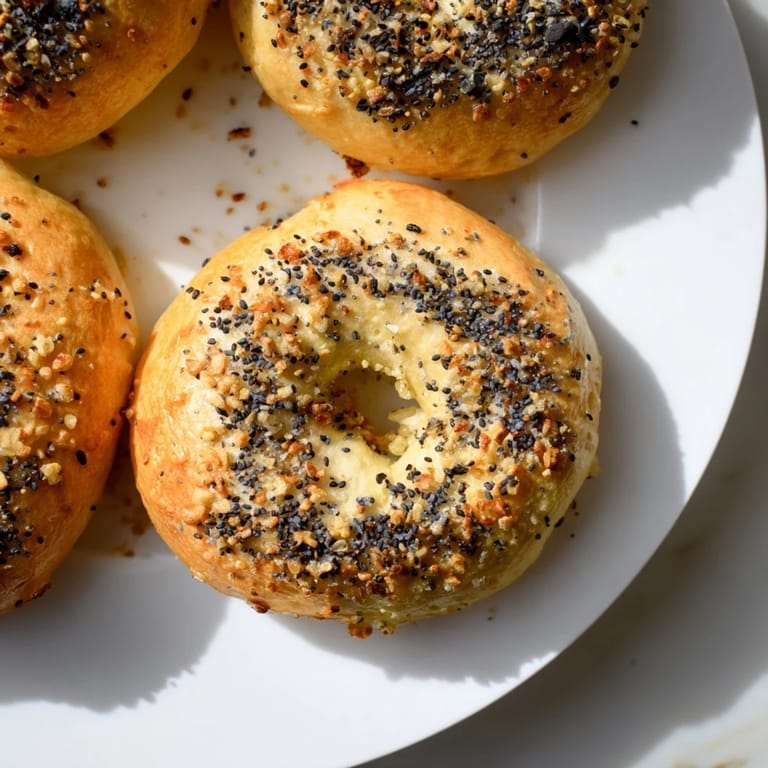
- Bake for 22 to 25 minutes until they're deep golden brown and sound hollow when you tap the bottom. The tops should look toasted and speckled.
- Cool and serve:
- Let them rest on a wire rack for 5 minutes before diving in; they'll firm up just enough to slice cleanly.
 Pin It
 There's something special about watching someone's face light up when they realize a homemade bagel tastes just like the ones from that bagel shop they love. These bagels stopped being just breakfast and became proof that sometimes the simplest ingredients make the most satisfying food.
Texture and Why It Works
The genius of using Greek yogurt and self-rising flour is that you skip the whole fermentation process while still landing on something authentically chewy. The yogurt brings moisture and tang, and the self-rising flour's leavening agents activate in the heat of the oven, creating a tender crumb inside and a slightly crispy exterior. You're not chasing some complicated method; you're letting simple chemistry do the work for you.
Topping Ideas and Serving
Everything bagel seasoning is bold enough on its own, but these bagels are a blank canvas for whatever you'd normally put on a bagel. I've sliced them warm and loaded them with cream cheese and smoked salmon, and I've toasted them the next day and piled on avocado and a fried egg. Cold with butter and jam works too if you're in a sweeter mood.
Storage and Make-Ahead
These are best eaten fresh, straight from the cooling rack when they still have that warmth and chewiness that makes them feel special. If you do have leftovers (which is rare in my house), store them in an airtight container for a day or two and toast them before eating—a quick 2 to 3 minutes in the toaster brings them back to life.
- Toast cold bagels for 2 to 3 minutes to refresh the texture and warmth.
- You can prep the dough ahead and refrigerate it for up to 4 hours before shaping and baking if mornings are chaotic.
- These freeze surprisingly well in an airtight bag for up to a month; just thaw and toast before serving.
 Pin It
 These bagels taught me that sometimes the best kitchen discoveries come from working with what you have on hand instead of what a recipe demands. Once you nail these, you'll find yourself making them whenever the craving hits, no advanced planning required.
Recipe Questions & Answers
- → How do these bagels achieve a chewy texture without yeast?
The combination of self-rising flour and Greek yogurt creates a moist, elastic dough that, when kneaded properly, yields a soft and chewy texture without needing yeast fermentation.
- → Can I use dairy-free yogurt in this preparation?
Yes, a plant-based Greek-style yogurt works well as a substitute, ensuring the dough remains tender while keeping the dish dairy-free.
- → What is the purpose of the egg wash before baking?
Brushing the bagels with egg wash helps develop a golden, shiny crust and acts as an adhesive for the everything seasoning to stick during baking.
- → Is it possible to substitute self-rising flour?
You can replace self-rising flour with all-purpose flour combined with baking powder and salt to mimic the leavening effect needed for proper rise.
- → How should leftover bagels be stored and reheated?
Store leftover bagels in an airtight container for 1–2 days. For best texture, toast them before serving to restore the crisp exterior.