 Pin It
 My first teriyaki bowl came together almost by accident on a Tuesday night when I'd overcommitted to dinner plans and had exactly thirty minutes to pull something together. A friend mentioned they craved something warm and comforting, and I remembered watching steam rise from a street vendor's wok in a food market years ago, the smell of caramelized soy sauce and ginger cutting through the crowd. That memory stuck with me, and somehow this bowl captured that same magic without requiring a passport or culinary school.
I made this for my neighbor last spring after she'd helped me move boxes for hours, and watching her close her eyes on that first bite felt like the best thank you I could offer. She'd been living on frozen meals for weeks, and something about plating this bowl with care—the colors, the steam rising off the rice, the way the sauce glistened—turned a simple dinner into an actual moment. She still texts me asking when I'm making it again.
Ingredients
- Boneless, skinless chicken thighs or breasts (1.5 lbs): Thighs stay juicier than breasts, but either works; cut them into pieces roughly the size of walnuts so they cook evenly and soak up sauce.
- Soy sauce (1/3 cup): This is your umami backbone; use low-sodium if you're watching salt, and check the label for gluten if that matters to you.
- Mirin (1/4 cup): This sweet rice wine is the secret to authentic teriyaki shine; if you can't find it, honey works in a pinch but adds different depth.
- Brown sugar and honey (2 tbsp each): The combination creates layers of sweetness rather than one flat note; brown sugar brings molasses undertones while honey adds silky texture.
- Rice vinegar (1 tbsp): Just enough to cut through richness and brighten the sauce without making it sour.
- Fresh garlic and ginger (2 cloves and 1 tsp): Mince the garlic fine and grate the ginger on a microplane so it distributes evenly through the sauce.
- Sesame oil (1 tsp): A small amount goes far; this toasted oil carries flavor that regular vegetable oil simply cannot.
- Jasmine or short-grain rice (2 cups): Jasmine smells floral and stays slightly sticky, making it perfect for catching sauce; rinsing it removes excess starch so each grain stays separate.
- Fresh vegetables (broccoli, carrots, bell pepper, snap peas): Cut everything roughly the same size so nothing overcooks while you wait for something else to finish.
- Fresh pineapple (1 cup diced): Buy it fresh if you can; canned releases too much liquid and tastes flat compared to the brightness of actual fruit.
- Cornstarch slurry (1 tbsp cornstarch plus 2 tbsp water): Mix this right before adding so the cornstarch doesn't clump; it transforms loose sauce into something glossy that clings to chicken.
Tired of Takeout? 🥡
Get 10 meals you can make faster than delivery arrives. Seriously.
One email. No spam. Unsubscribe anytime.
Instructions
- Rinse and cook your rice:
- Run the rice under cold water in a fine-mesh strainer, stirring gently with your fingertips until the water runs almost clear; this removes starch so you don't end up with gluey rice. Combine with water and salt in a saucepan, bring to a boil uncovered, then reduce heat to low, cover, and let it simmer undisturbed for exactly 15 minutes before turning off the heat and letting it steam covered for 10 more minutes.
- Build your sauce while rice cooks:
- In a small bowl, whisk together soy sauce, mirin, brown sugar, honey, rice vinegar, minced garlic, grated ginger, and sesame oil until the sugar dissolves completely. You'll notice the sauce smells deep and complex already; reserve half for the chicken and half for finishing.
- Give your chicken a head start:
- Toss your bite-sized chicken pieces with half the teriyaki sauce in a bowl, making sure every piece gets coated. Let it sit for at least 10 minutes while you slice your vegetables; this gives the sauce time to start breaking down the chicken's surface.
- Quickly stir-fry the vegetables:
- Heat oil in a large skillet or wok over medium-high heat until it shimmers slightly, then add broccoli, carrots, bell pepper, and snap peas all at once. Stir constantly for 3 to 4 minutes until the vegetables are bright colored and just starting to soften but still have a slight snap when you bite one; transfer to a plate immediately so they don't overcook.
- Brown your marinated chicken:
- Return the same pan to medium-high heat and add the marinated chicken pieces in a single layer, letting them sit undisturbed for 2 to 3 minutes so they develop a golden crust. Stir occasionally for another 3 to 4 minutes until the chicken is cooked through and the outside is no longer pale.
- Create the glossy coating:
- Pour the reserved teriyaki sauce into the pan with the cooked chicken, then immediately stir the cornstarch and water together to create a smooth slurry and add it to the pan. Simmer for 2 to 3 minutes, stirring gently, until the sauce thickens into something shiny that coats a spoon and clings to the chicken pieces.
- Assemble with intention:
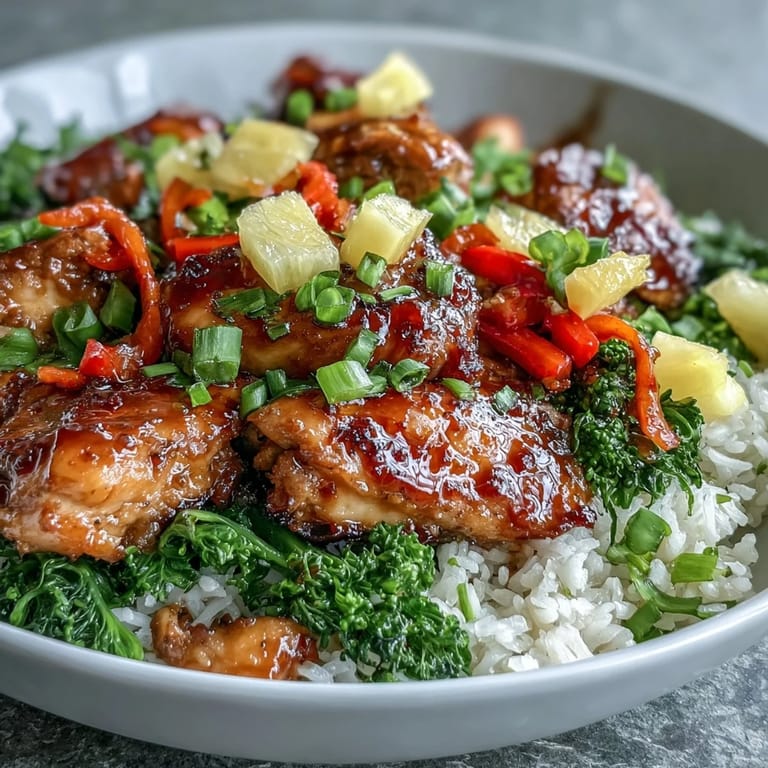
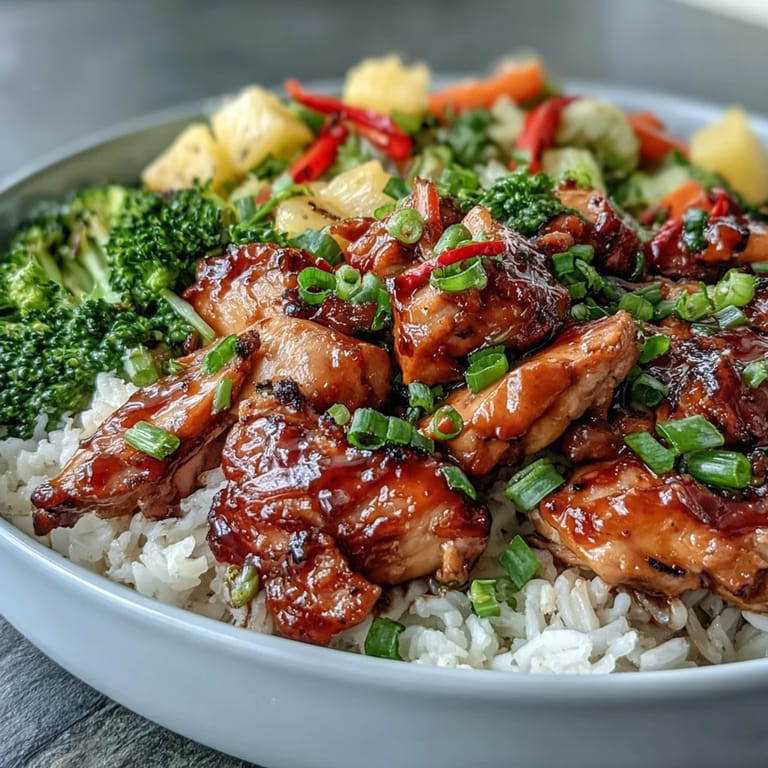
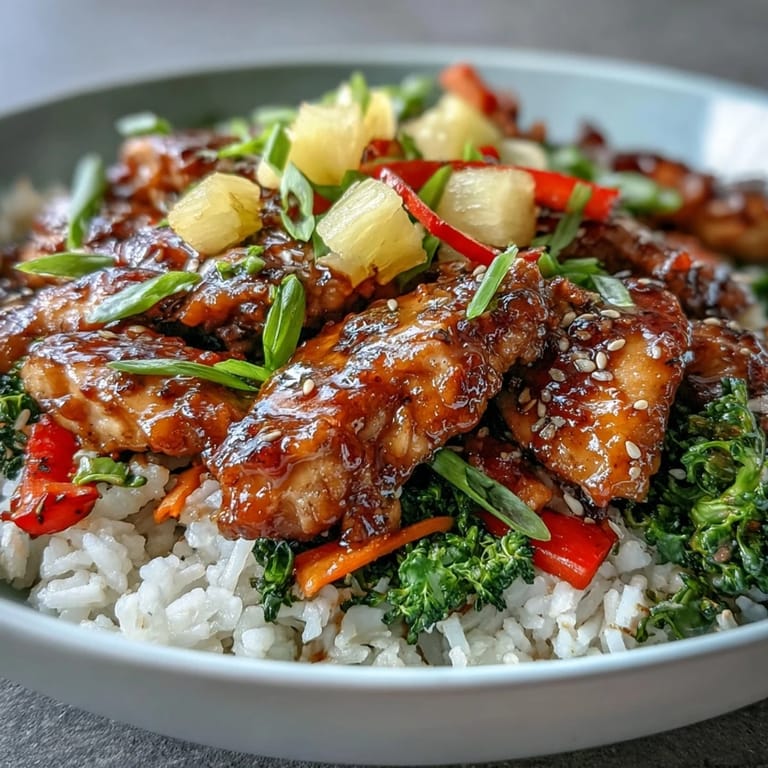
- Divide fluffy rice among four bowls, then top each with a generous portion of teriyaki chicken and its glossy sauce, followed by the stir-fried vegetables. Scatter diced pineapple over everything, then finish with a pinch of sliced scallions and toasted sesame seeds.
 Pin It
 There's a moment right after you pour that cornstarch slurry into the pan when the sauce suddenly shifts from thin and loose to thick and glossy, and it never stops feeling like small kitchen magic. My daughter noticed it once and called it the sauce getting dressed up for dinner, and now that's how I think about it every time I cook this.
Why Fresh Pineapple Changes Everything
The pineapple isn't just a garnish; it's a palate cleanser and flavor contrast rolled into one. Each sweet, tart bite cuts through the richness of the glaze and makes you want another spoonful immediately, which is why I've started dicing extra pineapple just to have it on hand. One evening I forgot to buy it and substituted mango, which was delicious but totally different; it taught me that this dish really does have favorite ingredients.
The Technique Behind the Glaze
The magic happens when you understand that teriyaki is really just sugar and soy sauce allowed to thicken and caramelize slightly, which is why the order of operations matters. By marinating first and adding sauce last, you're essentially building layers; the chicken gets flavor from inside out, then gets sealed with the glossy exterior coating. I used to add everything at once and ended up with chicken that was mushy on the outside and flavorless in the middle, so this two-sauce method changed my entire approach.
Making It Your Own
The beauty of this bowl is that it handles substitutions and additions without losing its soul. I've swapped in tofu for chicken on nights when someone vegetarian was coming over, added mushrooms when I had them in the crisper drawer, and even made a version with shrimp that came together in barely twenty minutes. The base structure holds strong enough that you can play with it.
- Try a drizzle of sriracha or chili oil on top if you like heat cutting through the sweetness.
- Add a soft-boiled or poached egg on top for extra richness and protein.
- Toast your sesame seeds in a dry pan for 30 seconds before using them to intensify their nutty flavor.
 Pin It
 This bowl became part of my regular rotation because it tastes restaurant-quality but doesn't require any ingredient that's hard to find or technique that's genuinely difficult. It's proof that weeknight cooking doesn't mean compromising on flavor or feeling like you've settled.
Recipe Questions & Answers
- → What cut of chicken works best?
Boneless skinless chicken thighs stay juicy and tender during cooking, though breasts work well too. Cut into uniform bite-sized pieces for even cooking.
- → Can I make this vegetarian?
Yes, substitute the chicken with firm tofu or tempeh. Press and cube the tofu, then follow the same marinating and cooking instructions.
- → What vegetables can I use?
Broccoli, carrots, bell peppers, and snap peas provide color and crunch. Mushrooms, zucchini, baby corn, or snow peas also work beautifully.
- → Is the teriyaki sauce spicy?
The sauce is traditionally sweet and savory without heat. Add sriracha, chili garlic sauce, or red pepper flakes if you prefer some spice.
- → Can I prepare components ahead?
Cut vegetables and mix the sauce up to a day in advance. Store separately in the refrigerator and cook when ready to serve for the best texture.