 Pin It
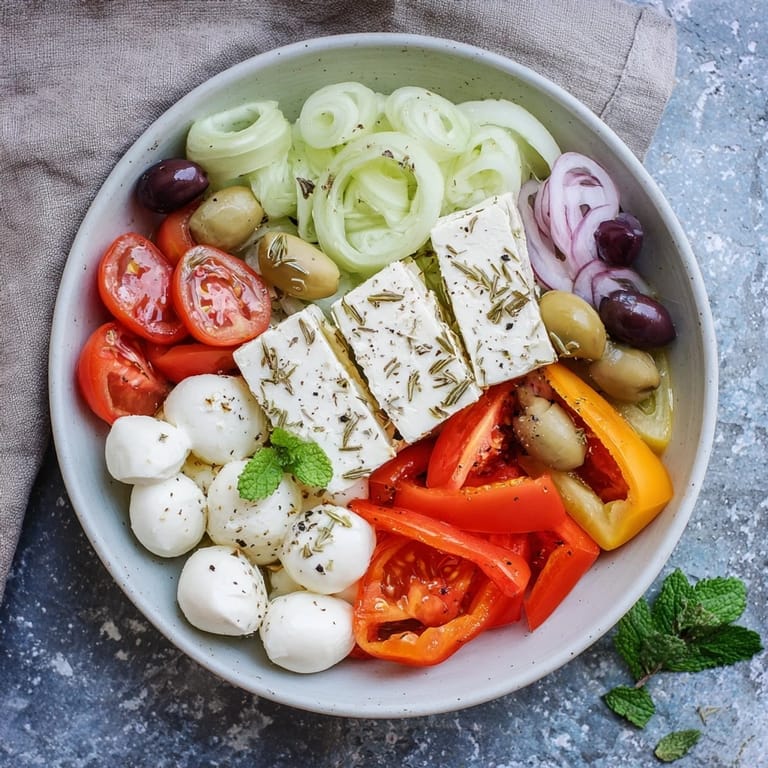
 There's something about arranging a mezze platter that makes you pause and actually enjoy the moment you're creating. Last summer, I was hosting friends for lunch, and instead of fussing over a hot stove, I decided to build this sun-drenched board right on our weathered wooden table. As I scattered the feta cubes and watched the light catch the olives, I realized this wasn't just about food—it was about inviting people to slow down and graze, to pick and choose their own adventure. That afternoon became less about the cooking and more about the conversation that happened around it.
I remember my neighbor peeking over the fence that day, drawn by the colors more than anything else. She admitted she'd never thought to arrange vegetables and cheese this way—she'd always boxed things separately on plates. By the end of the afternoon, she was texting me photos of her own version, and I realized how a simple platter can shift someone's whole approach to feeding people they care about.
Ingredients
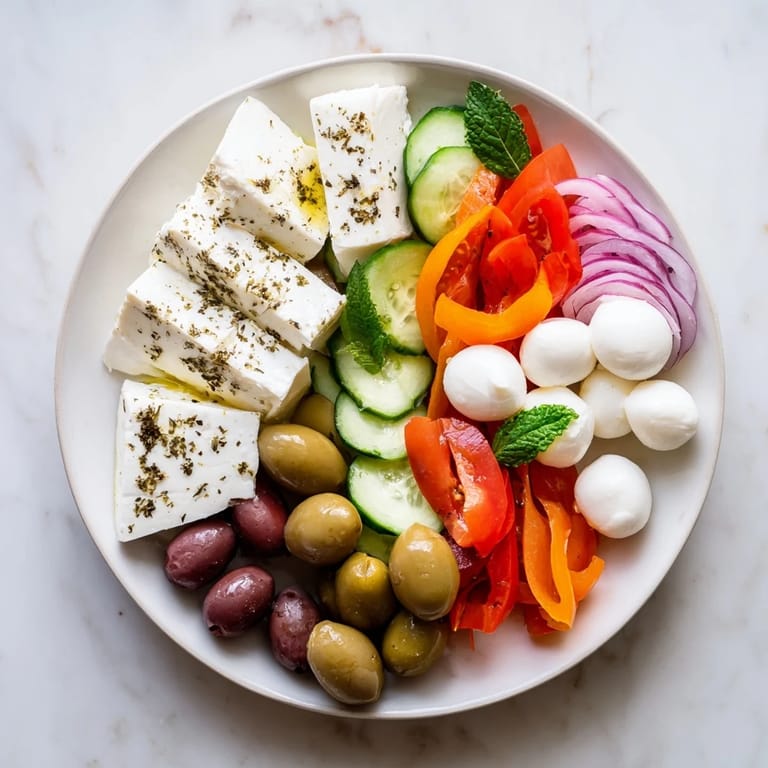
- Feta cheese, cubed: The salty, crumbly heart of this board—buy it fresh and keep it cold until the last moment so it stays firm and doesn't get lost among the vegetables.
- Fresh mozzarella balls: These little pockets of creaminess add texture and a gentle contrast to the sharp feta; make sure they're drained well or they'll puddle on the board.
- Cucumber, sliced: Choose one that's cool and crisp, not watery—it's the bridge that makes everything feel refreshing.
- Cherry tomatoes, halved: Halving them reveals the bright interior and makes them easier to grab with one hand while chatting.
- Bell pepper strips: Yellow catches the light beautifully and tastes sweeter than red, but use whatever color makes you happy.
- Red onion, thinly sliced: Raw and bright, it adds a gentle bite that wakes up your palate between bites of cheese.
- Radishes, sliced: Don't skip these—they add a peppery crunch and a pop of color that draws the eye.
- Kalamata olives: Pitted and glistening, they're the jewels of the board and worth buying good ones.
- Hummus and tzatziki: These creamy dips give you something to nestle everything into—they're the anchors of flavor.
- Crispbreads or pita wedges: Use quality ones, or make your own—they're the vehicle for everything else on the board.
- Extra virgin olive oil: A good one makes all the difference; drizzle it like you mean it.
- Fresh mint and dill: These herbs aren't just garnish—they're the whisper of summer that ties everything together.
Tired of Takeout? 🥡
Get 10 meals you can make faster than delivery arrives. Seriously.
One email. No spam. Unsubscribe anytime.
Instructions
- Start with the foundation:
- Place your largest platter or wooden board in front of you and take a breath. This isn't about filling every inch—think of the empty space as part of the design, like a painter's canvas.
- Position your cheeses:
- Scatter the feta cubes in one area and the mozzarella balls in another, leaving generous white space between them. This isn't a puzzle to solve; it's an invitation to wander.
- Fan out the vegetables:
- Create small clusters of cucumber slices, tomato halves, pepper strips, onion, and radishes as you move around the board. Let them breathe—cramped vegetables look stressed.
- Add the olives:
- Pile them in a small bowl or create a dark nest of them on the board; either way, they become a visual anchor that draws people in.
- Set out the dips:
- Spoon hummus and tzatziki into shallow bowls and nestle them into open spaces on the board. If you have small spoons, leave them in the bowls so people know they're meant to be shared.
- Dress it all:
- Drizzle olive oil over the feta and scattered vegetables with a light hand—you want to taste the ingredients, not the oil. Finish with a pinch of sea salt and cracked black pepper that catches the light.
- Garnish with herbs:
- Tear mint and dill sprigs and scatter them across the platter like you're creating a garden. Their green freshness is the final touch that says, this is ready.
- Serve and step back:
- Set the crispbreads or pita wedges nearby and let people build their own bites. The best part happens when guests start moving things around and making their own discoveries.
 Pin It
 What struck me most that afternoon wasn't the food itself, but how the platter became a reason for everyone to linger. My friend Maria, who usually rushes through meals, found herself sitting longer, talking more, reaching for one more piece of cucumber because it was right there in front of her. It's funny how arranging food a certain way can shift the entire rhythm of a gathering.
The Art of the Empty Space
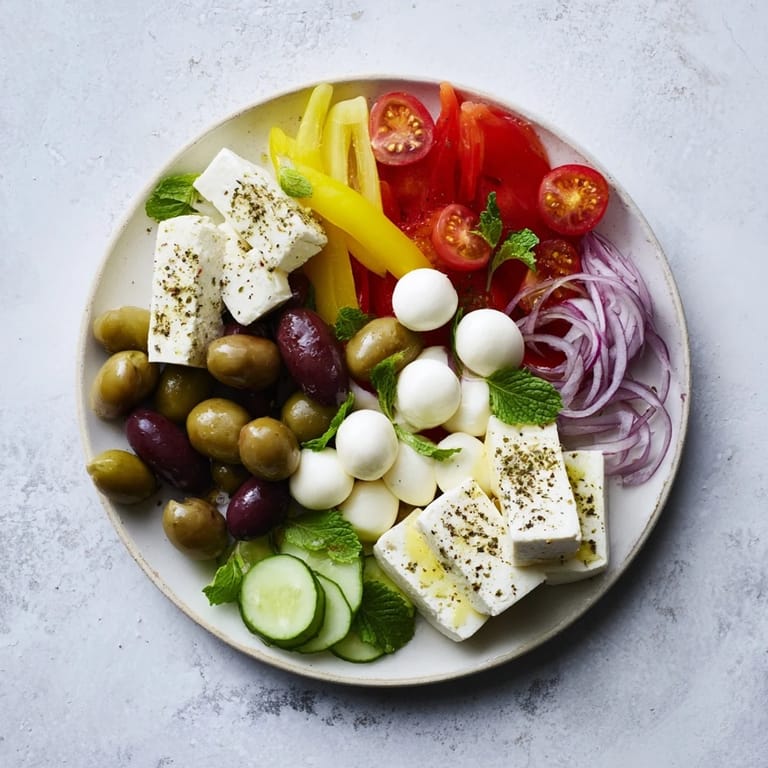
This is where mezze differs from other appetizer boards—it's not about filling every corner. The white space, the breathing room between clusters of food, is what makes this feel sophisticated and inviting rather than chaotic. When I first started making these boards, I'd cram everything together out of habit, but I learned that restraint is what makes people actually want to reach in and explore. The negative space is as important as what you're serving.
Building Flavor in Layers
Each component on this board plays a role in how the whole thing tastes when you eat it together. The salty feta needs the cool crunch of cucumber to balance it. The creamy mozzarella softens the sharp bite of red onion. The dips tie everything together, and those fresh herbs at the end wake up your palate. It's not random—it's orchestrated, even though it looks effortless. When you're arranging your platter, think about these little flavor conversations happening in each bite.
Making It Your Own
The beauty of a mezze platter is that it's a template, not a prescription. I've made versions with roasted vegetables when I had them on hand, added white beans for more substance, swapped in labneh for a creamier dip. One spring, I added sliced avocado and it completely changed the vibe. The constants are freshness, brightness, and that idea of inviting people to graze at their own pace.
- Add roasted chickpeas for a savory crunch that transforms it into more of a lunch.
- Try different cheeses—goat cheese, halloumi, or burrata all bring their own personality to the board.
- Don't forget garnishes like pomegranate seeds or toasted nuts; they catch people's eyes and add unexpected textures.
 Pin It
 This platter has become my go-to when I want to entertain without the stress, when I want to feed people something that feels nourishing and light. It's the kind of dish that reminds you why you cook in the first place—not to impress, but to bring people together around something beautiful and honest.
Recipe Questions & Answers
- → How should the platter be arranged for best presentation?
Arrange cheeses and vegetables in separate clusters with ample space between them to create an airy and visually appealing layout.
- → Can this platter be made vegan?
Yes, substitute plant-based feta and omit mozzarella or use vegan cheese alternatives to maintain similar flavors and textures.
- → What dips complement the platter?
Hummus and tzatziki provide creamy, tangy contrasts that enhance the fresh vegetables and cheeses.
- → What are good serving accompaniments?
Serve with assorted crispbreads or gluten-free pita wedges for added crunch and convenience.
- → How can flavors be intensified?
Sprinkle feta with dried oregano or sumac for an extra burst of Mediterranean flavor.
- → What beverages pair well with this platter?
A chilled Sauvignon Blanc or a light rosé complements the bright, fresh flavors perfectly.