 Pin It
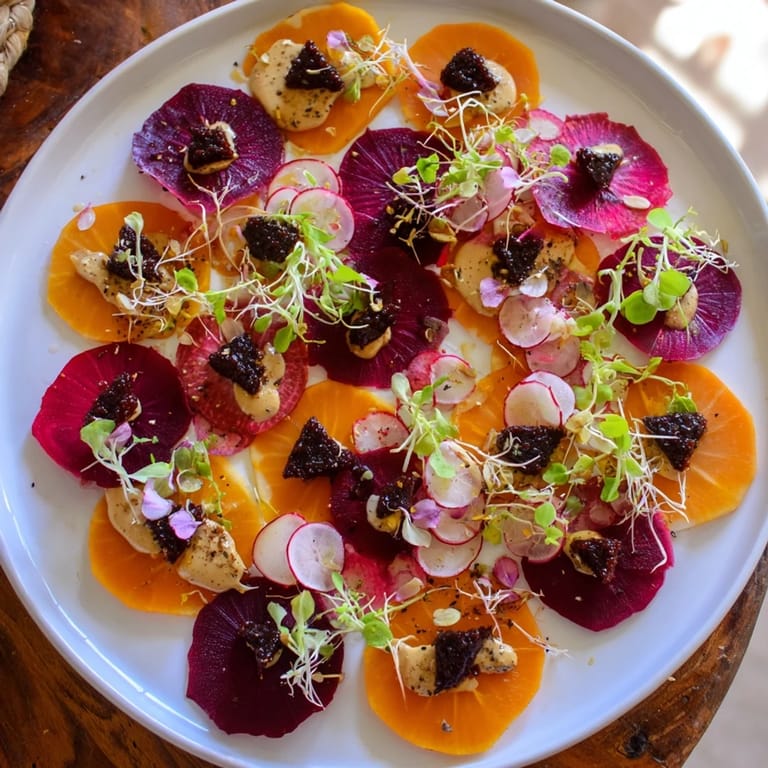
 I discovered this dish almost by accident one autumn evening when I was playing with leftover beets and couldn't decide which color to use. Instead of choosing, I laid them side by side and watched how they caught the light differently—one glowing warm gold, the other deep ruby red. That's when it clicked: what if the plate itself told a story about contrast and shadow? The result was something I kept coming back to, not just because it tasted bright and alive, but because every time I made it, the arrangement felt like solving a small visual puzzle.
I made this for a dinner party where my friend kept saying the food looked too pretty to eat—and then ate three plates anyway. Watching people slow down to really look at their food before tasting it reminded me why presentation matters. It wasn't pretentious; it was honest. The shadows and highlights on the plate made people curious about flavors they might have otherwise overlooked.
Ingredients
- Golden beet: Sweet and earthy, it anchors the bright side of the plate and stays firm when sliced thin.
- Red beet: Deeper in flavor and richer in color, it creates the visual drama you're after.
- Baby arugula: Peppery and delicate, it wilts slightly where the dressing touches, adding movement to the arrangement.
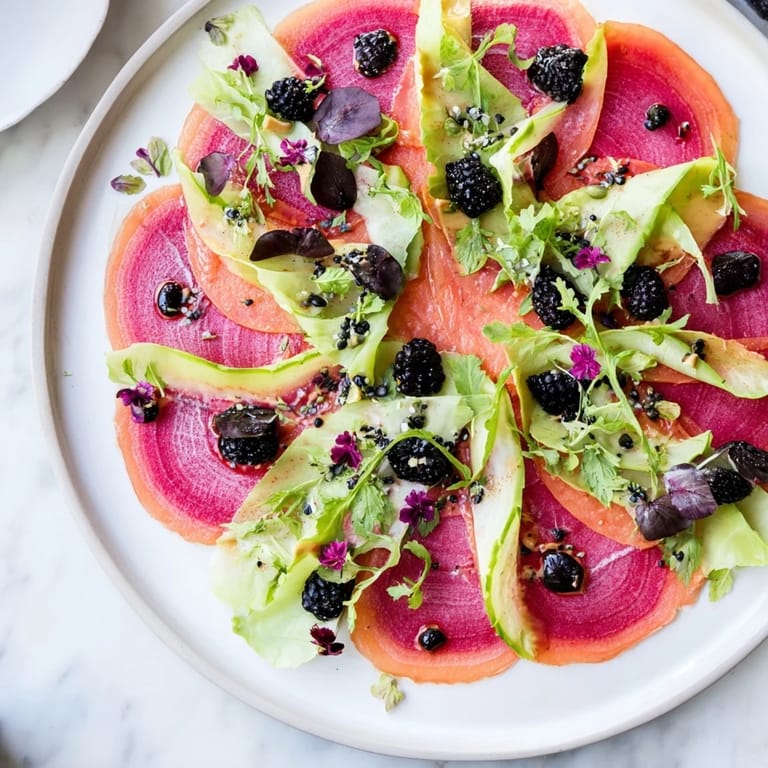
- Watermelon radish: Stunning interior rings of pink and white, sliced thin to show off that hidden geometry.
- Blackberries: They sit like jeweled shadows, their softness contrasting beautifully with the crisp vegetables.
- Black olives: Briny and assertive, they anchor the darker elements of the composition.
- Black tahini: If you can find it, use it; if not, regular tahini stirred with a tiny bit of squid ink does the job and feels a bit like you're in on a secret.
- Extra virgin olive oil: Good quality here makes a real difference—you'll taste it, not just use it.
- Lemon juice: Bright and essential, it keeps everything from tasting heavy.
- Honey: Just a touch, to round out the vinegar-sharp notes.
- Microgreens: Purple radish microgreens echo the color theme; basil adds a different kind of freshness.
Tired of Takeout? 🥡
Get 10 meals you can make faster than delivery arrives. Seriously.
One email. No spam. Unsubscribe anytime.
Instructions
- Slice your vegetables:
- Use a mandoline if you have one—it makes beets uniformly thin so they'll catch light evenly. If using a knife, take your time and let the blade do the work. You want them almost translucent at the edges.
- Build the golden layer:
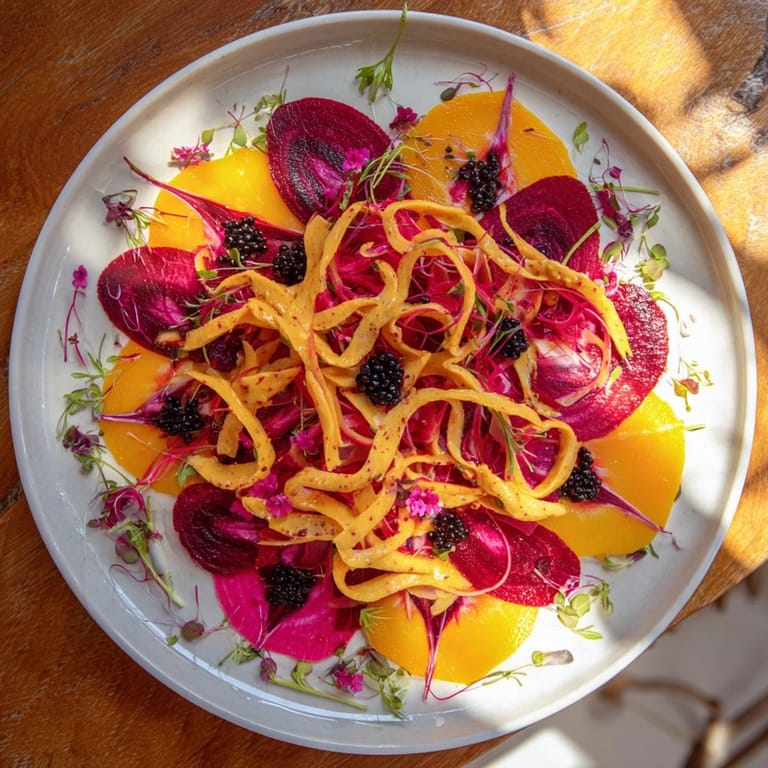
- Arrange the golden beet slices in overlapping arcs across your plate, leaving some space in the center. Think of them as petals or roof shingles, each one slightly offset from the last.
- Layer in the ruby:
- Tuck the red beet slices in between and around the golden ones, creating a patchwork. The color contrast is what makes this work, so don't be shy about the arrangement.
- Add the watermelon radish:
- Fan these out like they're catching light themselves. The interior rings will be visible from the edge, adding another layer of visual interest without crowding the plate.
- Scatter and distribute arugula:
- Loosely distribute the baby arugula across the vegetables—it doesn't need to cover everything. A few leaves here and there, with some breathing room, looks intentional rather than accidental.
- Create your shadows:
- This is where the dark elements come in. Place blackberries and olive halves strategically—not scattered everywhere, but positioned to create depth. Imagine where light would cast shadows on this composition.
- Make your dressing:
- Whisk olive oil, lemon juice, honey, salt, and pepper together. Taste it—it should be brightly acidic with a subtle sweetness.
- Drizzle with intention:
- Pour the dressing evenly across the plate. Watch how it pools slightly and makes the greens glisten. This is the moment where everything comes alive.
- Add the black tahini:
- Using the back of a spoon, dot small amounts of black tahini around the plate, then smear each dot slightly. The streaks look like shadows cast across the composition.
- Final garnish:
- Top with microgreens scattered across the heights of your arrangement. If using edible flowers, place them where they'll catch the eye without hiding the vegetables underneath.
- Serve straight away:
- This is best eaten within a few minutes while the textures are still distinct and the arugula hasn't fully wilted.
 Pin It
 What surprised me most about this dish was how it changed the conversation at the table. People started talking about what they were seeing instead of just eating, and that awareness made the flavors land differently—sharper, brighter, more intentional. It became less about feeding people and more about creating a moment.
Playing with Light and Shadow
The entire concept hinges on understanding how colors interact with light. The golden beet glows warm under bright light, while the red beet absorbs more light and appears deeper. The bright magenta and white rings inside the watermelon radish create their own kind of shadow play—a hidden detail that reveals itself only when you look closely. When you arrange these elements intentionally, you're not just plating food; you're creating a small landscape of visual contrast.
Vegetables as Architecture
Thin slicing is everything here. It's what transforms ordinary vegetables into something that feels delicate and refined. When vegetables are sliced thin, they become translucent, allowing light to pass through them rather than bounce off a thick, opaque surface. This changes how they look on the plate entirely—they feel weightless, almost architectural. The overlap pattern matters too; each slice supports the visual story of the one next to it.
Bringing It All Together
The beauty of this dish is that you're not constrained by a single perfect arrangement. Every time you make it, your eye will find different ways to balance the composition. The key is thinking about placement as a conversation between colors and shapes.
- Use odd numbers when you can—three blackberries feels more intentional than two or four.
- Leave negative space on the plate; it's as important as the ingredients themselves.
- Taste everything as you build to make sure the flavors are as considered as the arrangement.
 Pin It
 This dish reminds me that sometimes the most elegant meals are built on simplicity and attention to detail. It's worth making just to remember that cooking can be about creating something beautiful to look at, not just something good to eat.
Recipe Questions & Answers
- → How do I achieve thin and even beet slices?
Use a mandoline slicer or a very sharp knife to get uniform thin slices, which helps in layering and presentation.
- → Can the honey in the dressing be substituted?
Yes, for vegan preferences, agave syrup or maple syrup works well without altering the flavor balance.
- → What is the purpose of black tahini in the dish?
Black tahini adds a rich, earthy color contrast and a subtle nutty flavor that enhances the layered shadows.
- → How do I create the shadow effect with dark ingredients?
Arrange blackberries, black olives, and tahini behind and underneath the bright beet and radish layers to form striking silhouettes.
- → What are good beverage pairings for this dish?
Light white wines like Sauvignon Blanc or earthy reds such as Pinot Noir complement the fresh and dark flavor contrasts.