 Pin It
 There's a particular magic that happens when you stop trying to impress and instead just let beautiful things speak for themselves. I learned this the hard way at a sprawling vineyard gathering years ago, watching an older winemaker arrange nothing but cheese, grapes, and actual vines on a wooden board—no fuss, no pretense, just the honest flavors of the land arranged as they grew. That moment taught me more about hospitality than any elaborate recipe ever could.
I served this for the first time at a casual summer dinner, and I noticed something unexpected: people kept gravitating back to the board throughout the evening, not because they were hungry, but because the arrangement itself made them pause and breathe. The draping vines became a conversation starter, a touchstone, something that felt less like food and more like bringing a piece of the vineyard inside.
Ingredients
- Young, rustic cheese wheels (2 large, about 1.5 kg each): Look for tomme, young pecorino, or farmhouse varieties that still have that slightly unfinished, chalky texture—that's where the real flavor lives, and it photographs beautifully too.
- Fresh grapevine branches (3–4 long ones): These are the soul of the dish, so hunt them down at farmers markets or directly from vineyards if you can; they must be untreated with pesticides, and the leaves should still be vibrant and flexible.
- Fresh grapes (500 g, mixed colors if possible): Leaving them on the stem keeps them looking abundant and vineyard-authentic, plus it's easier for guests to grab.
- Rustic bread (1 baguette or country loaf, sliced): Serve it room temperature; warm bread steals the show and overpowers the delicate cheese.
- Assorted nuts (100 g—walnuts, almonds, hazelnuts): Toast them lightly if you have time; it deepens their flavor without requiring heat from your kitchen.
- Dried fruits (100 g—figs, apricots, dates): These add sweet pockets of flavor that balance the cheese's saltiness and the grapes' freshness.
Tired of Takeout? 🥡
Get 10 meals you can make faster than delivery arrives. Seriously.
One email. No spam. Unsubscribe anytime.
Instructions
- Arrange the vines first:
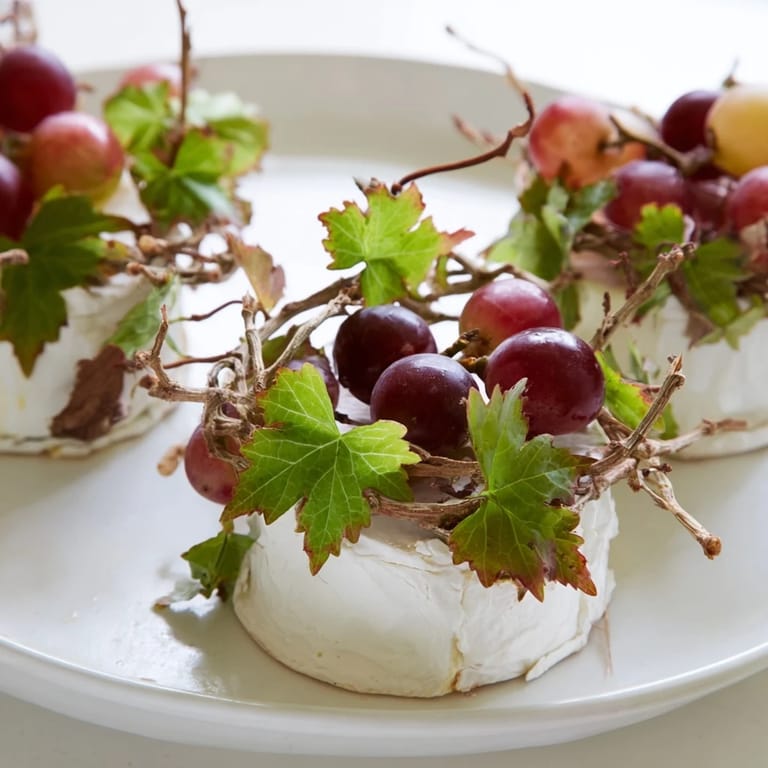
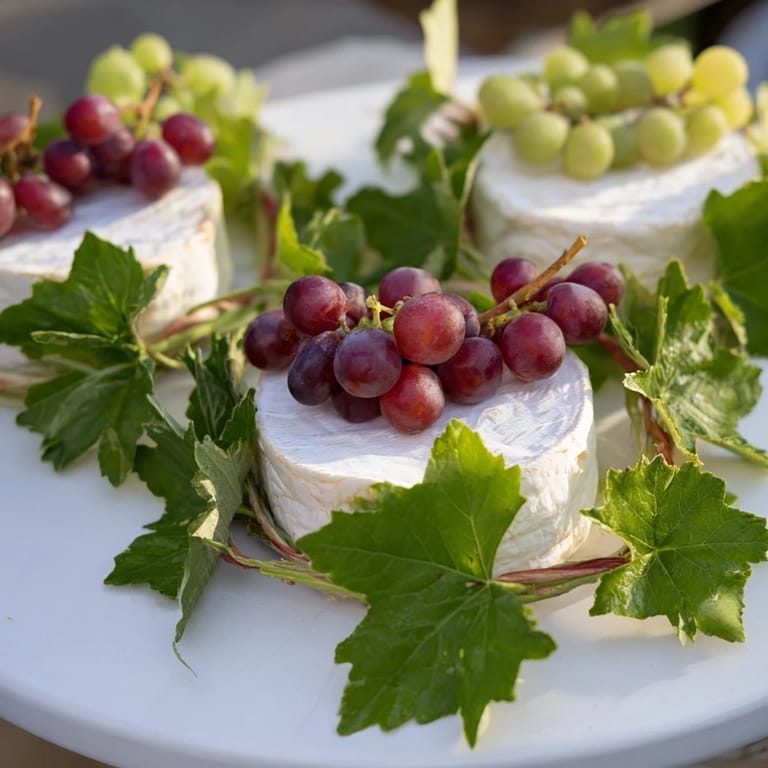
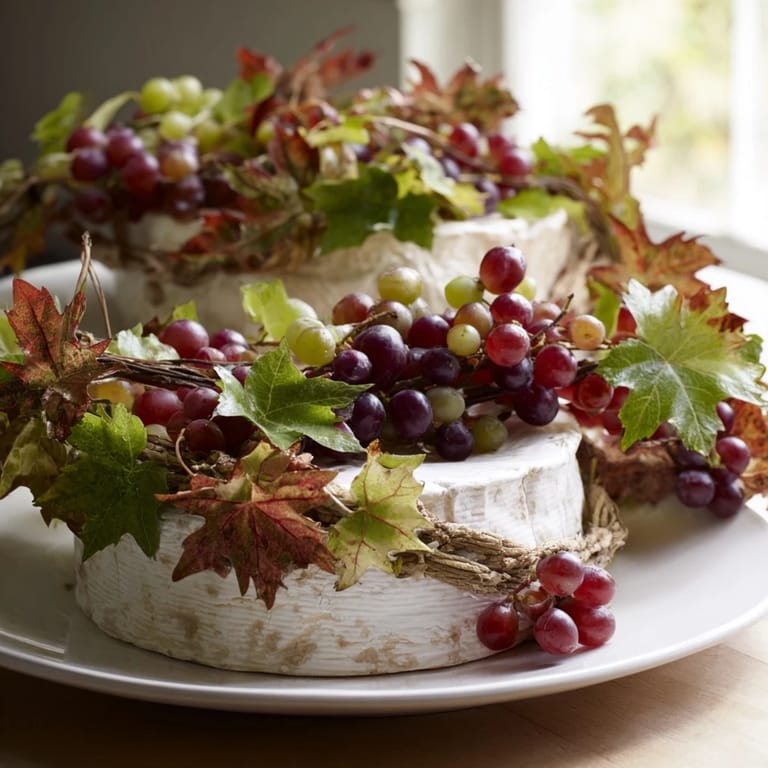
- Lay your grapevine branches directly onto the board or platter in loose, overlapping curves—imagine how they'd naturally fall if you gently tossed them. Let the leaves drape over the edges; this isn't about symmetry, it's about capturing that sense of abundance.
- Position the cheese wheels:
- Nestle the wheels wherever the vines look fullest, letting some vines lay across the cheese and others frame it. The interplay between the pale cheese and deep green leaves creates contrast that draws the eye.
- Tuck in the grapes:
- Cluster them in small groups along the vines and in gaps around the cheese—anywhere that feels visually empty invites color. If grapes are on the stem, let them cascade naturally.
- Add the accompaniments:
- Arrange bread slices, nuts, and dried fruits in small piles around the perimeter, leaving room for guests to cut cheese and move things around as they eat.
- Serve at room temperature:
- Cheese tastes best when it's not cold and tight, and the whole board invites leisurely sharing, not rushed eating.
 Pin It
 What surprised me most was how this arrangement transformed the eating experience itself—guests weren't just consuming food, they were participating in something that felt ceremonial and alive. The vines became permission to slow down, to break bread together, to reach across one another without apology.
Finding Your Vines
The hardest part of this recipe isn't the cooking—it's actually sourcing untreated grapevines. Visit farmers markets in late summer or early fall when vineyards are actively pruning, and build a relationship with a local grower. Some will even set aside branches for you if you ask a few weeks ahead. If you live near wine country, call vineyards directly; many are happy to hand over pruned vines that would otherwise be composted.
Choosing Your Cheese
The cheese is the anchor of this board, so choose wisely but not overthinkingly. Young, rustic wheels with that slightly raw, chalky quality taste more alive than aged, polished cheeses—they're also more forgiving if your board sits at room temperature for a couple of hours. Ask the cheesemonger for something that's still developing its character, something made locally if possible. The imperfections and irregular shape add to the rustic appeal.
Building Flavor Balance
This isn't just a board; it's an exploration of how flavors complement each other when you slow down and actually pay attention. The sweet snap of grapes cuts through the cheese's richness, the dried fruit adds concentrates sweetness, and the bread becomes almost a neutral canvas. If you want to elevate it, drizzle the cheese wheel lightly with raw honey or your best olive oil just before serving.
- Warm bread changes the entire experience—always serve it at room temperature or even slightly cool so the cheese stays the star.
- Let the cheese sit out for at least thirty minutes before serving so it softens enough to truly taste.
- If you're serving wine, a crisp white or light red will echo the vineyard theme and let the cheese sing.
 Pin It
 This dish reminds me that the most memorable meals aren't always the most complicated—sometimes they're the ones where you simply say yes to what's already beautiful and let people gather around it together. Serve it with intention, and watch how it brings people home.
Recipe Questions & Answers
- → What type of cheese works best for this dish?
Young, rustic cheeses such as tomme, young pecorino, or farmhouse varieties are ideal for their texture and mild flavor that complement fresh grapes.
- → Can I use treated grapevine branches?
It's important to use only untreated, organic grapevine branches to ensure safety and retain natural freshness.
- → How should the grapes be prepared?
Use fresh grapes left on the stem if possible and wash them thoroughly before arranging them among the vines and cheese.
- → Are there any recommended accompaniments?
Sliced rustic bread, assorted nuts like walnuts or almonds, and dried fruits such as figs or apricots enhance the flavors and textures.
- → What is the best way to serve this dish?
Serve at room temperature on a large wooden board or platter, allowing guests to slice the cheese and pair it with grapes and sides.