 Pin It
 I'll never forget the first time I created a Rainbow Pride board at a friend's celebration. Walking into that kitchen, I knew this wasn't just about arranging fruit and vegetables—it was about crafting something that told a story of joy, inclusion, and vibrant togetherness. The moment I laid down that first crimson line of tomatoes and strawberries, I felt the magic begin. Every color became a promise of celebration, and I realized that this simple grazing board would become the centerpiece of something far more meaningful than just food.
I still think about the quiet moment before my niece's Pride party when the board was finally complete. The living room was empty except for me and those six perfect color bands curving across the board like a promise. When people started arriving and I saw their faces light up—that's when I knew this board would become a tradition for every celebration we host.
Ingredients
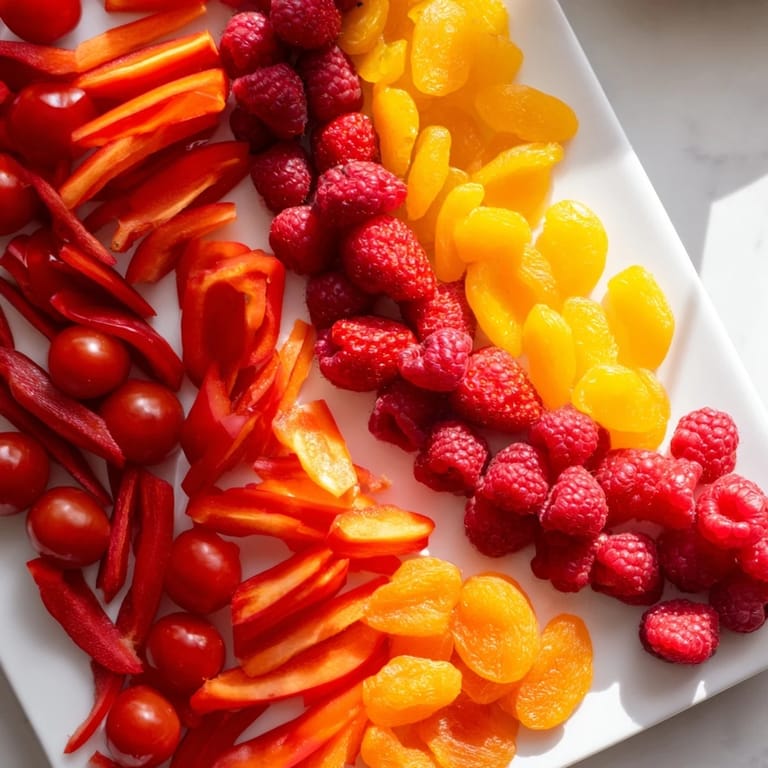
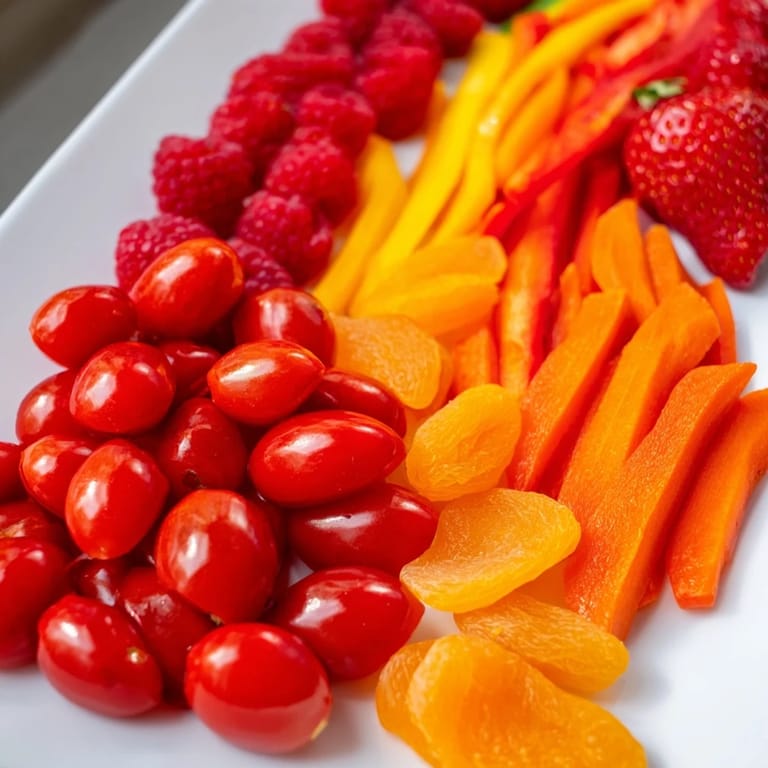
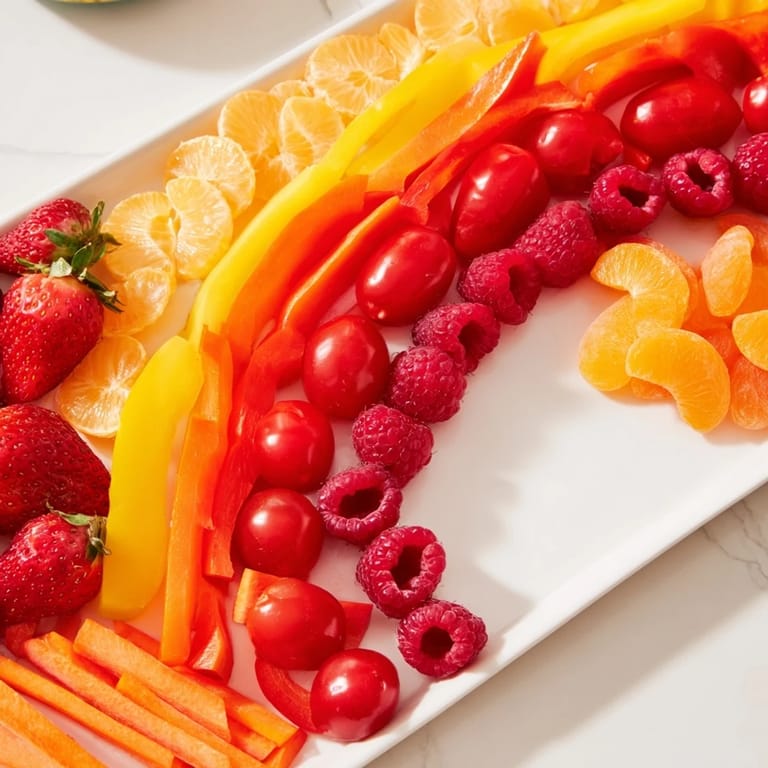
- Red section (cherry tomatoes, strawberries, red bell pepper, raspberries): Choose the most vibrant tomatoes and berries you can find—they're the anchor of your rainbow and deserve to shine brightest. If strawberries aren't at their peak, the raspberries alone are stunning.
- Orange section (bell pepper strips, mandarin segments, dried apricots, baby carrots): The dried apricots bring a chewy sweetness that balances the crisp peppers beautifully. Baby carrots are prettier than cut ones and stay fresher longer.
- Yellow section (pineapple chunks, yellow bell pepper, yellow cherry tomatoes, cheddar cubes): Fresh pineapple is non-negotiable here—it's the yellow that glows. The cheddar cubes add a savory pop that keeps this section from being too sweet.
- Green section (green grapes, cucumber slices, sugar snap peas, guacamole): The green grapes are your workhorse—they fill space beautifully and stay fresh. Keep the guacamole in a small bowl to prevent browning and to make it feel intentional, not like an accident.
- Blue section (blueberries, blue corn chips, blackberries, blue cheese): This is where you get creative with color theory. The blue cheese crumbles add a sophisticated edge, and the tortilla chips give that necessary texture contrast.
- Purple section (purple grapes, blackberries, purple cauliflower, dried figs): Raw purple cauliflower florets are a revelation—delicate and beautiful. The dried figs tie this section together with their deep, sophisticated sweetness.
- Accompaniments (gluten-free crackers, hummus): These aren't afterthoughts—they're the bridge between colors. Choose crackers that are sturdy enough to hold toppings but won't overpower the fresh produce.
Tired of Takeout? 🥡
Get 10 meals you can make faster than delivery arrives. Seriously.
One email. No spam. Unsubscribe anytime.
Instructions
- Gather and prepare:
- Wash everything under cool water and pat completely dry—wet vegetables slip around and won't stack prettily. Halve the berries, slice peppers into strips about the width of your pinky finger, and cut cucumbers at a slight angle for elegance. Take your time here because this is the meditation moment before the magic happens.
- Map your canvas:
- Before you place a single ingredient, imagine gentle curved lines flowing across your board from one end to the other. These lines don't need to be perfectly straight—in fact, the slight waves make it feel more alive and intentional. Start with red at one end and picture where blue will finish.
- Build your red foundation:
- Begin by creating a flowing band of red ingredients across one third of your board. Layer cherry tomatoes and strawberries, letting them nestle against each other like they're holding hands. The raspberries fill gaps and add depth.
- Progress through the spectrum:
- Move directly into orange, then yellow, then green, building as you go. Don't worry about perfection—in fact, the slight imperfections are what make this feel genuine and human. Each color should flow into the next like a sunset melting into evening.
- Honor the blue and purple:
- These final colors are your crescendo. The blueberries and blackberries create natural shadows and depth. The deeper purple of the figs and cauliflower give the finish a sophisticated quality.
- Place your bowls intentionally:
- Set the guacamole and hummus bowls where they feel right—perhaps at the heart of their respective colors, or nestled in a gap. These little vessels are part of your art.
- Fill the silence:
- Step back and look. Those small gaps you see? Fill them with extra crackers, a few more grapes, or another strip of pepper. Let the board look abundant and generous, like it's overflowing with celebration.
 Pin It
 The most beautiful moment wasn't when the board was finished—it was when my friend's child pointed at it and said, 'It's like eating a rainbow, but it's real.' In that moment, I realized this board had become a small act of love, a way of saying we see you, we celebrate you, and your joy matters enough to arrange strawberries by color for an hour.
The Psychology of Color on Your Table
There's something primal about arranging food by color. It goes beyond aesthetics—it's about the conversation the board starts before anyone even takes a bite. When people see those distinct color bands, their brains relax. There's an order to it, a sense that someone cared enough to make beauty. It says, 'You're worth the effort.' That's powerful. Over the years, I've noticed that a carefully arranged rainbow board changes how people eat and interact. They slow down. They admire before they consume. They're more likely to try something new because the visual promise of flavor and variety is right there in front of them.
Adapting for the Season and What's Local
The magic of this board is that it doesn't need to be exactly the same twice. In summer, go heavy on berries and stone fruits. In fall, think roasted root vegetables, pomegranate arils, and deeper tones that feel more autumnal. Spring brings fresh peas, baby vegetables, and that explosion of color that only spring produce can offer. The rule is simple: find whatever's most beautiful and in-season in your area, and if it matches the color you need, it belongs on your board. I've made this board with beets, with purple cabbage, with orange persimmons and yellow quinoa if I'm serving it cold. The framework is yours to play with. What matters is that you're working with what's at its peak, because food at its peak always tastes and looks better.
Making It Work for Every Dietary Need
This board is already naturally vegetarian and mostly gluten-free if you choose the right crackers, but it's also endlessly adaptable to other needs. Vegan? Swap the cheddar and blue cheese for beautiful dairy-free alternatives or just let those spaces fill with more produce. Nut-free? Check your cracker labels carefully and swap them for seeds or additional vegetables if needed. Allergies to specific produce? The beauty is that each color band has multiple options—if someone can't eat tomatoes, the strawberries are right there carrying the red. This board is inclusive by design because it celebrates variety within every single color.
- Always check packaged ingredient labels, especially crackers and dried fruits, for hidden allergens
- Mention specific allergies to guests when they arrive so they know what's safe for them
- Keep serving utensils clean or provide a separate utensil for each section to prevent cross-contamination
 Pin It
 Every time I build this board, I'm reminded that celebration doesn't have to be complicated. Sometimes it's just about taking what grows and matters and arranging it with intention, color by color, piece by piece. That's love on a platter.
Recipe Questions & Answers
- → How do I maintain the clean color separation on the board?
Sort ingredients strictly by color and arrange them in gentle curving lines without overlapping. Using separate bowls for dips and cheeses helps keep flavors and colors distinct.
- → Can I prepare this board in advance?
Prepare and wash all ingredients beforehand, but arrange them shortly before serving to maintain freshness and vibrant colors.
- → What are good beverage pairings for this grazing board?
Light drinks like sparkling water, crisp white wine, or dry rosé complement the fresh flavors and colorful presentation beautifully.
- → How can I adapt this board for dietary preferences?
Omit dairy cheeses or replace with plant-based alternatives for vegan or dairy-free options while keeping the vibrant color arrangements intact.
- → What tools are best for assembling the board?
Use a large serving board or platter, small bowls for dips, a sharp knife for slicing, and tongs or forks for easy ingredient placement.
- → Are there any allergen considerations to be aware of?
Check crackers and accompaniments for nuts, gluten, or sesame. Dairy cheeses are included but can be substituted as needed.