 Pin It
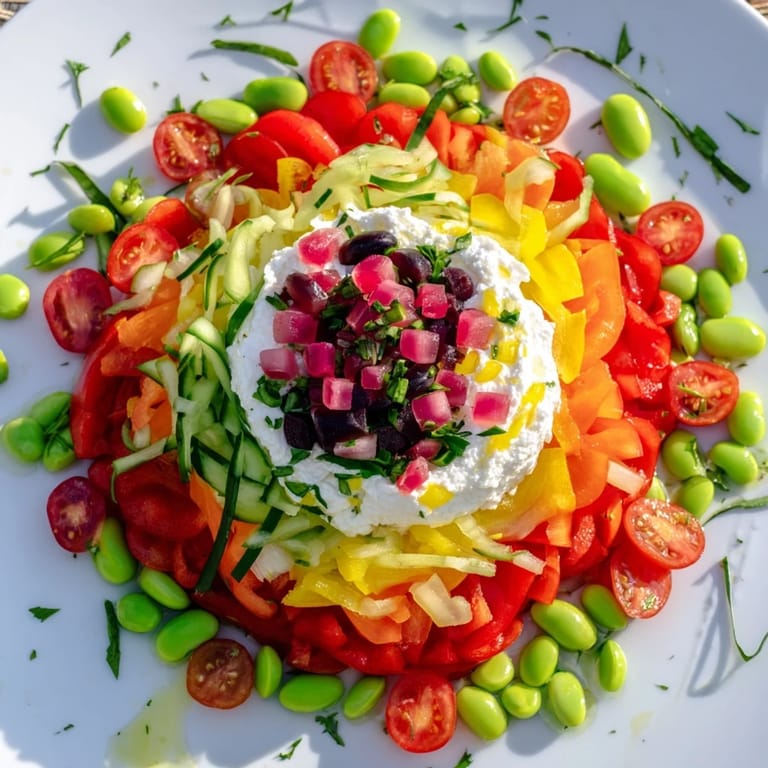
 I was standing in my kitchen on a gray afternoon when a beam of sunlight hit a glass of water and scattered into a rainbow across the counter. That simple moment sparked something—what if I could capture those colors on a plate? The Prism Burst was born from that thought, a salad that transforms ordinary vegetables into something that feels almost too beautiful to eat. It's the kind of dish that makes people pause before digging in, cameras out, admiring how the reds and oranges and purples fan out like nature's own light show. But here's the secret: it tastes as good as it looks.
I made this for my sister's birthday potluck, nervous about how it would travel. When I set it down on the table, the room actually went quiet for a moment—then everyone crowded around asking what it was. Watching my nephew carefully study the color arrangement before asking if he could eat it with his eyes closed made me realize this dish does something beyond feeding people. It creates a little moment of wonder.
Ingredients
- Ricotta cheese (1 cup): The creamy white anchor that everything radiates from—use full-fat if you want richness, or swap in Greek yogurt for something tangier and lighter.
- Extra-virgin olive oil (3 tablespoons total): Quality matters here since it's not hiding in anything else; good oil lifts the whole thing.
- Lemon zest (1 teaspoon) and juice (1 tablespoon): These prevent the salad from tasting flat and add a bright snap that wakes up your palate.
- Cherry tomatoes (1/2 cup, halved): Pick ones that are actually ripe and fragrant—they're the red heart of this whole thing.
- Red and orange bell peppers (1/4 cup and 1/2 cup, thinly sliced): Slice them thin so they catch the light and feel delicate on your fork.
- Shredded carrots (1/4 cup): Raw carrots bring a subtle crunch that holds up even if the salad sits for a bit.
- Yellow bell pepper (1/2 cup, thinly sliced): This is your sunshine layer—don't skip it.
- Corn kernels (1/4 cup): Fresh or thawed frozen both work; the sweetness balances the brightness of everything else.
- Cucumber (1/2 cup, thinly sliced): Slice it just before serving so it doesn't weep and water down your colors.
- Edamame (1/4 cup, cooked): They add protein and a satisfying pop when you bite into them.
- Fresh herbs (2 tablespoons, chopped): Parsley, basil, or mint all work—use what you have or what smells freshest.
- Blueberries (1/3 cup): They roll around in the blue section, adding sweetness and visual drama.
- Purple cabbage (1/4 cup, finely shredded): This is your true blue—it's almost jewel-like if you shred it thin.
- Red grapes (1/2 cup, halved): They bring a grape-like sweetness that echoes the blueberries but in violet territory.
- Radishes (1/4 cup, thinly sliced): They're peppery and pale pink-violet, and they add bite to the outer layer.
- Honey or agave (1 teaspoon): Just enough to round out the dressing without making it taste like dessert.
- Salt and pepper: Season everything separately as you go—it makes a real difference.
Tired of Takeout? 🥡
Get 10 meals you can make faster than delivery arrives. Seriously.
One email. No spam. Unsubscribe anytime.
Instructions
- Build your white foundation:
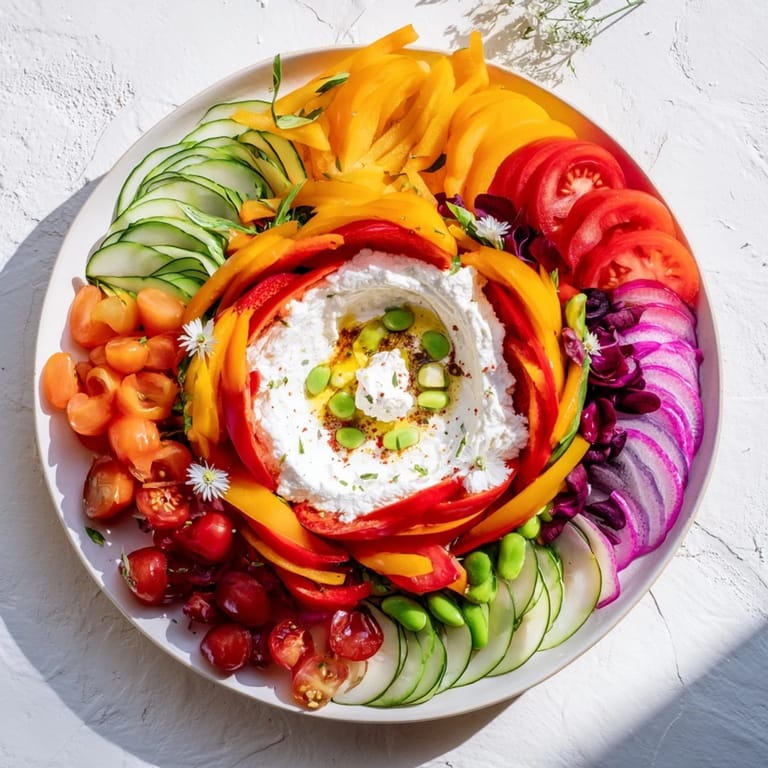
- Mix the ricotta with olive oil, lemon zest, salt, and pepper in a small bowl until it looks like creamy clouds. Spoon it onto the center of your platter and spread it into a soft white circle—this is your anchor point, so take a breath and let it be imperfect.
- Organize your colors:
- Set out separate small bowls for each color group so you're not scrambling when you start arranging. This prep step saves you from looking stressed while you're creating something beautiful.
- Fan out the rainbow:
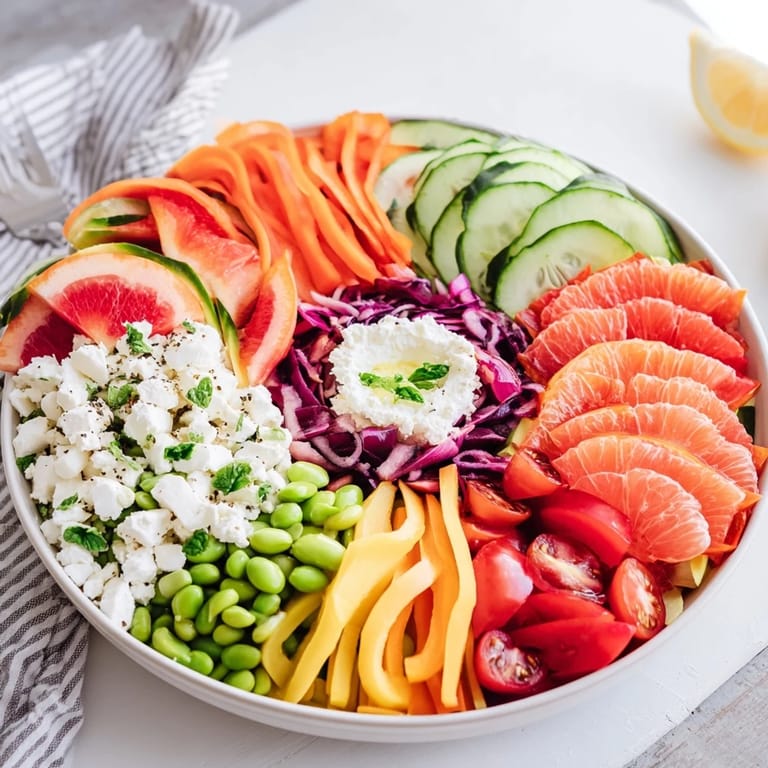
- Starting with red, then orange, yellow, green, blue, and finally violet, arrange each layer in a fan pattern radiating outward from the white center. Think of it like you're painting with your hands—let the colors touch at the edges but keep each stripe visible and distinct.
- Make the dressing:
- Whisk together olive oil, lemon juice, honey, salt, and pepper in a small bowl until it's smooth and emulsified. Taste it and adjust the seasoning because this is what brings all the flavors together.
- Final touches:
- Drizzle the dressing over the salad just before serving, or pass it on the side so people can dress it to their taste. Finish with a scatter of fresh herbs and a crack of black pepper, then step back and admire what you made.
 Pin It
 There's something almost meditative about arranging this salad, watching each vegetable fall into its place like you're solving a gentle puzzle. By the time you're done, you realize you've created something that's genuinely beautiful—and that beauty is part of what makes it taste better.
Color Theory on Your Plate
The whole point of this salad is that it makes you see vegetables differently. Instead of thinking about carrots or peppers as side dishes, you're seeing them as artists see pigment—each one contributing to a larger vision. The arrangement catches light differently depending on the angle you view it from, so even at a table full of people, everyone's seeing a slightly different version of the same salad. That shift in perspective, from practical eating to appreciative looking, is where the magic happens.
Texture Play and Flavor Balance
What makes this work isn't just the colors—it's the unexpected textures and flavors bumping up against each other. Soft creamy ricotta meets crisp cucumber. Peppery radishes play against sweet corn and grapes. The lemon dressing cuts through all of it with brightness. There's also a delicate balance between the vegetables that want to stay firm and the ones that soften as they sit, so the longer the salad sits, the more the flavors begin to meld and shift.
Ways to Make It Your Own
The beautiful thing about this salad is that it's a template, not a rigid rule. If you don't love blueberries, use red cabbage for blue. If radishes feel too spicy, swap in thinly sliced beets or pink grapefruit segments. Some people add toasted nuts or seeds for crunch, others layer in microgreens or edible flowers for extra visual interest. The structure stays the same—the radiating fan from white to violet—but the specifics are entirely yours to play with.
- For extra richness, try vegan cream cheese or cashew cream if you want to keep it plant-based.
- If you're making this ahead, prep all the vegetables separately and only assemble 30 minutes before serving.
- Pair it with something light and crisp like Sauvignon Blanc or just a cold sparkling water with lemon.
 Pin It
 This salad is proof that food doesn't have to be complicated to feel special. It's just vegetables arranged with intention, a creamy white base, and a bright dressing—but together, they create something that feels like celebration. Make it for someone and watch their face light up.
Recipe Questions & Answers
- → What ingredients create the colorful layers?
Red cherry tomatoes and bell peppers, orange bell peppers and shredded carrots, yellow bell peppers and sweet corn, green cucumber, edamame and herbs, blue blueberries and purple cabbage, violet grapes and radishes form the distinct layers.
- → How is the central white base prepared?
The base is made by mixing ricotta cheese or Greek yogurt with olive oil, lemon zest, salt, and pepper, then spreading it on the serving platter as a creamy foundation.
- → What dressing complements the salad best?
A light dressing of olive oil, lemon juice, honey or agave syrup, salt, and pepper adds brightness without overpowering the fresh flavors.
- → Can this salad accommodate dietary restrictions?
Yes, it suits vegetarian and gluten-free diets. Vegan versions can use plant-based cream cheese alternatives instead of dairy.
- → How should the salad be served for best presentation?
Arrange each color group radiating outward from the central base in visible stripes, resembling a prism fan, and garnish with fresh herbs and black pepper.
- → Are there optional additions for texture or flavor?
Toasted nuts or seeds, microgreens, and edible flowers can be added for extra texture and visual appeal.