 Pin It
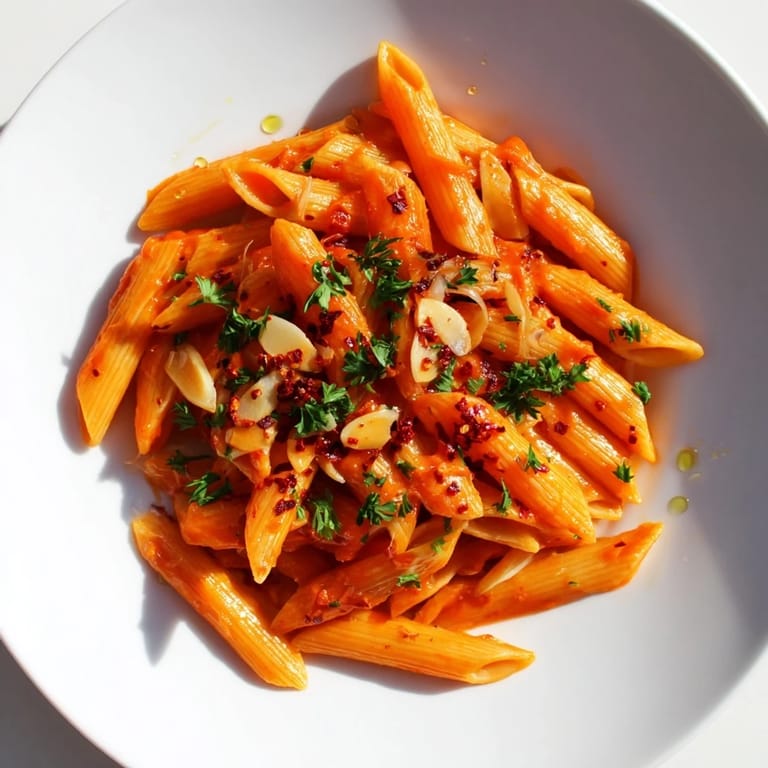
 There's something about the smell of garlic hitting hot oil that makes you want to drop everything and cook. I discovered penne all'arrabbiata on a random Tuesday evening when I had nothing in my pantry but pasta, canned tomatoes, and some aggressive red chili flakes that had been sitting there for months. What started as desperation turned into one of those magical kitchen moments where simplicity actually tastes like luxury. The heat, the garlic, the bright tomato sauce—it was so good I made it again the next night, and the night after that.
I remember cooking this for a friend who'd been having a rough week, and watching her face light up at that first bite told me everything. She asked if I'd made the sauce from scratch that morning, and I had to laugh and tell her it was genuinely just canned tomatoes and about five ingredients. She went home and made it that same night, texted me a photo of her plate, and said it was exactly what she needed. That's when I realized this dish doesn't need fancy or complicated—it just needs to be made with attention.
Ingredients
- 400g penne rigate: The ridges hold the sauce like little hands, making every bite count—skip the smooth pasta unless you like sauce sliding off.
- Extra virgin olive oil (3 tbsp): This isn't just cooking oil; it's the backbone of flavor, so use something you actually enjoy tasting.
- 4 large garlic cloves, thinly sliced: Sliced, not minced—you want each piece to have a little personality and texture.
- 1–2 tsp red chili flakes: Start with 1 teaspoon if you're unsure about heat; you can always add more once you taste it.
- 800g peeled whole tomatoes (canned): Two 400g cans work perfectly, and crushing them by hand is oddly satisfying.
- 1 tsp sea salt and 1/2 tsp black pepper: Season as you taste; the sauce will intensify as it simmers down.
- 2 tbsp fresh flat-leaf parsley: Adds a bright note at the end that wakes everything up.
Tired of Takeout? 🥡
Get 10 meals you can make faster than delivery arrives. Seriously.
One email. No spam. Unsubscribe anytime.
Instructions
- Boil the pasta:
- Fill a large pot with salted water and bring it to a rolling boil—taste the water and it should feel like the sea. Drop in your penne and set a timer according to the package, but start checking a minute or two early for that perfect al dente bite where the pasta still has resistance.
- Start the sauce:
- While pasta cooks, warm olive oil in a large skillet over medium heat. Once shimmering, add your sliced garlic and chili flakes, then listen for the gentle sizzle and breathe in that incredible aroma—this is the moment the dish comes alive.
- Build the sauce:
- After about a minute when the garlic is golden and fragrant but not at all brown, add your crushed tomatoes along with salt and pepper. Give it a stir and let it bubble gently for 12–15 minutes, stirring every few minutes, until the sauce loosens up and takes on a deeper color.
- Bring it together:
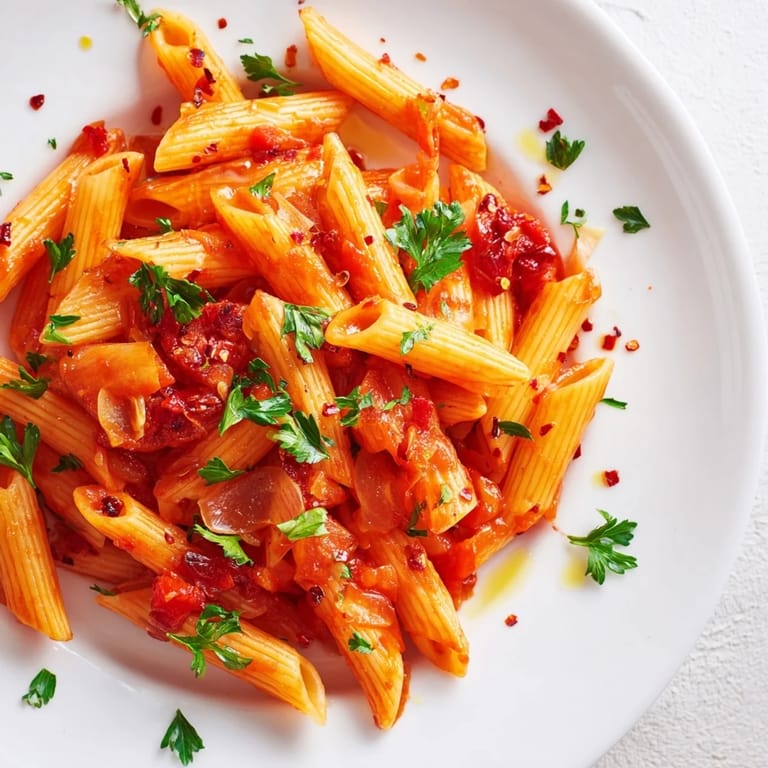
- Drain your pasta but save that starchy pasta water first—it's liquid gold for loosening the sauce. Toss the hot penne directly into the skillet with the sauce, adding a splash of pasta water until the sauce coats everything evenly and clings to each piece.
- Finish and serve:
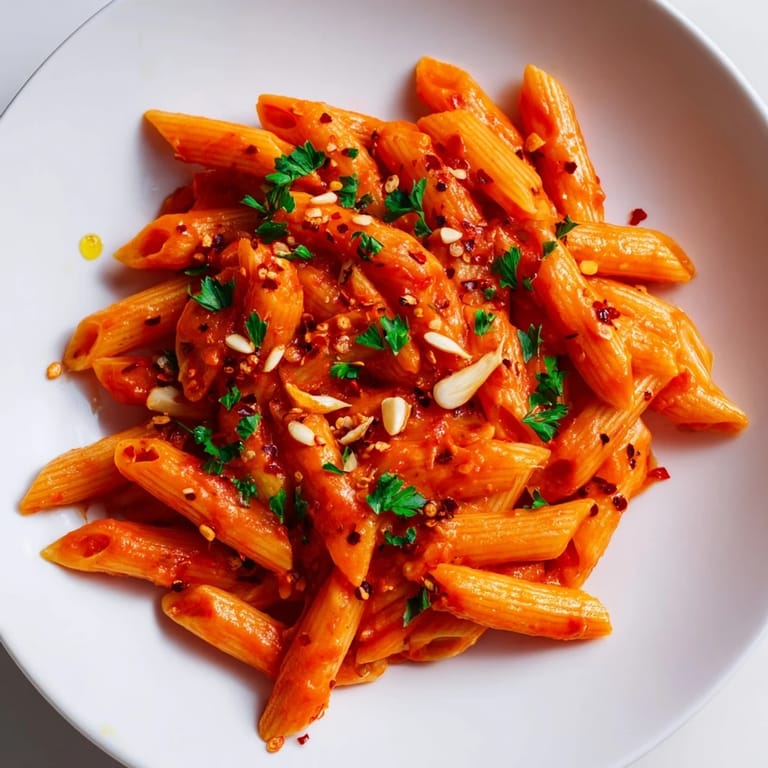
- Remove from heat, scatter the fresh parsley over the top, drizzle with a little more olive oil, and serve immediately while everything is hot and the flavors are singing.
 Pin It
 There was this moment when I served this to my grandmother, who grew up eating Roman pasta every single day, and she took a bite and just nodded without saying anything. Then she had a second bite and looked at me and said 'You're not ruining it with cream or cheese,' and somehow that felt like the greatest compliment I've ever gotten in the kitchen.
The Soul of Simplicity
Arrabbiata doesn't hide anything—no cream to smooth over mistakes, no cheese to mask flavors, no complicated technique. What you have is what you taste, which means every single ingredient needs to matter and be good. This is why using actual good olive oil and whole tomatoes makes such a difference. There's nowhere for mediocre ingredients to hide, and that's the whole point. It's a dish that taught me that sometimes the best cooking is about respecting what you're working with rather than trying to improve it.
Heat and Balance
The beauty of the chili isn't about making your mouth hurt; it's about that tingle that makes you feel alive, that keeps your mouth interested. Some people are scared of it, some people love it aggressive, but the real magic is when the heat plays against the brightness of the tomato and the buttery warmth of the garlic. You're not going for painful—you're going for 'oh, this has personality.' If you make it and it's too spicy, next time use less or pair it with crusty bread and something cool to drink.
Making It Your Own
Purists will tell you that arrabbiata should never have cheese, but I think that rule exists because it's so good without it that adding cheese would be unnecessary. That said, there's no police coming to your kitchen, so if you want a sprinkle of Parmesan or some nutritional yeast on top, do it. What matters is that you're actually making something and sitting down to eat it, not that you're following someone else's rules.
- A good crisp white wine like Verdicchio or even a light Chianti goes beautifully alongside and cuts through the richness.
- Day-old crusty bread is essential—not for the pasta, but for soaking up the sauce left in your bowl.
- Leftovers reheat gently with a splash of water, though honestly I find myself eating this straight from the fridge the next day cold.
 Pin It
 This dish lives in that perfect space where it's humble enough to make for yourself on a lonely Thursday, but generous enough to cook for people you love without ever feeling like you're taking shortcuts. That's the real power of something this simple.
Recipe Questions & Answers
- → How is the sauce made spicy?
The sauce gets its heat from red chili flakes gently sautéed with garlic, which infuse the olive oil before combining with crushed tomatoes.
- → Can I adjust the spiciness level?
Yes, you can reduce or increase the amount of chili flakes based on your heat preference without affecting the overall flavor balance.
- → What pasta is ideal for this dish?
Penne rigate is preferred as its ridges hold the sauce well, but other tubular pastas can also work.
- → How do I ensure the sauce coats the pasta evenly?
Reserve some pasta cooking water before draining and add it to the sauce. This starchy water helps loosen and bind the sauce to the pasta.
- → What garnish enhances the dish?
Fresh flat-leaf parsley finely chopped adds bright herbal notes, while a drizzle of extra virgin olive oil enriches the final plate.