 Pin It
 Last New Year's Eve, I was standing in my kitchen at midnight watching the ball drop on a tiny laptop screen, bowl of tahini-dressed salad in hand, and it hit me that this wasn't the champagne-and-caviar moment I'd imagined. It was better. There's something about black-eyed peas—this humble Southern tradition of eating them on New Year's Day for luck and prosperity—that feels like you're in on a secret older than you are. When I decided to make a salad version instead of the traditional stew, I wasn't trying to reinvent the wheel; I was just hungry for something bright and fresh that still honored all that good fortune.
My neighbor stopped by that afternoon, uninvited but welcome, and I watched her face light up when she tasted it. She'd grown up eating Hoppin' John with her grandmother in Georgia, and she said this version felt like someone had opened a window in the traditional recipe and let the sun pour in. That's when I knew I'd landed on something honest—not a trend, not a shortcut, but a real way to honor the past while making space for something new.
Ingredients
- Black-eyed peas: Use dried if you have time to soak and cook them, but canned work beautifully when you're in a rush—just rinse them really well to wash away the canning liquid.
- Chickpeas: These add extra protein and a subtle nuttiness that rounds out the black-eyed peas without overpowering them.
- Long-grain rice: Cool it before adding so the warm grains don't wilt your vegetables; jasmine or basmati works too if that's what's in your cupboard.
- Fresh vegetables: The red bell pepper, celery, and red onion are your flavor base—don't skip them or rush the chopping because those little bits of crunch matter.
- Cherry tomatoes: Halve them instead of quartering so they don't get lost in the mix and so the dressing can coat them evenly.
- Green onions and parsley: These finish the salad with brightness; add them right before serving if you're making this ahead so they stay crisp and alive.
- Tahini dressing: This is the entire soul of the dish—creamy but not heavy, nutty but not overwhelming, and it ties everything together in a way that no vinaigrette alone could do.
Tired of Takeout? 🥡
Get 10 meals you can make faster than delivery arrives. Seriously.
One email. No spam. Unsubscribe anytime.
Instructions
- Prepare your peas:
- If using dried black-eyed peas, give them a quick rinse, then soak for at least 4 hours or overnight to soften them. The next day, drain and cook them gently in simmering water for 30 to 40 minutes until they're tender enough to squish between your fingers but not falling apart. Let them cool completely before adding to your salad.
- Assemble the base:
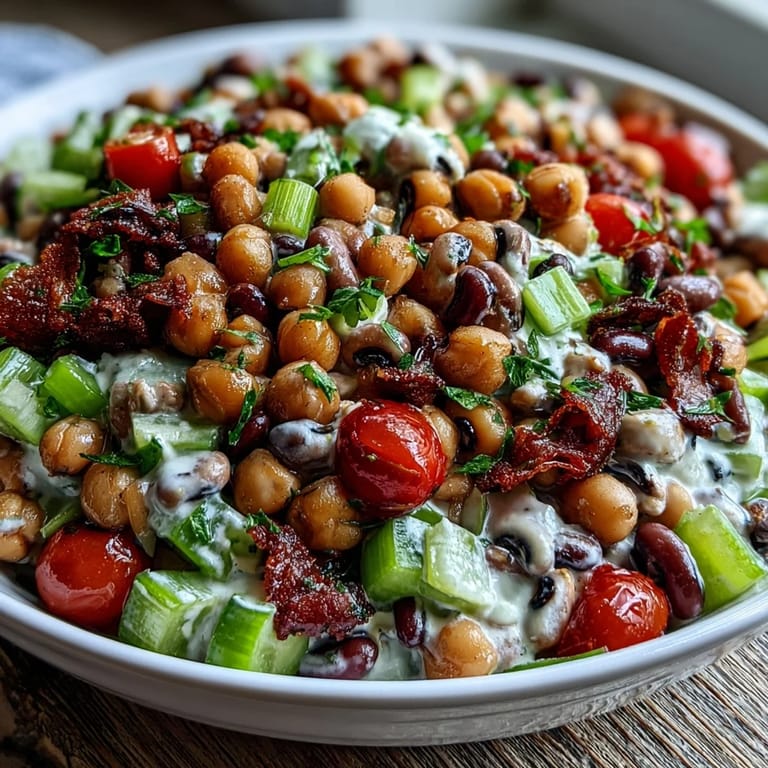
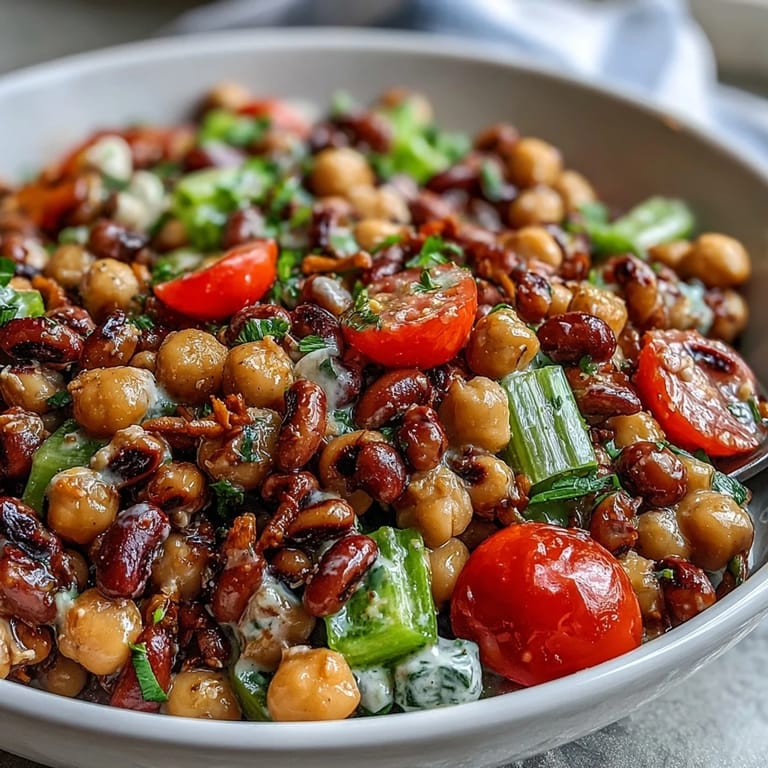
- In your largest bowl, combine the cooled black-eyed peas, drained chickpeas, cooled rice, diced red bell pepper, diced celery, finely chopped red onion, halved cherry tomatoes, sliced green onions, and fresh parsley. Take a moment to look at it before moving on—you want everything visible and evenly distributed.
- Make the tahini magic:
- In a smaller bowl, whisk together the tahini, lemon juice, apple cider vinegar, olive oil, maple syrup, and minced garlic until everything is smooth. Add salt, pepper, and smoked paprika if using, then slowly drizzle in water one tablespoon at a time while whisking until you reach a consistency that's creamy and pourable but not thin.
- Bring it all together:
- Pour your dressing over the salad and toss everything gently but thoroughly, trying not to crush the vegetables in the process. Taste as you go and add a pinch more salt or lemon if it needs brightness.
- Rest and serve:
- You can eat this immediately, but it's even better if you let it sit in the refrigerator for an hour so all the flavors get acquainted. Give it one more gentle toss before serving, and watch how the dressing settles into everything.
 Pin It
 There's a particular quiet that falls over a table when people are eating something truly good and also meaningful. That New Year's Day lunch, my neighbor had seconds while telling me about her grandmother's kitchen in Atlanta, and I realized that food is the truest time machine we have access to. This salad does that work—it reaches back while moving forward.
The Beauty of Tahini in New Year's Food
Tahini gets overlooked in American kitchens, relegated to hummus or Middle Eastern sides, but it's actually the perfect bridge between the hearty tradition of Hoppin' John and the fresh, bright salad format. It brings richness without heaviness, warmth without weight, and a subtle earthiness that makes everything taste like it's been cooking longer than it actually has. The moment the tahini hits the lemon juice, chemistry happens—everything emulsifies into something that's both comforting and alive.
Why This Works as a New Year's Tradition
The original Hoppin' John is about luck, prosperity, and continuity—eating what your ancestors ate and trusting that tradition holds real power. This version doesn't abandon that; it just translates it into a language that makes sense right now. You're still eating the lucky peas, still honoring the custom, but you're doing it in a way that feels connected to who you are today, not just who came before.
Make It Your Own
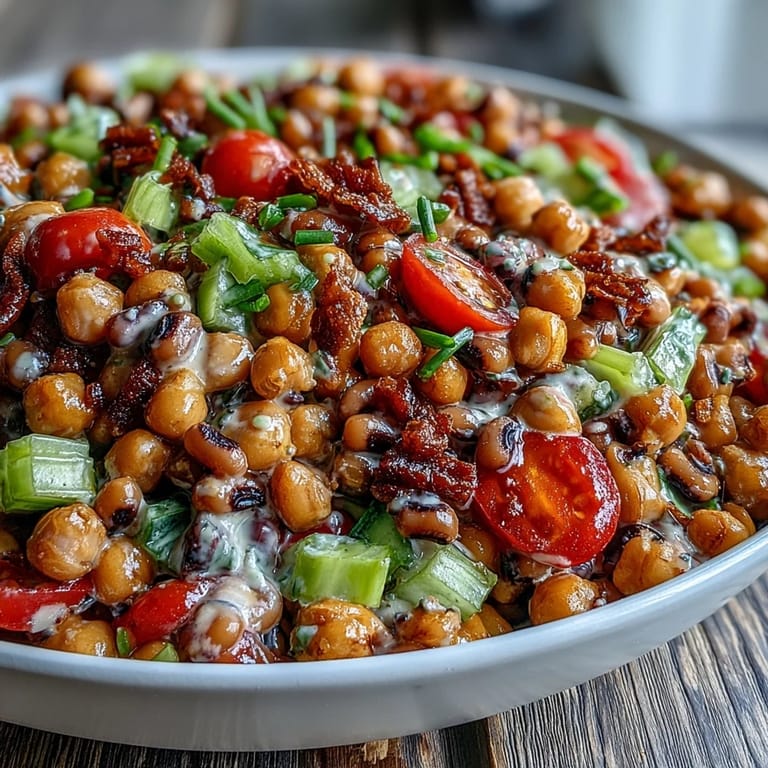
This recipe is sturdy enough to handle additions without losing its center. Some people add diced avocado for richness, others fold in a handful of chopped kale for extra greens, and I've had friends ask if they can add their own proteins like grilled tofu or crumbled feta. The point is that the base is strong enough to support your variations, your ingredients, and your own small traditions.
- For heat, dice a jalapeño or add a pinch of cayenne right into the tahini dressing and let it infuse.
- Leftovers keep beautifully for up to 3 days in an airtight container in the refrigerator, and they actually taste better the next day once everything melds.
- This pairs wonderfully with sparkling wine or a crisp Sauvignon Blanc if you're making it for a gathering.
 Pin It
 This salad is proof that tradition doesn't have to stay frozen in time to mean something. It changes, it travels, and it becomes part of your story while honoring the ones that came before.
Recipe Questions & Answers
- → Why is Hoppin' John eaten on New Year's Day?
Black-eyed peas symbolize luck and prosperity in Southern folklore, while the round shape represents coins. Eating Hoppin' John on New Year's Day is believed to bring good fortune and financial success for the coming year.
- → Can I make this salad ahead of time?
Absolutely. The flavors actually improve after sitting in the refrigerator for a few hours. Store leftovers in an airtight container for up to 3 days, though add fresh avocado just before serving if using.
- → What can I substitute for tahini?
Creamy cashew butter or almond butter work well as alternatives. For a nut-free option, try Greek yogurt or mayonnaise blended with extra lemon juice and a touch of sesame oil for that nutty flavor.
- → Is this dish gluten-free?
Yes, as written this is naturally gluten-free. Just ensure your tahini is certified gluten-free and check labels on canned goods if you have severe sensitivities. The rice and all vegetables are safe.
- → How do I store leftovers?
Keep refrigerated in an airtight container for up to 3 days. The dressing may thicken when cold—simply stir in a splash of water or lemon juice to restore creaminess before serving.
- → Can I use dried black-eyed peas instead of canned?
Yes, soak dried peas overnight then simmer for 30-40 minutes until tender. One cup dried yields about three cups cooked, equivalent to roughly two cans. Let cool completely before assembling the salad.