 Pin It
 I first encountered a Moroccan tile mosaic platter at a sun-drenched riad in Marrakech, where the host arranged an explosion of colors across a low brass table, each bowl a tiny mirror reflecting candlelight and spice-scented air. The memory stayed with me—not just the flavors, but the way that simple act of gathering bowls and ingredients transformed an ordinary evening into something ceremonial and warm. Years later, I recreated that magic in my own kitchen, and it became the dish I reach for whenever I want to slow down a meal, invite people to linger, and celebrate the beauty of sharing.
I remember my mother-in-law's eyes when she first saw this platter at our table—how she immediately stopped mid-conversation to take a photo, then spent the next hour reaching for different combinations, telling stories about travels to Fez and Casablanca. That's when I knew this wasn't just appetizers; it was an invitation to travel together through taste.
Ingredients
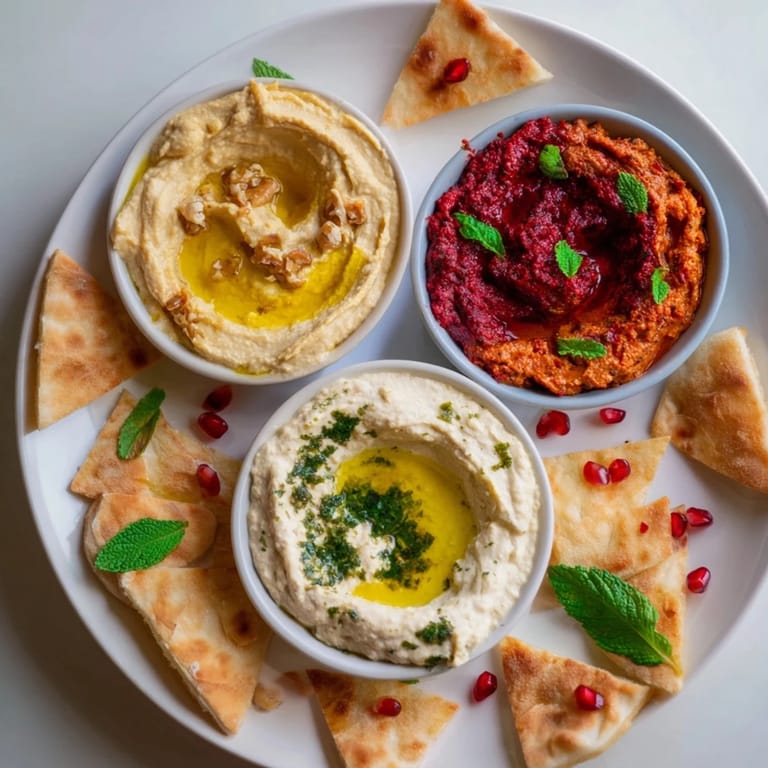
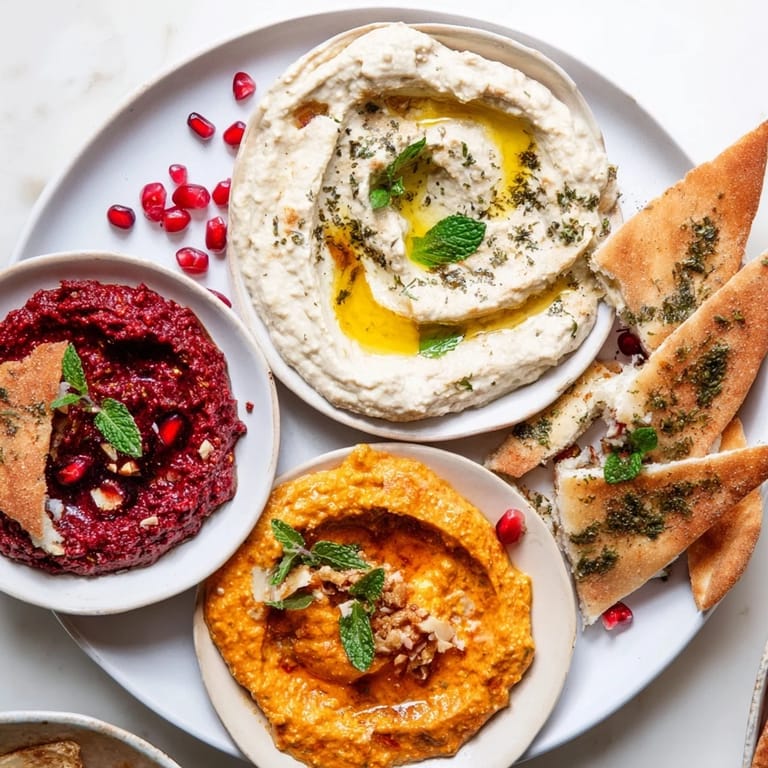
- Classic hummus: The neutral canvas that lets other flavors shine; make or buy your favorite, but taste for salt—it's the foundation.
- Baba ganoush: Smoky and deep, it adds a layer of complexity that makes guests pause and ask what they're tasting.
- Muhammara: Red pepper and walnut dip that brings warmth and a subtle sweetness; this is the unexpected star.
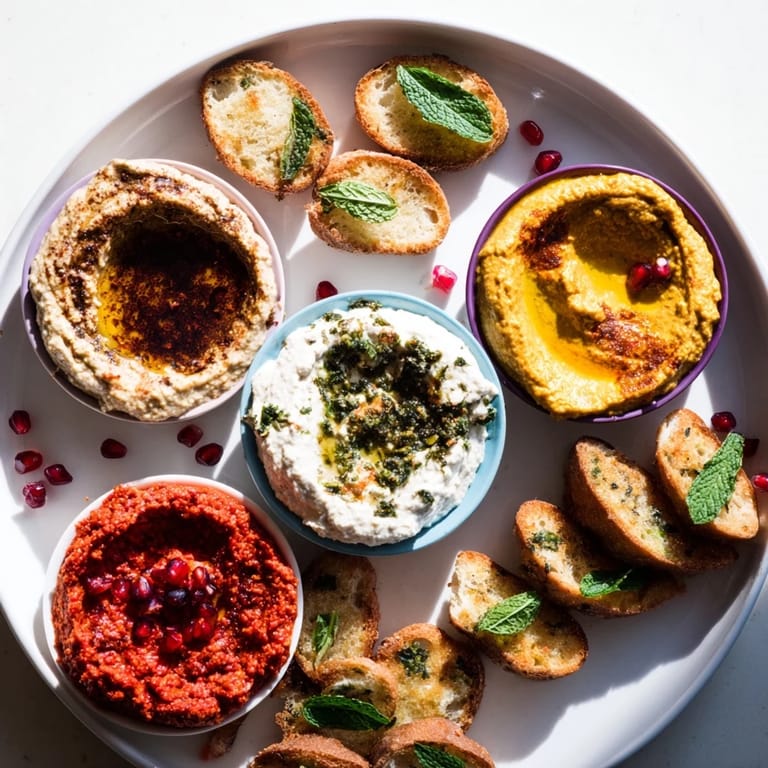
- Labneh or Greek yogurt with zaatar: Creamy and herbaceous, it balances the heavier dips and gives the platter a moment of cool relief.
- Roasted red peppers: Sweet and silky, they add visual drama and a gentle sweetness that connects different flavors.
- Marinated artichoke hearts: Tangy and tender, they're the texture contrast that keeps your palate engaged.
- Moroccan carrot salad: Shredded, bright with lemon and cumin—make this fresh the day of if you can; it tastes like sunshine.
- Preserved lemons: Pungent and funky in the best way, they're the flavor that stops people mid-bite and makes them curious.
- Mixed Moroccan olives: Choose varieties with different sizes and colors; they're like edible jewels and add saltiness that makes everything taste more like itself.
- Quick-pickled red onions: Sharp and bright, they cut through richness and add a visual pop; make them at least a few hours ahead.
- Cornichons or baby gherkins: Crunchy and vinegary, they're the palate cleanser that appears in your hand when you need it most.
- Roasted almonds and pistachios: Unsalted is crucial—you want their natural flavor and nuttiness, not a salty overlay.
- Toasted sesame seeds: Tiny but mighty; toast them yourself if possible—that warm, nutty smell is half the appeal.
- Baguette or gluten-free crackers: Your vehicle for dips; toasted bread is non-negotiable for texture and flavor.
- Mini pita breads: Soft and warm, they carry dips and vegetables together in the most satisfying way.
- Pomegranate seeds: Jewel-like and tart, they're your final note of brightness and surprise.
- Fresh mint and cilantro: Not just garnish—they're flavor anchors that tie Moroccan traditions into every bite.
- Sumac: A whisper of tartness and color; use it sparingly, as a finishing touch, not a base.
- Extra virgin olive oil: The final drizzle that says you care about this moment.
Tired of Takeout? 🥡
Get 10 meals you can make faster than delivery arrives. Seriously.
One email. No spam. Unsubscribe anytime.
Instructions
- Begin with your dips and spreads:
- Scoop hummus, baba ganoush, and muhammara into small colorful bowls or ramekins at least a few hours before serving—this lets flavors settle and gives you peace of mind. If making labneh, let it drain overnight if possible, then spoon it into its own bowl and drizzle generously with olive oil and a pinch of zaatar. Each dip deserves its own stage.
- Prepare vegetables and pickles:
- Slice roasted red peppers into strips, quarter artichoke hearts, and toss your carrot salad with fresh lemon juice and a pinch of cumin until it tastes alive. Arrange each in its own small bowl. Make quick-pickled red onions at least 30 minutes ahead—slice them thin, toss with salt and good vinegar, and let them sit in the fridge. They get better as they sit, turning a deeper pink and tasting more balanced.
- Gather olives, nuts, and seeds:
- Pour mixed Moroccan olives into a bowl, another for the gherkins, another for almonds, another for pistachios, and a small one for sesame seeds. Toast the sesame seeds in a dry pan for just two minutes, until fragrant—you'll smell when they're ready. Don't walk away; they go from golden to burnt in seconds.
- Toast your bread:
- Slice the baguette on a slight angle, brush with a whisper of olive oil, and toast in a 375°F oven for 5-7 minutes until golden and crisp on the outside but still a bit tender within. Warm the mini pitas in a dry skillet just before serving, so they're soft and pliable. Bread is your moment to pause and be present.
- Arrange your mosaic:
- This is the art. Take your large serving tray or wooden board and begin placing bowls, starting with your largest dips in a triangle or loose circle. Nestle smaller bowls in the gaps. Scatter preserved lemon slices, olives, and nuts directly on the board, filling empty spaces with intention. Think of it like painting—you want color, texture, and rhythm. Scatter pomegranate seeds like they're precious, add mint and cilantro leaves so they breathe across the board.
- Add the finishing touch:
- Drizzle olive oil over the dips one final time, dust sumac across a few vegetables, and step back. This moment of seeing it complete is part of the recipe.
- Serve and encourage discovery:
- Bring it to the table while bread is still warm. Arrange small spoons near each dip so guests know they're invited to taste. The real magic happens when someone combines hummus with preserved lemon and cilantro, or baba ganoush with pomegranate seeds—let them explore.
 Pin It
 What strikes me most about serving this platter is how it invites slowness. People don't wolf it down; they settle in, they talk more, they reach across each other, they laugh. One friend told me she'd never tried muhammara before and it changed her life—now she makes it monthly. That's the gift of a good mezze spread: it opens doors.
Building Your Own Variations
The beauty of this recipe is that it's a framework, not a rigid formula. I've served it with grilled halloumi when I wanted richness, added cubed feta when I had it on hand, and once included thin slices of cured fish when feeding omnivores. In summer, I add cucumber slices and fresh tomatoes. In winter, I roast root vegetables with cumin and cinnamon. The foundation—dips, vegetables, bread—stays the same, but everything else is negotiable. You're not locked into tradition; you're playing within it.
The Art of Pairing and Pacing
Serve this before a substantial main course—it's an opener, not a meal. The variety keeps guests engaged and prevents any single flavor from dominating their palate before dinner begins. If you're serving it as the main event, pair it with something simple like roasted vegetables or grilled fish. I've learned that people want to taste everything, so offer small portions of each element. The bread matters here; warm, good bread gives people something substantial to anchor their dips to, and it buys you time while you finish other dishes. A crisp white wine, sparkling water with fresh mint, or Moroccan mint tea alongside makes the experience feel complete.
Make-Ahead Strategy and Storage
This platter rewards preparation. Make the dips 1-2 days ahead and store them covered in the refrigerator. Marinate vegetables the morning of, and prepare the carrot salad no more than 4 hours before serving—it wilts if it sits too long. Pickled onions improve with time, so make them even the day before. Toast nuts and seeds the morning of, and toast bread within an hour of serving. This staggered approach means you're never overwhelmed at the last moment; instead, you're simply composing a beautiful final arrangement. When guests arrive, you can be present instead of stressed, and that ease is felt in the meal.
- Keep dips covered with plastic wrap to prevent them from drying out or absorbing fridge flavors.
- Store fresh herbs separately in a damp paper towel, added only moments before serving so they stay vibrant.
- Transport the platter on a sturdy board or baking sheet, and rearrange it at your destination if needed—it's more forgiving than you'd think.
 Pin It
 This platter is less about following rules and more about creating a moment where people slow down together. Every time you make it, it'll be different, and that's exactly as it should be.
Recipe Questions & Answers
- → What dips are featured in the mosaic platter?
Key dips include classic hummus, smoky baba ganoush, spicy muhammara, and creamy labneh drizzled with olive oil and zaatar.
- → How are the vegetables prepared for the platter?
Vegetables are marinated or roasted, such as red peppers, artichoke hearts, Moroccan carrot salad, and preserved lemon slices.
- → Can the platter accommodate dietary restrictions?
Yes, it can be made gluten-free by using gluten-free crackers and vegan by substituting plant-based yogurt for labneh.
- → What nuts and seeds complement the mosaic?
Roasted almonds, shelled pistachios, and toasted sesame seeds add crunch and flavor variety.
- → How should the platter be assembled for best presentation?
Arrange small colorful bowls of dips, vegetables, olives, and nuts tightly on a large tray, filling gaps with fresh herbs and pomegranate seeds to mimic a mosaic pattern.