 Pin It
 My coworker brought a Korean beef bowl to lunch one day, and I watched her methodically layer each component like she was composing something precious. The gochujang-beef smell alone had everyone at the table leaning in, and when I finally asked for the recipe, she laughed and said it was the easiest thing she made on weeknights. That single bowl changed how I thought about weeknight dinners, proving that bold flavors don't require hours hunched over a stove.
I made this for my roommate on a random Tuesday when she came home exhausted from work, and she actually stopped mid-bite to ask what I'd done differently to make rice taste like something worth pausing for. It wasn't the rice at all, of course, but the whole assembly, the warm beef, the cool pickled crunch, the nuttiness of sesame oil hitting all at once. That moment taught me that food is really just an excuse to say, I see you're having a rough day.
Ingredients
- Lean ground beef: Use 1 lb of the leanest option you can find so the beef doesn't get greasy once it releases its fat into the pan.
- Gochujang: This Korean chili paste is the whole personality of the dish, fermented and complex, not just heat; buy it from an Asian market or online if your regular grocery doesn't stock it.
- Soy sauce: The umami backbone that makes everything taste deeper and more intentional than it has any right to.
- Brown sugar: A small amount balances the spice and salt, rounding everything into harmony.
- Garlic and ginger: Mince these fresh, not from a jar, because the difference in aroma will convince you that this meal is more special than it actually is.
- Toasted sesame oil: The aromatic kind in the small bottle, used sparingly because a little goes impossibly far.
- Green onions: Slice them thin and reserve half for finishing so you get both cooked softness and raw brightness.
- Short-grain rice: White or brown both work, but short-grain has a slight stickiness that holds the bowl together.
- Edamame: Buy them shelled and cooked to save time, or thaw frozen ones.
- Cucumber: Slice it thin enough to be delicate but thick enough to have texture and crunch.
- Carrot: Julienne it into thin matchsticks so it catches the sauce and cooks slightly from the heat of the beef.
- Kimchi: The funky, briny counterpoint that makes your mouth wake up; chop it into bite-sized pieces.
- Toasted sesame seeds: Buy them already toasted so you just sprinkle and go, finishing each bowl with a scattered handful.
Tired of Takeout? 🥡
Get 10 meals you can make faster than delivery arrives. Seriously.
One email. No spam. Unsubscribe anytime.
Instructions
- Toast the aromatics:
- Heat sesame oil in a large skillet over medium heat until it shimmers, then add garlic and ginger, letting them bloom for exactly one minute until your kitchen smells undeniably alive. This short window is where the magic starts, so don't rush it or let it burn.
- Brown the beef:
- Add ground beef to the pan and break it up with a wooden spoon or spatula, pressing it against the skillet so it develops a light crust instead of steaming itself into submission. Keep moving it for about five to six minutes until no pink remains and the beef is in small, browned pieces.
- Build the sauce:
- Stir in gochujang, soy sauce, and brown sugar, coating every piece of beef in that glossy red mixture, and let it bubble gently for another two to three minutes so the sauce clings to the meat instead of pooling at the bottom. You'll see it thicken and deepen in color as the sugar caramelizes slightly.
- Finish with brightness:
- Remove from heat and stir in half of the green onions, which will soften just enough from the residual heat to mellow out but still taste fresh.
- Assemble with intention:
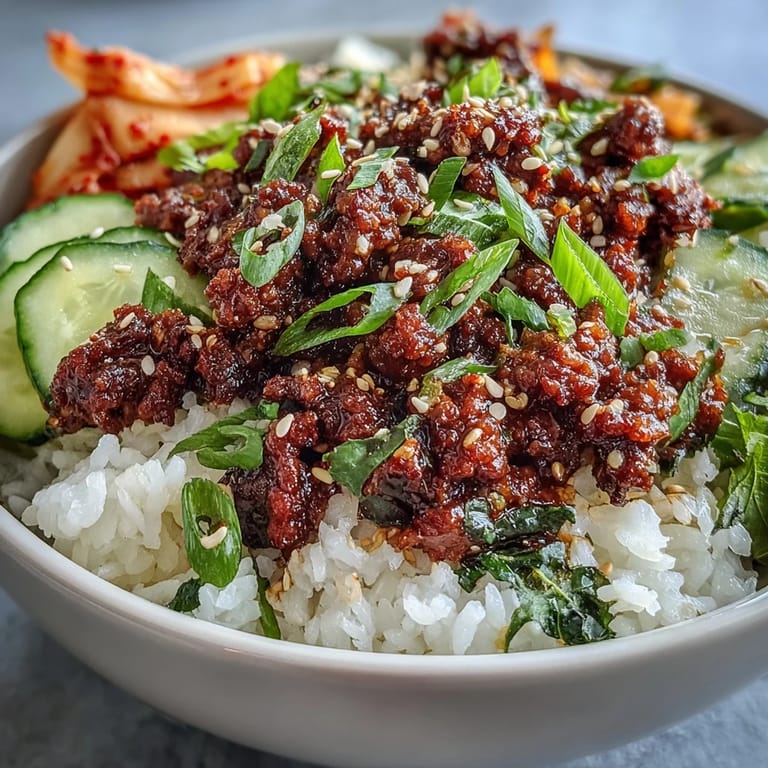
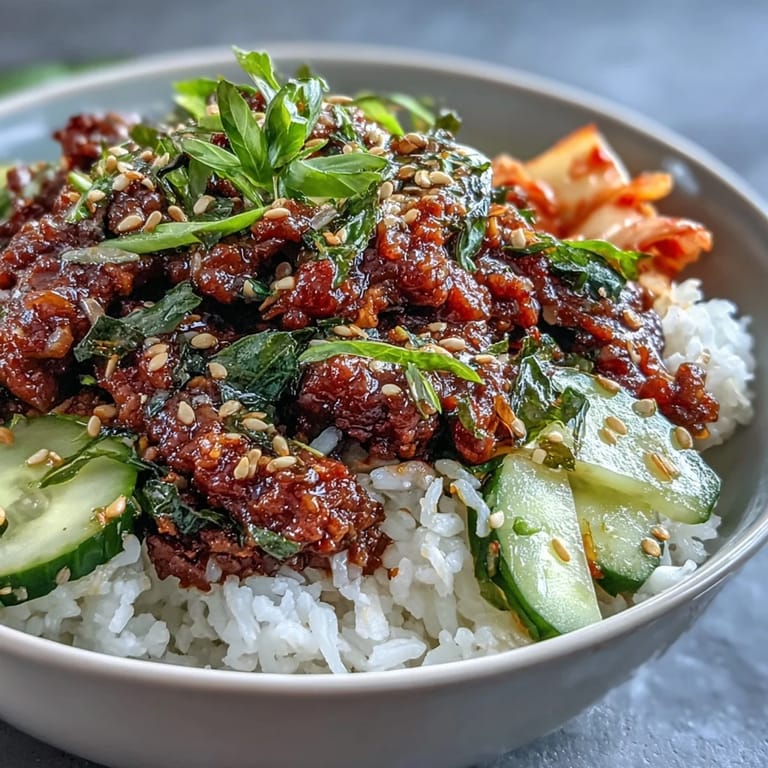
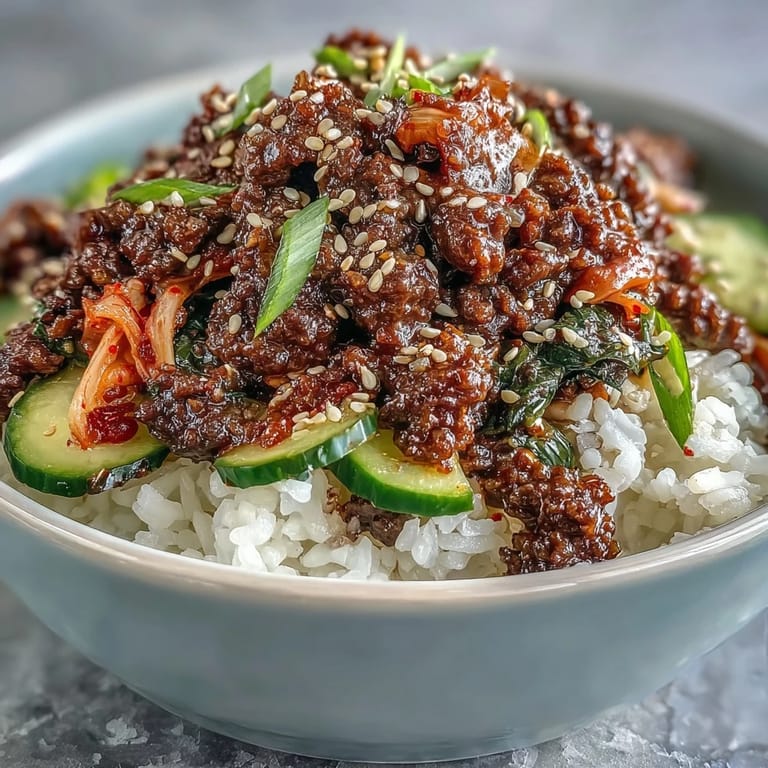
- Divide warm rice among four bowls, creating a small well in the center, then pile the beef into that well so its sauce runs into the rice. Top with edamame, cucumber, carrot, and kimchi, arranging them so the bowl looks as good as it tastes.
- Finish and serve:
- Sprinkle the remaining green onions and toasted sesame seeds over the top, and bring the bowls directly to the table while everything is still warm and the components haven't started to meld into each other.
 Pin It
 My partner came home one evening, took one bite, and without saying anything handed me his phone open to my own text from months ago where I said I was tired of cooking Korean food because it felt intimidating. He just smiled, and I realized that sometimes the food we're afraid to make turns out to be the easiest thing on the menu, we just needed the right moment to try it.
Why Gochujang Matters
Gochujang is fermented red chili paste that tastes nothing like a regular hot sauce, it has depth and funk and a subtle sweetness that makes you want to keep tasting it. The first time I used it, I thought I was just adding heat, but what I really did was invite an entire flavor ecosystem into my bowl, and now I keep a jar in my fridge at all times for moments exactly like these.
Building Your Perfect Bowl
The beauty of this dish is that you're not married to any single component, the beef is non-negotiable but everything else is a conversation between you and what's in your refrigerator. Some nights I add sliced radishes or shredded cabbage if I'm in the mood for extra crunch, other times I crack a fried egg on top because why not lean into richness when you're already here. The framework stays the same, but the specifics bend to your mood and hunger.
Variations That Keep It Interesting
Ground turkey or chicken works beautifully if you want something lighter, or plant-based crumbles if you're cooking for vegetarians, and the sauce clings to all of them the same way. The gochujang amount is entirely your call, start with two tablespoons and add more if you like heat, or use less if you're cooking for people who think anything spicy is a personal attack. There's also something to be said for switching out the proteins entirely and just loading up on vegetables and tofu instead, letting the gochujang be the star.
- Swap the beef for ground turkey, chicken, or crumbled tofu and adjust cooking time accordingly.
- Add sliced radish, shredded cabbage, or steamed broccoli for more vegetables and crunch.
- Top with a fried egg for richness, or a dollop of sour cream if you want cool creaminess against the heat.
 Pin It
 This bowl has become my answer to the question I used to ask myself at five in the afternoon, which was what on earth am I making for dinner. Now I know, and it takes half an hour from cold stove to full table.
Recipe Questions & Answers
- → Can I make this gluten-free?
Yes, substitute regular soy sauce with gluten-free tamari and ensure your gochujang is certified gluten-free. Most kimchi brands are gluten-free, but always check labels.
- → How spicy is this dish?
The heat level depends on your gochujang. Start with 2 tablespoons for moderate spice, then adjust to taste. You can reduce the amount for milder flavor or add more for extra heat.
- → Can I prepare components ahead?
The ground beef mixture stores well in the refrigerator for 3-4 days. Prepare vegetables in advance and keep them in separate containers. Assemble bowls just before serving for best texture.
- → What rice works best?
Short-grain white or brown rice provides the ideal sticky texture. You can also use jasmine rice or quinoa for variation. Just ensure grains are fully cooked and fluffy before assembling.
- → Is this freezer-friendly?
The cooked ground beef mixture freezes beautifully for up to 3 months. Thaw overnight in the refrigerator and reheat gently. Assemble bowls fresh with cooked rice and vegetables.
- → Can I add more vegetables?
Absolutely. Sliced radishes, shredded cabbage, spinach, or bean sprouts make excellent additions. Sauté harder vegetables briefly or keep them raw for crunch.