 Pin It
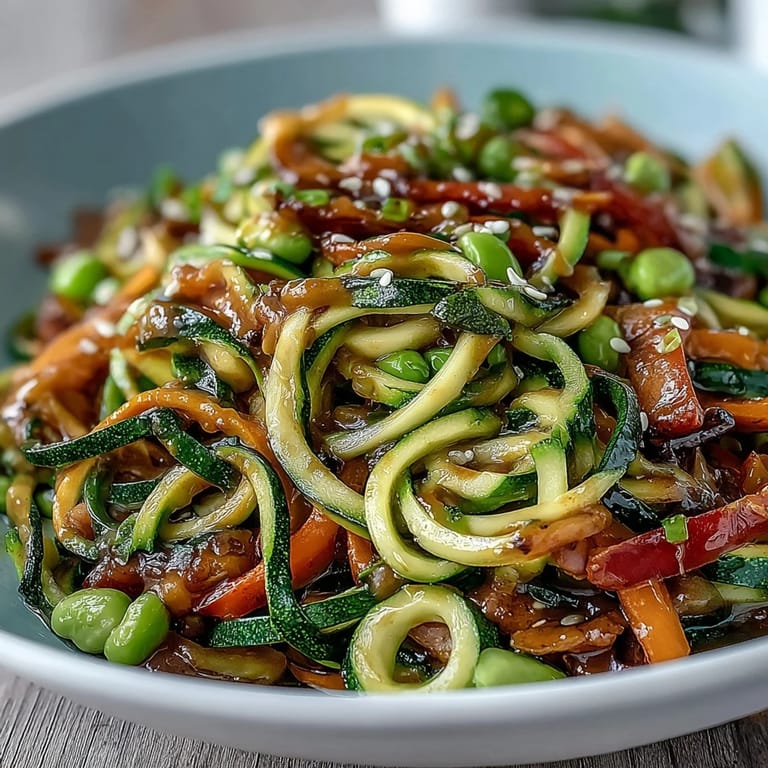
 My spiralizer arrived on a Tuesday, and I spent that entire evening circling my kitchen like it was a brand new toy, waiting for the right moment to use it. When Thursday rolled around and I had half a dozen zucchinis from the farmers market getting soft on my counter, something clicked—I could make this light, tangy stir-fry that actually tastes like you're treating yourself, not punishing yourself. The peanut sauce is what makes it sing; it's creamy and rich but doesn't weigh you down, and somehow everything comes together in the time it takes to brew a cup of tea.
I made this for my friend Marcus on a humid July afternoon when everyone was too tired to think about heavy food. He watched me spiralize the zucchini with this skeptical look until the first bite, then went quiet in that way people do when they're genuinely surprised by something. He came back for seconds and asked if I could teach him how to make the sauce, which might be the highest compliment I've ever received in my kitchen.
Ingredients
- Zucchini, spiralized: Four medium ones give you that perfect noodle texture without the starchiness of pasta, and spiralizing takes thirty seconds if you have the tool.
- Red bell pepper: The sweetness balances the tangy sauce, and it stays crisp if you don't let it sit in the pan too long.
- Carrot, julienned: This adds a subtle crunch and a hint of natural sweetness that rounds out the flavors.
- Snap peas: They're technically optional but they're the ones that make people say this tastes restaurant-quality.
- Green onions: Slice them thick if you like the bite, thin if you want something gentler.
- Fresh cilantro: If you're someone who tastes soap in cilantro, you can skip this entirely and the dish still works beautifully.
- Natural peanut butter: The kind with just peanuts and maybe salt, not the kind with added oils—it makes a difference in how silky the sauce becomes.
- Soy sauce or tamari: Tamari is your friend if gluten matters to you, and low-sodium means you control the salt level.
- Rice vinegar: This is what gives the sauce its subtle tang without making it too sharp.
- Lime juice: Fresh lime is better than bottled, but I won't judge if you use bottled on a Tuesday night when fresh limes feel like too much.
- Maple syrup or honey: Just enough to take the edge off the vinegar and balance the savory notes.
- Toasted sesame oil: Use the toasted kind, not the plain kind, or the whole sauce tastes like it's missing something.
- Garlic and ginger: Minced and grated fresh, these are non-negotiable if you want the sauce to taste alive.
- Red pepper flakes: Leave them out if you're cooking for someone who thinks spice is a personal attack.
Tired of Takeout? 🥡
Get 10 meals you can make faster than delivery arrives. Seriously.
One email. No spam. Unsubscribe anytime.
Instructions
- Prep everything first:
- Spiralize your zucchini, slice your pepper thin, julienne your carrot, and trim those snap peas. It feels like extra work until you're actually cooking and realize having everything ready means you're not juggling tasks at high heat.
- Build the sauce:
- Whisk together the peanut butter, soy sauce, rice vinegar, lime juice, maple syrup, sesame oil, garlic, and ginger in a bowl. Start with two tablespoons of warm water and keep whisking, adding more water a tablespoon at a time, until it's smooth and pourable—not too thick, not too thin.
- Get the pan hot:
- A large nonstick skillet or wok over medium-high heat is your friend here. A splash of sesame oil is optional but it makes the whole kitchen smell incredible.
- Cook the firm vegetables first:
- Add the bell pepper, carrot, and snap peas and stir-fry for two to three minutes. You want them to still have some snap when you bite into them, not soft and surrendered.
- Add the zucchini gently:
- Toss in your spiralized zucchini and cook for another two to three minutes, stirring gently. Zucchini releases water if you're rough with it or leave it in the heat too long, so treat it like you're tucking it in, not wrestling it.
- Bring it all together:
- Pour that silky peanut sauce over everything and toss until every noodle is coated. Let it warm through for one to two minutes, then taste and adjust—more lime if it needs brightness, more water if it's too thick.
- Finish and serve:
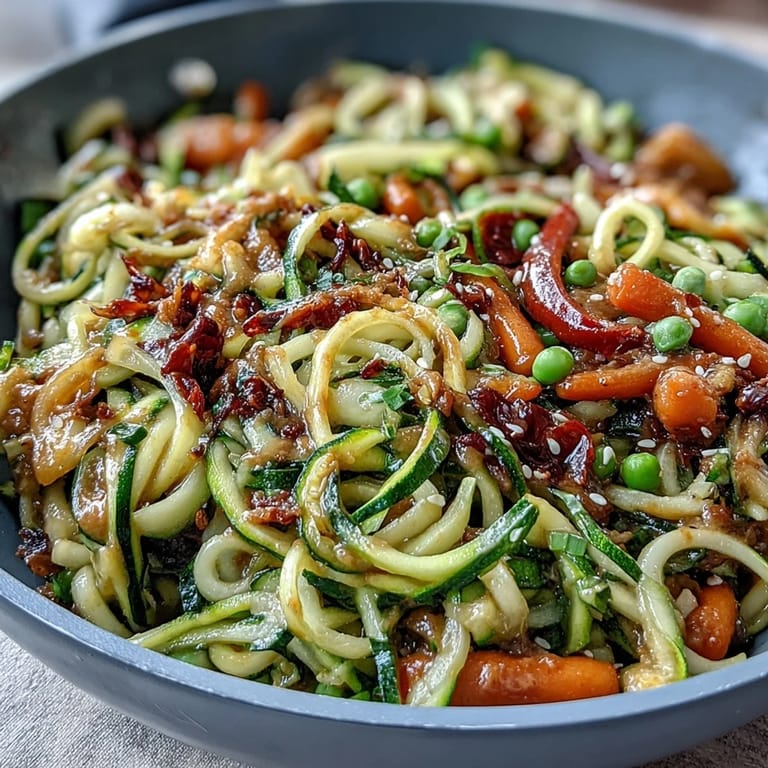
- Plate immediately while everything is still warm, scatter chopped peanuts and cilantro and green onions on top, and eat it right away.
 Pin It
 My sister made this for her kids who have decided they're too cool to eat vegetables, and somehow they didn't even notice the zucchini noodles hiding under that peanut sauce. She texted me later saying her eight-year-old asked if they could have it again tomorrow, which felt like we'd unlocked some kind of parenting cheat code together.
The Peanut Sauce Moment
The first time I made this, I got impatient with whisking and the sauce came out lumpy and thick, like I'd accidentally made peanut butter again. I added water in a panic and suddenly it transformed into this glossy, pourable magic that coated every noodle perfectly. That's when I learned that patience and incremental adjustments matter more than getting it right the first time.
Vegetables You Can Swap In
This isn't a strict recipe that falls apart if you deviate. I've made it with broccoli florets when snap peas weren't in the house, and once I added mushrooms because I was trying to use what I had and it was genuinely better. The vegetables are really just a vehicle for that peanut sauce, so think of them as flexible.
Making It Heartier
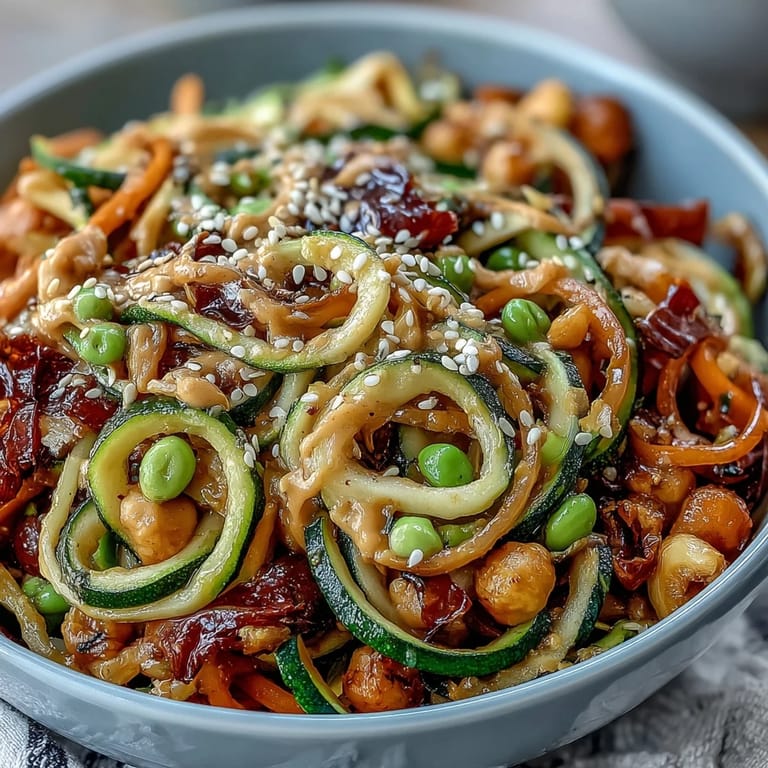
If zucchini noodles alone feel too light, there are ways to make this more substantial without losing what makes it special. Grilled chicken strips, pan-seared tofu, or even shrimp turn this into something that could be your main course without any side dishes. I've also topped it with a soft-boiled egg when I wanted more richness, and the runny yolk mixed with the sauce was unreasonably good.
- Grilled or pan-seared chicken breast is the obvious choice and adds protein without changing the flavor profile.
- Crispy tofu cubes make this completely vegan and somehow feel more satisfying than you'd expect.
- Shrimp cooks in the same time as the vegetables, so you can add it when you add the bell peppers and never miss a beat.
 Pin It
 This stir-fry became my go-to dinner when I wanted something that tasted like I'd put in effort but didn't require the actual effort, and somehow it never gets boring. It's the kind of recipe that makes you feel capable in the kitchen while feeding you something genuinely delicious and good for you at the same time.
Recipe Questions & Answers
- → Can I use other nut butters in the sauce?
Yes, almond or cashew butter can substitute peanut butter for a different flavor or nut-free variation.
- → How should zucchini noodles be cooked to avoid sogginess?
Cook zucchini noodles briefly, tossing gently and removing from heat once just heated through to maintain a firm texture.
- → What are good protein additions for this dish?
Grilled tofu, chicken, or shrimp can be added to boost protein content and enhance the meal.
- → Can soy sauce be replaced for gluten-free needs?
Yes, tamari or coconut aminos are excellent gluten-free alternatives to soy sauce.
- → What kitchen tools are recommended for preparation?
A spiralizer or julienne peeler, large skillet or wok, mixing bowl, whisk, and a cutting board are ideal.