 Pin It
 My cousin texted me three weeks before her graduation asking if I could bring something to her backyard party—nothing too complicated, she said, just something that would make the table look alive. I spent that afternoon wandering through the farmers market, letting the colors guide me: deep purple grapes catching the light, strawberries practically glowing red, and then I spotted a vendor selling edible flowers in little paper cups. That's when it clicked—forget the standard fruit platter. This would be less about following a recipe and more about creating something that felt like celebration itself, something her guests could walk up to and just smile at before taking a bite.
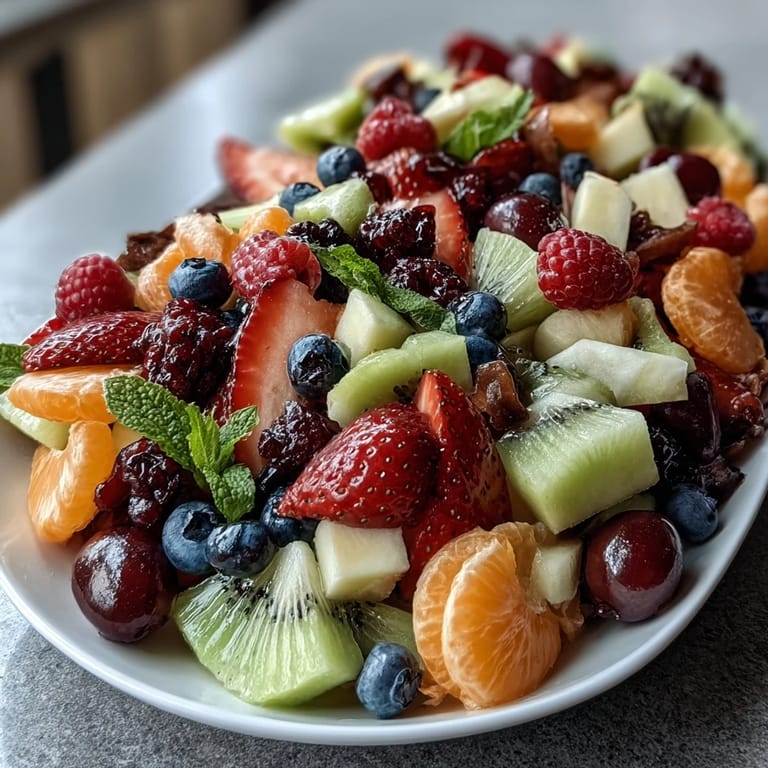
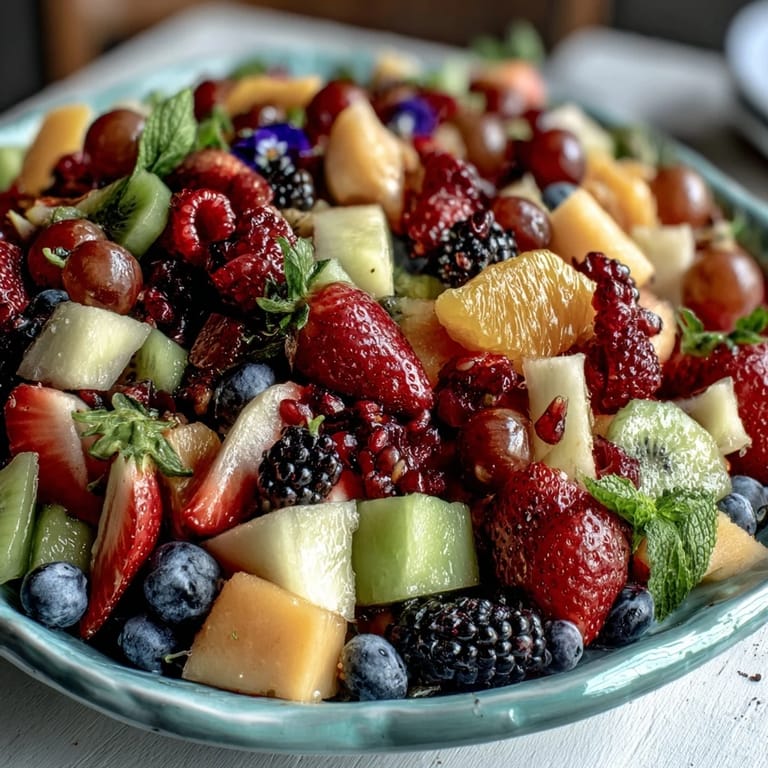
The night before the party, I arranged everything on our dining table and just stood there watching the light move across all those colors—the way the kiwi green played against the berry reds, how the edible pansies looked like tiny jewels tucked between the fruit. My daughter wandered in asking why I wasn't cooking anything, and I realized that's exactly what makes this special. There's no stress, no last-minute panic, just thoughtful assembly and something genuinely beautiful to show for it.
Ingredients
- Seedless green grapes: Their gentle sweetness and firm bite create a nice contrast with softer berries—they're your reliable anchor in the arrangement.
- Seedless red or black grapes: These bring visual drama and a slightly deeper flavor that balances the brighter fruits around them.
- Strawberries, hulled and halved: The iconic red that people reach for first—slice them just before serving so they don't weep and stain the other fruits.
- Pineapple, cut into bite-size pieces: Its tropical sweetness and yellow color brighten every section, plus it adds textural contrast with its slight firmness.
- Watermelon, cut into wedges or balls: A melon baller creates those perfect little spheres that feel special, but chunky pieces work just fine if you're short on time.
- Cantaloupe, cut into wedges or balls: The pale orange creates those warm tones that make the whole table feel summery and inviting.
- Blueberries: Their dark color grounds the arrangement and their little round shape nestles perfectly between larger fruits.
- Raspberries: Fragile and beautiful—place them last and handle gently since they bruise if you look at them wrong.
- Kiwis, peeled and sliced: That bright green and the little black seeds catch the eye, and they add a subtle tartness that wakes up your palate.
- Oranges, peeled and segmented: Fresh segments add both color and a citrus brightness that keeps everything feeling fresh rather than heavy.
- Edible flowers: Only use certified food-grade flowers that haven't been treated with pesticides—pansies and violas are foolproof choices, while nasturtiums add a peppery surprise.
- Fresh mint leaves: Their green creates visual interest and releases a subtle fragrance that makes people notice they're eating something intentional.
- Lemon slices: Both decorative and practical—they prevent some fruits from browning and add a final pop of citrus yellow.
Tired of Takeout? 🥡
Get 10 meals you can make faster than delivery arrives. Seriously.
One email. No spam. Unsubscribe anytime.
Instructions
- Wash everything thoroughly:
- Run all fruits under cool water and pat them completely dry with paper towels—any moisture will cause them to slip around and make your arrangement look messy. For the edible flowers, I use a very gentle rinse and let them air dry on a clean towel.
- Prep your fruits with intention:
- Cut larger fruits into pieces that feel natural to eat with your hands, nothing so tiny it gets lost and nothing so chunky it's awkward. A melon baller transforms cantaloupe and watermelon into elegant little spheres that feel special, but honestly, rustic wedges have their own charm too.
- Choose your canvas:
- A large white or neutral serving board creates the best backdrop—it lets the colors sing instead of competing with a busy pattern. If you only have a table, that works perfectly too; just make sure it's clean and you have enough space to give each section room to breathe.
- Arrange in colorful clusters:
- Start by creating loose sections of each fruit rather than scattering everything randomly—group the reds together, the greens in another spot, the yellows somewhere eye-catching. This creates natural flow and makes it easy for guests to find what they're craving.
- Tuck flowers and herbs between fruits:
- This is where the magic happens: slip edible flowers and mint leaves into gaps between fruit clusters, letting them peek out like happy surprises. Don't overthink the placement; a few scattered strategically beats a perfectly mapped-out design that feels forced.
- Add lemon slices for the final touch:
- Fan a few thin lemon slices across the top or tuck them around the edges—they're both beautiful and practical, and they hint that you thought of every detail.
- Keep it chilled until showtime:
- Arrange everything on a table in a cool room or even in the shade outside if weather permits, then bring it out just before guests arrive. This prevents any wilting and ensures everything tastes as fresh as it looks.
 Pin It
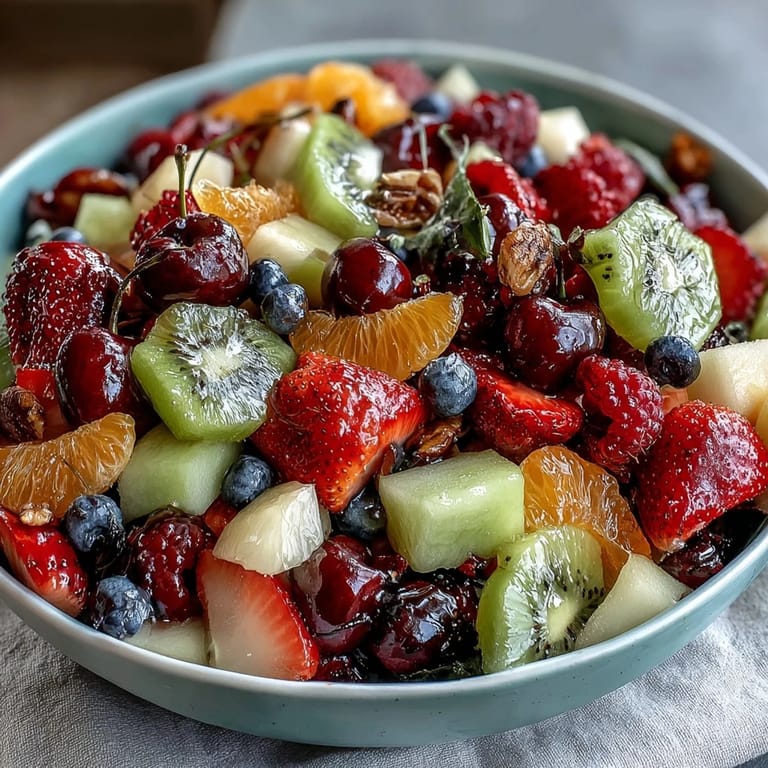
 At my cousin's party, I watched people arrive and go straight to the fruit table before even saying hello to the host. There was something about its visual generosity that made everyone slow down and actually enjoy the moment instead of rushing from one conversation to the next. An older family friend who usually skips sweets spent twenty minutes picking through it, and I realized this wasn't just food—it was an invitation to linger.
Seasonal Swaps That Keep It Fresh
The beauty of this fruit table is that it adapts to whatever's in season and looking beautiful at your market. In summer, lean into stone fruits like peaches and plums; in late summer and early fall, add juicy figs and fresh cherries that catch the light like rubies. Late fall brings pears and pomegranate arils, while winter is perfect for citrus—blood oranges especially bring an unexpected richness that guests don't anticipate. Mango and papaya work year-round in most places and add an exciting tropical note that makes the whole spread feel a bit more adventurous.
The Edible Flower Game-Changer
I used to think edible flowers were just for fancy restaurants and Instagram aesthetics, but once I started adding them to dishes like this, I realized they actually change people's relationship with food. There's something about seeing a bright pansy nestled between berries that makes someone smile before they even taste anything. The flavors are usually delicate—nasturtiums bring a peppery note, borage tastes faintly of cucumber, and violas are almost floral without being overwhelming. If you've never sourced edible flowers before, farmers markets are your best bet, and many specialty grocers now carry them in little containers specifically for cooking.
Making It Feel Special Without Extra Work
The secret that nobody talks about is that impressive-looking food doesn't require complicated technique—it requires thoughtful arrangement and good color sense. Spend an extra two minutes grouping similar colors instead of randomly placing fruits, and suddenly it looks intentional and curated instead of thrown together. If you want to offer something alongside it, a simple honey-yogurt dip or coconut cream dip takes thirty seconds to prepare and gives guests an interactive element they'll appreciate.
- Arrange the fruit as close to serving time as possible so everything stays perky and fresh-looking instead of sad and wilted.
- If you're transporting this anywhere, arrange it on-site rather than trying to move a finished table—fruits shift and rearrange in the car, and that's a headache you don't need.
- Keep any dips in a separate small bowl rather than dotting them around the fruit; it prevents the fruit from getting wet and sliding everywhere.
 Pin It
 There's something deeply satisfying about creating something beautiful that nourishes people during a celebration. This fruit table teaches you that the best food moments aren't about complexity—they're about paying attention to color, freshness, and the small details that make people feel welcomed.
Recipe Questions & Answers
- → Which fruits work best for a vibrant fruit table?
Choose a colorful mix like grapes, strawberries, pineapple, watermelon, cantaloupe, blueberries, raspberries, kiwis, and oranges to achieve varied textures and colors.
- → How should edible flowers be prepared and selected?
Use only food-grade, pesticide-free edible flowers such as pansies, violas, nasturtiums, and marigolds. Wash gently and pat dry before arranging.
- → What is the best way to arrange the fruit for visual appeal?
Arrange fruits in overlapping sections or patterns on a large serving board or table, mixing colors and shapes to create an eye-catching display.
- → Can I prepare the display in advance?
Assemble the fruit table shortly before serving to avoid wilting and maintain freshness, keeping it chilled until serving time.
- → Are there any recommended garnishes to enhance the presentation?
Fresh mint leaves and lemon slices add fragrant accents and brighten the overall look, complementing the edible flowers and fruits.
- → What tools are helpful when preparing the fruit table?
Using a sharp knife, cutting board, and melon baller (optional) helps create uniform bite-sized pieces and attractive shapes.