 Pin It
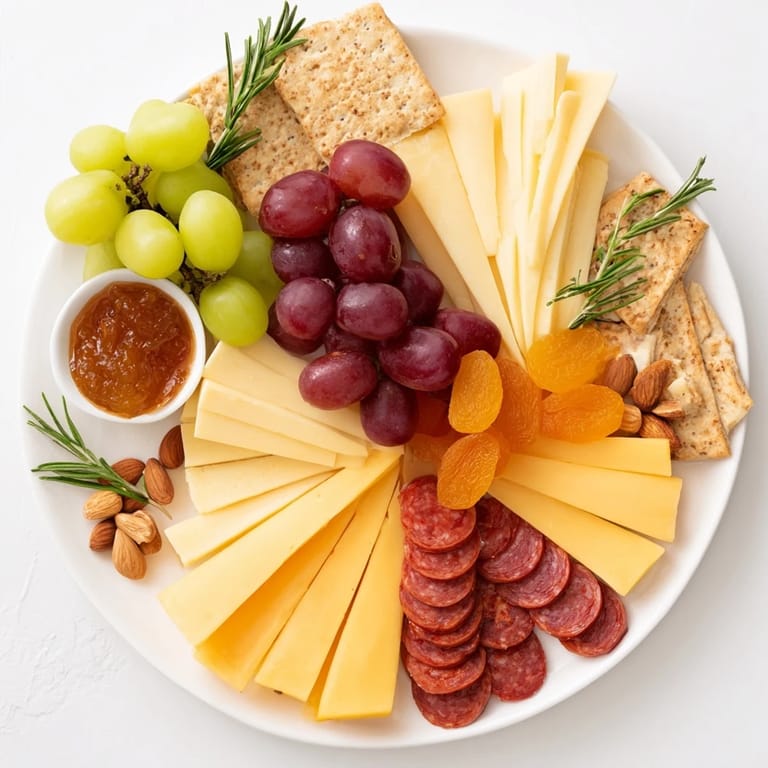
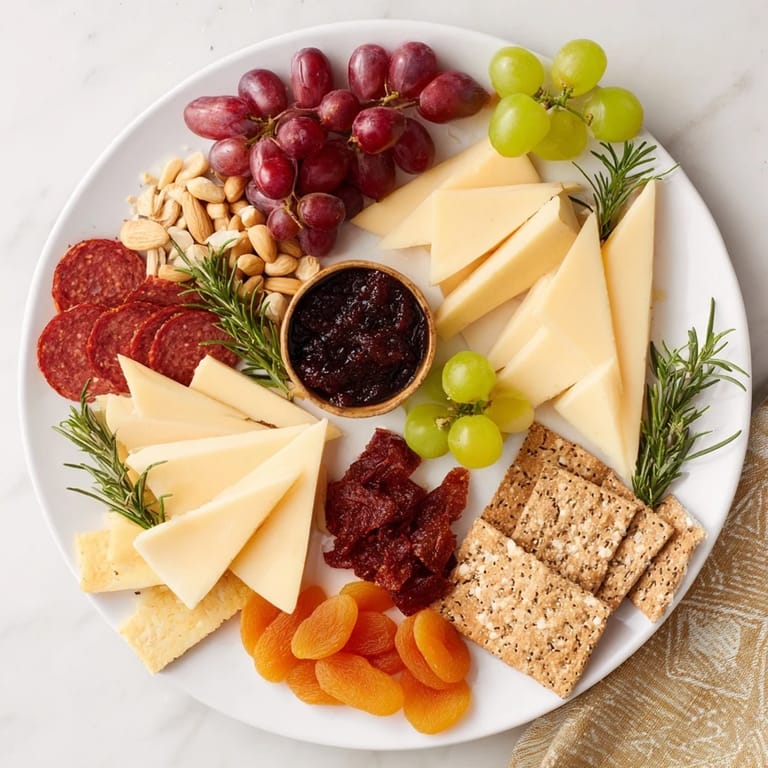
 There's something about geometric precision that makes people pause. I discovered this by accident one evening when a guest noticed I'd arranged cheese into neat triangles instead of the usual casual scatter, and suddenly everyone was leaning in closer, studying the board like it was art. That small observation sparked something—what if I made the geometry intentional? What if every element followed the same language of shapes? The Geometric Gala was born from that moment, turning a simple charcuterie board into something that feels modern, deliberate, and oddly more inviting than the traditional spread.
I made this for a dinner party where everyone arrived stressed from their week, and I watched their expressions shift the moment they saw the board. Something about the shapes, the intention behind them, made people sit down slower, look longer. By the end of the evening, guests were taking photos not because it was trendy, but because it felt like someone had genuinely thought about making their experience special. That's when I knew this wasn't just about cheese and meat—it was about the care you show when you invite people to your table.
Ingredients
- Manchego cheese: Use 150 g and cut into clean triangles with a sharp knife—its firm texture holds shape beautifully and its nutty flavor anchors the board.
- Aged cheddar: 150 g provides sharpness and visual contrast; the golden color looks striking against pale cheeses when arranged in triangles.
- Brie: Chill the 100 g before slicing into wedges so it stays defined rather than oozing; it's your creamy element that makes people reach first.
- Gruyère: 100 g cut into rhombuses adds complexity and a subtle sweetness that plays well with the meat selections.
- Prosciutto: 120 g folded or cut into triangles brings an airy, delicate quality that contrasts with harder cheeses.
- Soppressata: 120 g sliced and trimmed into rhombuses gives you a spicy earthiness and deep color that grounds the board visually.
- Chorizo: 100 g sliced diagonally into rhombuses adds warmth and a paprika note that ties everything together.
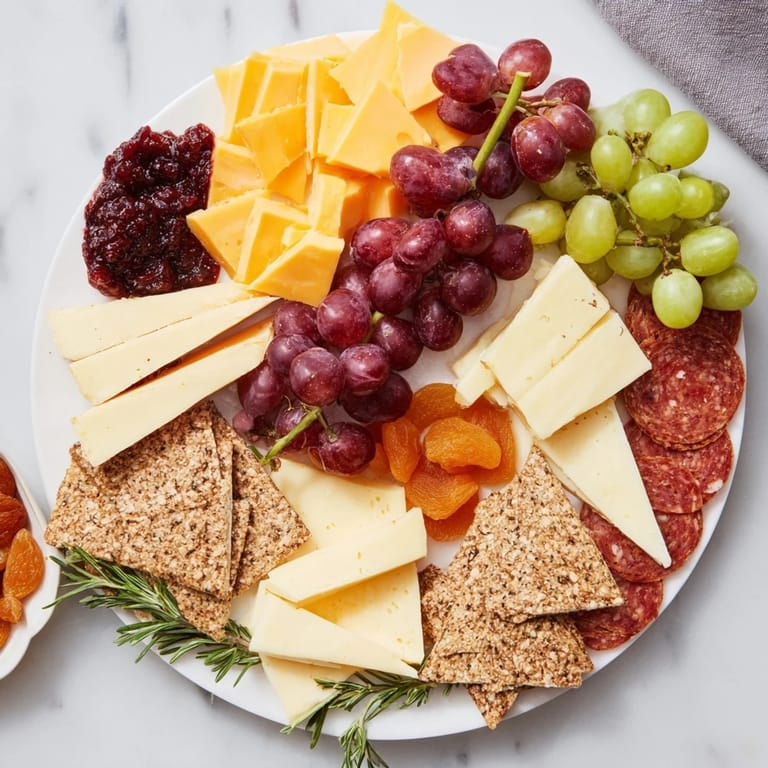
- Seedless red and green grapes: One small bunch each provides pops of natural sweetness and visual rhythm between the geometric cuts.
- Dried apricots: 50 g cut into diagonal pieces offers tartness and chewy texture; trim them into shapes so they belong to the overall design.
- Marcona almonds: 50 g scattered fills gaps and adds a buttery crunch that guests don't expect but always appreciate.
- Fig jam: 2 tbsp creates little flavor moments and softness; place in a small bowl so people can choose to add it.
- Gluten-free seed crackers: 100 g broken into triangles completes the theme and gives structure to the board without overwhelming it.
- Fresh rosemary or thyme sprigs: Use for garnish to add aroma and a touch of green that prevents the board from feeling too heavy.
Tired of Takeout? 🥡
Get 10 meals you can make faster than delivery arrives. Seriously.
One email. No spam. Unsubscribe anytime.
Instructions
- Prep your cheeses with intention:
- Lay each cheese on a clean cutting board and use a sharp chef's knife to cut steady, confident lines—triangles first, then rhombuses. The goal is consistency in shape, not perfection; slight variations actually add character.
- Handle the cured meats gently:
- Prosciutto should be folded loosely to keep its delicate structure, while soppressata and chorizo need clean diagonal cuts to form proper rhombuses. Let the blade do the work rather than sawing.
- Create visual clusters with fruit and nuts:
- Arrange grapes in small groups rather than scattering them, and cluster apricots nearby so they feel intentional. Almonds fill the remaining gaps, but leave some negative space—a crowded board feels chaotic rather than curated.
- Position your spreads strategically:
- Place fig jam in a small bowl slightly off-center or dot it directly on the board in two or three spots. This gives people options and creates focal points that guide the eye.
- Anchor with crackers and garnish:
- Arrange seed crackers in loose stacks or fans, maintaining triangular shapes where possible. Tuck rosemary sprigs into gaps last so they're fresh and aromatic when guests arrive.
- Trust the arrangement and serve with presence:
- Step back and look at the whole board before serving. If something feels off, adjust—but mostly, just let it be what it is. The imperfect geometry is what makes it feel human.
 Pin It
 I realized during my third attempt that the geometry wasn't really about math or precision—it was about permission. Permission to care about how things look, to slow down, to notice that the person across from you might feel a little lighter when someone has thought about their experience. That's what this board became for me, not a puzzle to solve but a small gesture that says, you matter enough for me to try.
Choosing Your Cheeses Thoughtfully
The best boards happen when you pick cheeses that tell a story together. Manchego brings earthiness and firm texture, cheddar gives you sharpness and color, Brie is your creamy moment, and Gruyère adds subtle richness. When these four sit next to each other, each one tastes a little different than it would alone—it's like they're having a conversation on the palate. Pick cheeses you actually want to eat, not ones that sound impressive. Your genuine enthusiasm makes the board feel real.
The Art of Cutting Without Overthinking
Here's what I learned: a guide or ruler helps if you're nervous, but the board doesn't need to look like it was made by a machine. Slight variations in angle actually make it feel more approachable, less intimidating. Cut slowly and let the knife do the work—this is meditative, not stressful. Some pieces will be slightly off, and that's where the humanity lives. If you want perfectly uniform shapes, use a template, but I've found that guests barely notice imperfections; they just see that you cared.
Making It Your Own
This is a framework, not a prescription. Swap cheeses for ones you love, try different cured meats like bresaola or coppa cut to match the theme, add nuts or dried fruit that speaks to you. The geometry is the unifying language—everything else is your personal dialect. I've made this board with completely different ingredients and it works because the concept is strong enough to hold whatever you choose to put on it.
- Pair it with a crisp white wine like Sauvignon Blanc or an effervescent rosé that won't overpower the delicate flavors.
- If you're serving this early in the meal, keep portions modest so people aren't too full for what comes next.
- Always mention to guests which cheeses are on the board so they can plan their journey through the flavors.
 Pin It
 The Geometric Gala taught me that simple ingredients become memorable when you show up with intention. It's an easy appetizer that feels anything but ordinary.
Recipe Questions & Answers
- → Which cheeses work best for geometric cutting?
Firm cheeses like Manchego, aged cheddar, Brie, and Gruyère hold their shape well when cut into triangles or rhombuses, providing clean edges and a striking look.
- → How can I maintain uniform shapes while cutting?
Using a sharp knife and optionally a ruler as a guide helps ensure precise, consistent cuts for a professional and artistic presentation.
- → What are suitable accompaniments for this platter?
Seedless grapes, dried apricots, Marcona almonds, and fig jam complement the cheeses and meats with contrasting flavors and textures.
- → Can I substitute the meats included on the board?
Yes, options like bresaola or coppa can be sliced into geometric shapes to maintain the visual theme while adding variety to the flavors.
- → How should I serve this platter for best results?
Arrange all elements with alternating shapes for visual interest and serve immediately to preserve the freshness and crispness of the crackers and garnishes.