 Pin It
 There's something almost magical about watching a simple pan of pasta transform into pure silk within seconds. I discovered my love for carbonara on a quiet weeknight when I had almost nothing in the pantry except eggs, bacon, and dried pasta—but somehow, with the right timing and a bit of tossing, it became one of the most satisfying meals I'd ever made. The trick isn't fancy technique; it's understanding that heat and motion do the real work here. Now when I'm short on time but want something that feels genuinely special, this is what I reach for.
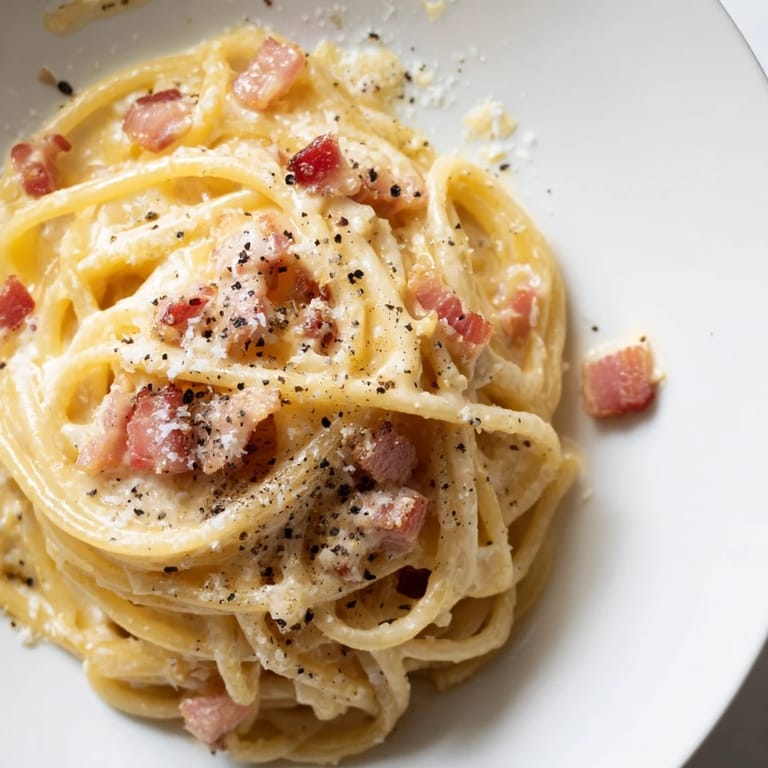
I made this for a friend who claimed they couldn't cook, and watching their face when I handed them a plate of silky, glossy spaghetti coated in that golden sauce was priceless. They were convinced there was cream involved—there wasn't—and that moment of surprise made me realize how much this dish plays on expectations. It's deceptively simple, which is exactly why it works.
Ingredients
- Spaghetti: 200g of dried pasta is the foundation; make sure it's cooked to al dente so it has just enough bite to stand up to the vigorous tossing.
- Large eggs: Use fresh, room-temperature eggs if possible—they emulsify more smoothly and create that silky texture without scrambling.
- Parmesan cheese: Freshly grated makes all the difference; pre-grated versions contain anti-caking agents that mess with the sauce's texture.
- Black pepper: Freshly ground pepper is essential here because it's one of the few seasonings doing the heavy lifting.
- Bacon or pancetta: 100g diced and cooked until the edges are crispy and the fat has rendered out; this is your flavor anchor.
- Reserved pasta water: This starchy liquid is the secret weapon that binds everything into a creamy sauce without needing cream.
Tired of Takeout? 🥡
Get 10 meals you can make faster than delivery arrives. Seriously.
One email. No spam. Unsubscribe anytime.
Instructions
- Get everything ready:
- Fill a large pot with salted water and bring it to a rolling boil—the water should taste like the sea. While it heats, whisk together eggs, Parmesan, and black pepper in a bowl until the mixture looks pale and uniform; this egg mixture is your sauce.
- Cook the pasta:
- Once the water boils, add spaghetti and cook until al dente according to package instructions, then reserve about 80ml of pasta water before draining. This starchy water is absolutely critical to the final sauce.
- Crisp the bacon:
- In a large skillet over medium heat, cook the diced bacon or pancetta until golden and the edges are starting to crisp, about 3 to 4 minutes. The rendered fat will add rich flavor to everything that follows.
- The toss:
- Remove the skillet from heat, add the drained pasta to the bacon, then immediately pour in the egg-Parmesan mixture. Toss vigorously and continuously, adding reserved pasta water a splash at a time as the eggs cook from the residual heat of the pasta and pan, creating that silky, glossy sauce.
- Serve right now:
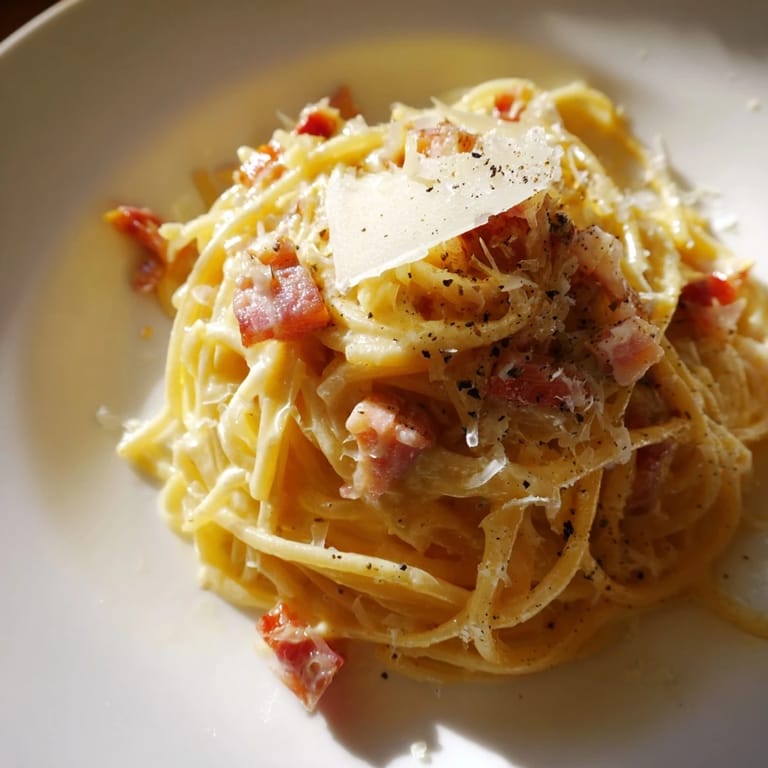
- This dish waits for no one—pile it into warm bowls immediately and finish with extra Parmesan and cracked black pepper before anyone takes a bite.
 Pin It
 I learned the hard way that carbonara is unforgiving if you're not paying close attention. One moment of distraction, and instead of silky sauce you've got scrambled eggs clinging to pasta, which taught me that some of the best dishes are actually about presence—being right there in the moment, watching, tossing, adjusting. That lesson has stuck with me beyond this one dish.
The Emulsification Secret
What makes carbonara work is a simple act of chemistry: the starch in pasta water helps the egg yolks emulsify, creating a smooth, creamy coating rather than scrambled bits. I used to add cream like everyone around me did, thinking more richness was always better, until a Roman friend showed me the original way. The revelation was that the simplest version—just eggs, cheese, pasta water, and fat—actually tastes better. It's less heavy and somehow more elegant, which is often the case when you strip things down to their essence.
Timing Is Everything
There's a small window between when the pasta comes off the heat and when you need to start serving, and that's where the magic happens. I think of it like conducting an orchestra—everything must come together at exactly the right moment. Once you've done it a few times, this becomes muscle memory, and you'll find yourself moving through the steps without thinking, your hands knowing when the pasta water consistency feels right.
Making It Your Own
While the traditional carbonara is perfect on its own, there are subtle ways to expand it without losing its soul. A minced garlic clove tossed with the bacon adds sweetness and depth, though some purists will object. Pecorino Romano instead of Parmesan gives you a sharper, slightly more authentic Roman flavor if that's what you're after. Either way, the foundation remains strong enough to handle small variations without falling apart.
- Add garlic to the bacon if you want extra flavor, but fish it out before tossing the pasta so the pieces don't overpower individual bites.
- Pecorino Romano is more traditional and has a sharper bite than Parmesan if you're feeling adventurous.
- Always work quickly once the egg mixture hits the hot pasta—hesitation is your only real enemy here.
 Pin It
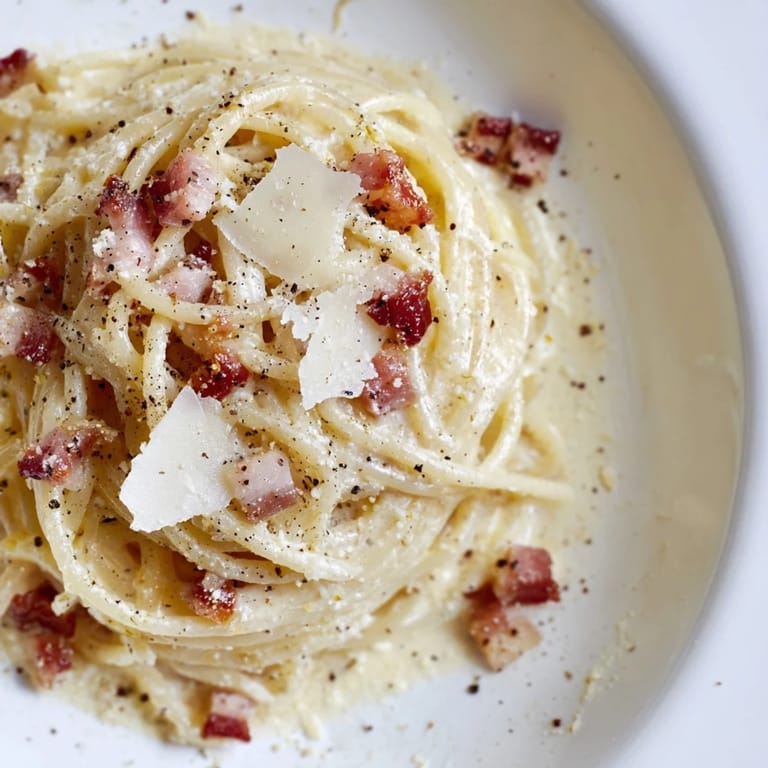
 Carbonara taught me that some of the best meals don't need complexity or long ingredient lists—just good technique and respect for each ingredient's role. Make this once, and it becomes part of your regular rotation forever.
Recipe Questions & Answers
- → How do I prevent the eggs from scrambling?
Remove the skillet from heat before adding the egg mixture. Toss quickly and add reserved pasta water gradually to create a smooth, creamy sauce.
- → Can I substitute Parmesan cheese?
Pecorino Romano is a great alternative, offering a sharper and more authentic flavor that complements the dish well.
- → What type of pasta works best?
Spaghetti is traditional and holds the sauce well, but other long pasta like linguine can also be used.
- → Is bacon interchangeable with pancetta?
Yes, pancetta provides a similar richness and crispiness, keeping the characteristic texture and flavor of the dish.
- → Can I add garlic for extra flavor?
Adding a clove of minced garlic while frying the bacon enhances the aroma; just remove it before mixing with pasta.