 Pin It
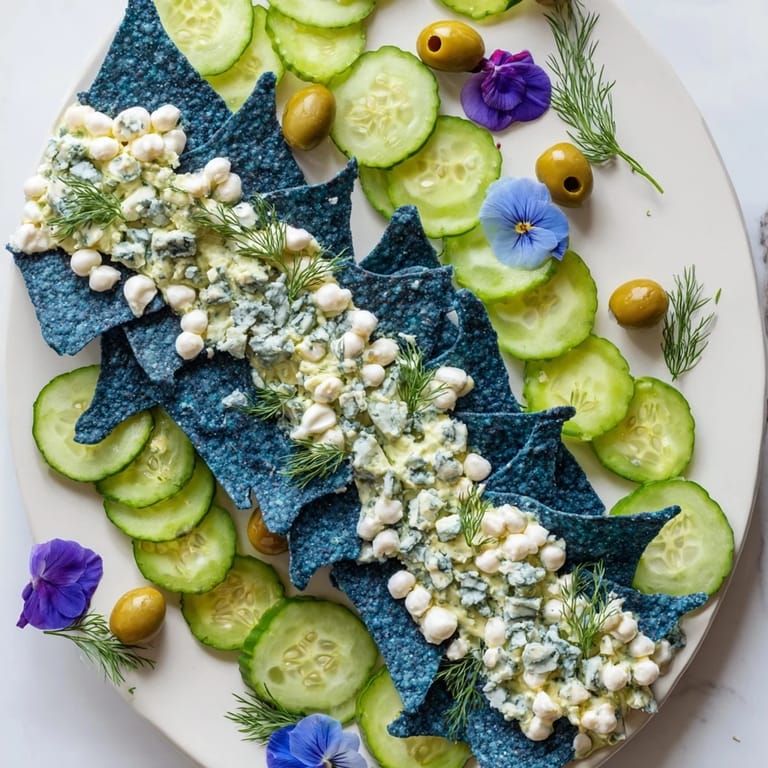
 I'll never forget the moment I decided to transform a simple cheese board into something that would make my guests gasp. It was during a summer dinner party when a friend mentioned how ocean waves had always calmed her, and I thought—why not bring that tranquility to the appetizer table? That evening, I stood in my kitchen arranging blue corn chips in swooping curves, layering crumbled blue cheese like seafoam, and suddenly I wasn't just making food anymore. I was creating an edible landscape that would spark conversation and delight before anyone took a single bite.
I remember making this for my sister's engagement celebration, and watching her face light up when she saw the platter was worth every careful arrangement of those cucumber slices. Her fiancé grabbed a goat cheese round and dill sprig combo, and he said it tasted like summer on a cracker. That's when I knew this wasn't just a pretty plate—it was an experience.
Ingredients
- Blue cheese, crumbled (100 g): This is your wave's anchor, the bold, tangy foundation that says "this is fancy." Crumble it generously—those irregular pieces look more organic and artistic than neat portions.
- Creamy goat cheese, in small rounds (100 g): The softer counterpoint to sharp blue cheese, these rounds nestle beautifully between crackers and vegetables. I cut mine with a small spoon or melon baller for perfect, bite-sized circles.
- Blue corn tortilla chips (100 g): Not just any chips—blue corn has a subtle sweetness and visual drama that screams ocean. They form your wave's backbone, so arrange them before anything else.
- Seaweed rice crackers (50 g): These add an authentic briny note and a delicate crunch. They're thinner than regular crackers, so they layer beautifully without overwhelming the softer elements.
- Green olives, pitted (12): Fresh, briny, and round—they roll naturally into those wave curves you're creating. I always taste one beforehand because olive intensity varies.
- Cucumber, thinly sliced (1 small): Slice it just before serving so it stays crisp and doesn't release water onto the board. Those thin, translucent rounds are pure geometry.
- Green bell pepper, sliced into rings (1): The rings are the star here—they create perfect circles that guide the eye along your wave's motion. I remove the seeds carefully to keep those rings intact.
- Sugar snap peas (1 handful): These stay crunchy and add that fresh, just-picked quality. Their natural curve mirrors ocean movement, so scatter them thoughtfully.
- Green apple, thinly sliced (1 small): A touch of sweetness and tartness. Slice just before assembly and toss with a tiny squeeze of lemon to prevent browning—though a hint of golden-brown apple can look almost intentional.
- Green grapes (1/2 cup): They're the unexpected treasure, that sweet pop that makes people smile. I leave them whole for visual drama, but halving them works if you want easier eating.
- Fresh dill sprigs: The finishing touch that whispers "ocean." Their feathery texture breaks up all the solid shapes and adds life to your final composition.
- Microgreens and edible flowers (optional): If you can find them, they're the jewelry of this platter. Edible blue or purple flowers especially reinforce the water theme.
Tired of Takeout? 🥡
Get 10 meals you can make faster than delivery arrives. Seriously.
One email. No spam. Unsubscribe anytime.
Instructions
- Set your stage:
- Lay out your large platter or board on a flat, well-lit surface. Take a moment to visualize the wave before you start—where does it begin, where does it crest, how does it flow? I sketch it in my mind, or sometimes even with a finger, before placing anything. This is your canvas, and you're about to make it beautiful.
- Build the wave base with chips:
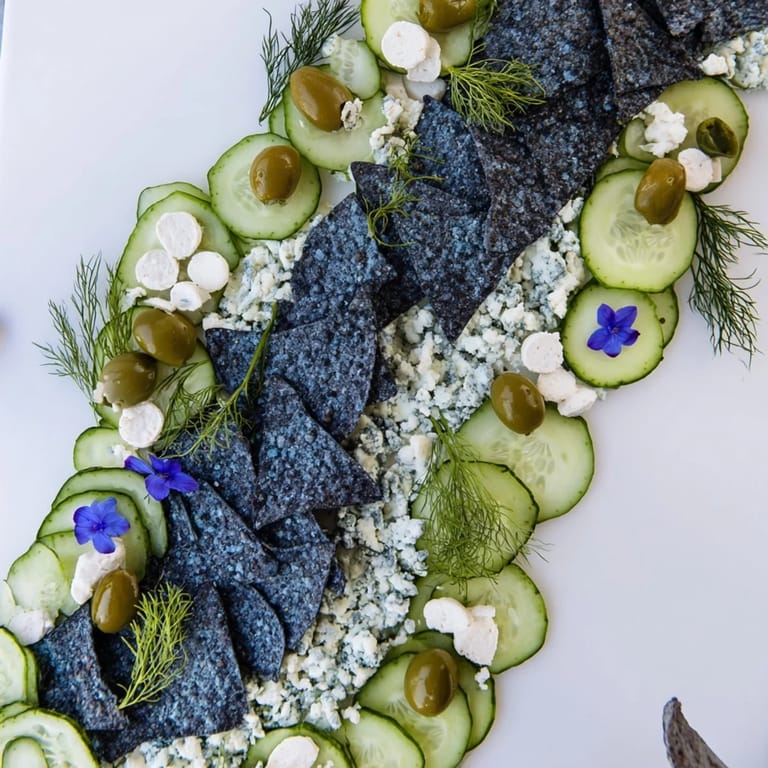
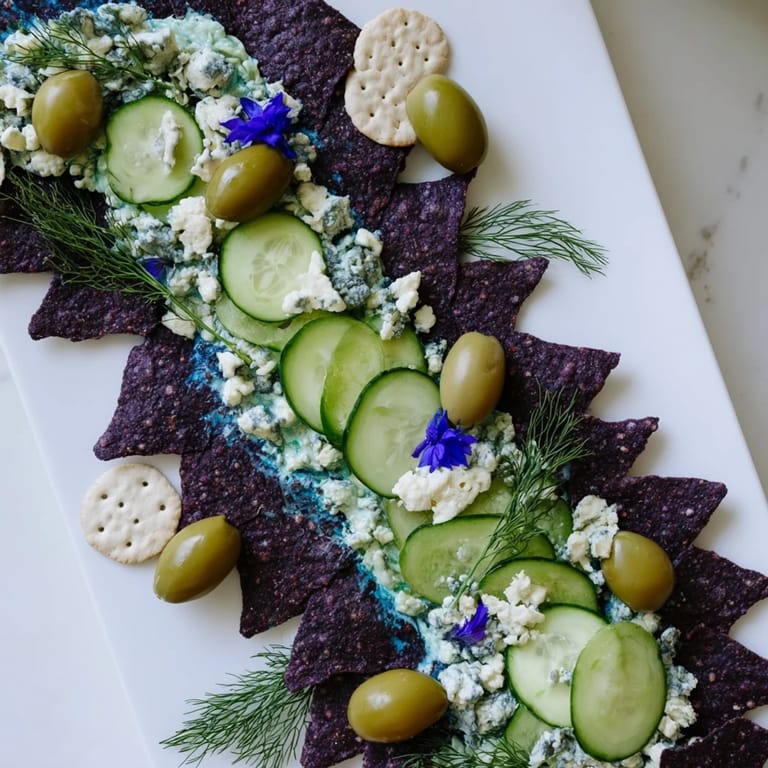
- Arrange the blue corn tortilla chips in a broad, curving line—like the crest of an ocean wave frozen mid-motion. Don't stress about perfection; nature isn't perfectly straight. Let them overlap slightly, creating dimension. This is the anchor of everything that follows, so take your time and trust your instincts.
- Layer in the blue cheese:
- Crumble your blue cheese and scatter it along and just behind the chip line. Watch how those irregular pieces nestle into the crevices. The blue against blue creates depth, and the creamy texture contrasts beautifully with the chip's crunch. Step back and feel the movement.
- Create parallel arcs with goat cheese and crackers:
- Now arrange your goat cheese rounds and seaweed rice crackers in gentle arcs parallel to your main wave line. This is where the composition really starts singing—you're building layers that guide the eye along the flow. The pale cream cheese and delicate crackers add softness to the chip's boldness.
- Fill the curves with green treasures:
- Place your olives, cucumber slices, and green bell pepper rings into the spaces between your wave lines. Let them nestle naturally, filling curves and valleys. Don't overthink placement—organic arrangement is more beautiful than perfect rows. Watch how each color plays against the others.
- Scatter the sweet accents:
- Tuck sugar snap peas along the wave, then distribute green apple slices and grapes across the composition. These are your highlights—they catch the light and draw people's eyes. A cluster of grapes here, a scatter of apple there. You're not arranging ingredients; you're choreographing a visual dance.
- Crown it with garnish:
- This is the moment it transforms from lovely to breathtaking. Place fresh dill sprigs, microgreens, and any edible flowers strategically. Don't cover everything—let the vegetables and cheeses breathe. The garnish is punctuation, not the whole sentence. Step back, admire your work, smile.
- Bring it to the table:
- Serve immediately while everything is fresh and crisp. Set out small tongs or cocktail picks so guests can help themselves without shattering anything. Watch their faces as they see it for the first time.
 Pin It
 What I love most is the quiet moment right after I finish, when I stand back and see this ocean wave I've created, still and perfect on the board. Then the first guest approaches, picks up a dill-wrapped goat cheese, and their entire face changes. That's the real recipe—creating a moment where food becomes memory.
The Power of Color and Presentation
When I first started making boards, I thought flavor was everything. But this recipe taught me that we eat with our eyes first. The moment someone sees this platter, they're already imagining how it tastes. The blues and greens aren't just pretty—they tell a story. Every shade from pale sage to deep forest to bright turquoise works together like a painting. I started visiting farmers markets just to find the most beautiful vegetables, and it completely changed how I cook. Now I think about color contrast before I think about recipes.
Pairing and Serving Moments
This platter isn't just food; it's a conversation starter and a pace-setter for your gathering. I serve it before the main course when everyone's arriving, a little hungry, and ready to mingle. The best pairings are crisp and cool—a chilled Sauvignon Blanc with its herbal notes mirrors the dill perfectly, or sparkling water with lime echoes the fresh, ocean-like feeling. I've learned that serving temperature matters too. Everything comes from the fridge just before plating, so that first bite is refreshingly cool.
Customizing Your Waves
Once you understand the basic principle—layering colors and textures in flowing, curved lines—you can make this recipe entirely your own. I've made versions for dietary restrictions and personal preferences, and each one taught me something new. Some lessons I've learned through happy accidents: blue spirulina-dusted almonds add an unexpected crunch, roasted blue potatoes (if you can find them) add earthiness, and vegan cashew cheese works beautifully for dairy-free versions. The ocean metaphor is flexible—you could make it a sunset platter with oranges and reds, a forest with darker greens and browns, or even a galaxy with purple, silver, and black elements. The technique is timeless even as the details shift.
- Always taste your cheeses before serving—intensity varies, and you might want to balance sharp blue cheese with extra creamy goat cheese depending on your guests' preferences.
- Keep backup ingredients in small bowls nearby so you can quickly refresh any section that gets depleted first, maintaining your design.
- Remember that imperfection is beautiful—the most stunning boards look like they grew naturally, not like they were laboriously arranged.
 Pin It
 This recipe is my reminder that beautiful food doesn't require culinary school or complicated techniques—just intention, a little imagination, and the willingness to make something that brings people joy before they even taste it. That's the real feast.
Recipe Questions & Answers
- → What ingredients give the platter its ocean-inspired colors?
The platter uses blue corn tortilla chips, blue cheese, green olives, cucumber slices, green bell pepper rings, and fresh green fruits like grapes and apple to create the blue and green color palette.
- → How is the wave shape created on the serving platter?
Start by arranging blue corn chips in a broad curving line to mimic the crest of a wave, then layer cheeses and crackers in arcs parallel to this shape, filling in with vegetables and fruits to complete the flowing effect.
- → Can the platter be adapted for dairy-free diets?
Yes, substitute the blue and goat cheeses with vegan alternatives to keep a similar texture and flavor while maintaining the vibrant look.
- → What garnishes enhance the ocean-like appearance?
Fresh dill sprigs, microgreens, and edible blue or purple flowers add delicate, natural accents resembling seaweed and ocean plants.
- → What beverages pair well with this platter?
Chilled Sauvignon Blanc or sparkling water with lime are refreshing options that complement the fresh and tangy flavors of the platter’s ingredients.