 Pin It
 One rushed Tuesday morning, I grabbed eggs and thought about something my neighbor mentioned in passing—crepes don't have to be complicated. She'd made them in a blender, whisked them into the skillet like an omelet, and wrapped whatever was left in the fridge inside. I was skeptical until that first bite: light, protein-packed, and done before my coffee cooled. Now they're my go-to when I need breakfast that feels effortless but tastes intentional.
I made these for my sister during a Saturday brunch when she announced she'd gone gluten-free. Instead of scrambling to find a substitute, I just blended eggs and watched her face when she realized what they were. She asked for the recipe immediately, and now she makes them every other weekend. That's when I knew they'd become something more than a quick breakfast.
Ingredients
- 4 large eggs: The foundation—room temperature eggs blend smoother and cook more evenly, creating a tender crepe without rubbery edges.
- 2 tablespoons water or milk: This creates the right consistency; too thick and they won't spread thin, too thin and they tear when you flip them.
- Pinch of salt and black pepper: Season the batter itself rather than relying on fillings alone—this gives every bite flavor.
- 1 teaspoon olive oil or butter: Just enough to prevent sticking without making them greasy; a non-stick skillet does half the work.
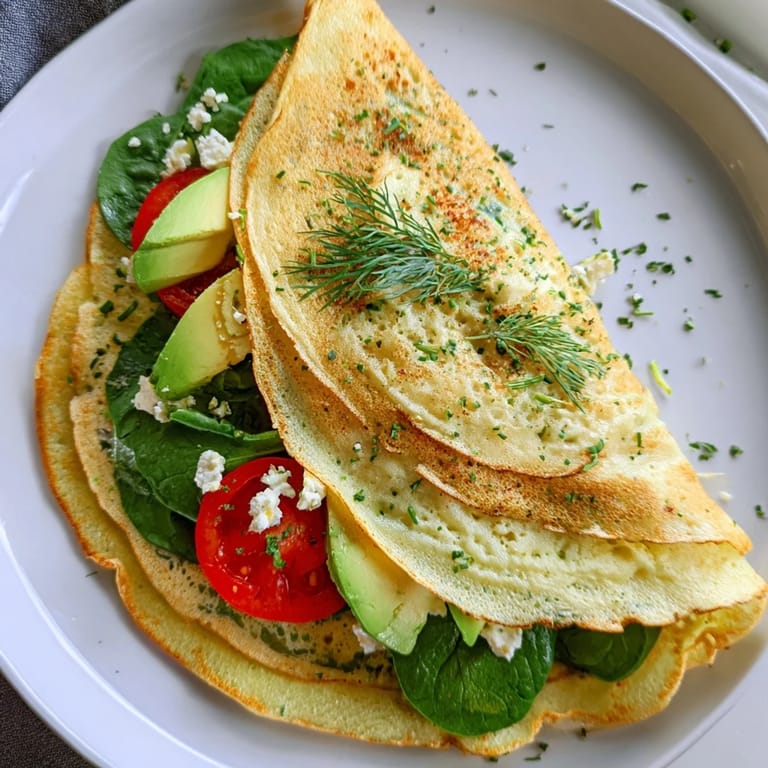
- Baby spinach, smoked salmon, feta, tomato, avocado, fresh herbs: Choose one or mix several—the beauty is that nothing needs cooking except the crepe itself.
Tired of Takeout? 🥡
Get 10 meals you can make faster than delivery arrives. Seriously.
One email. No spam. Unsubscribe anytime.
Instructions
- Blend until frothy:
- Crack your eggs into the blender with water or milk, salt, and pepper. Blend on high for thirty to forty-five seconds until the mixture looks almost fluffy—this incorporates air and makes the crepes lighter. You'll see a slight foam on top when it's ready.
- Heat your skillet:
- Set medium heat and brush the pan with just enough oil or butter to coat. You want the surface hot enough that a drop of water sizzles, but not smoking.
- Pour and tilt:
- Pour half the blended egg into the center of the skillet, then immediately tilt the pan in all directions so the mixture spreads into a thin, even layer. This is the only slightly tricky part—work quickly before it starts to set.
- Cook and flip:
- After one to two minutes, the edges will curl up slightly and the bottom will be set to a pale golden. Slide your spatula underneath, take a breath, and flip in one confident motion. Cook the other side for just thirty seconds—it only needs to dry out, not brown.
- Build your crepe:
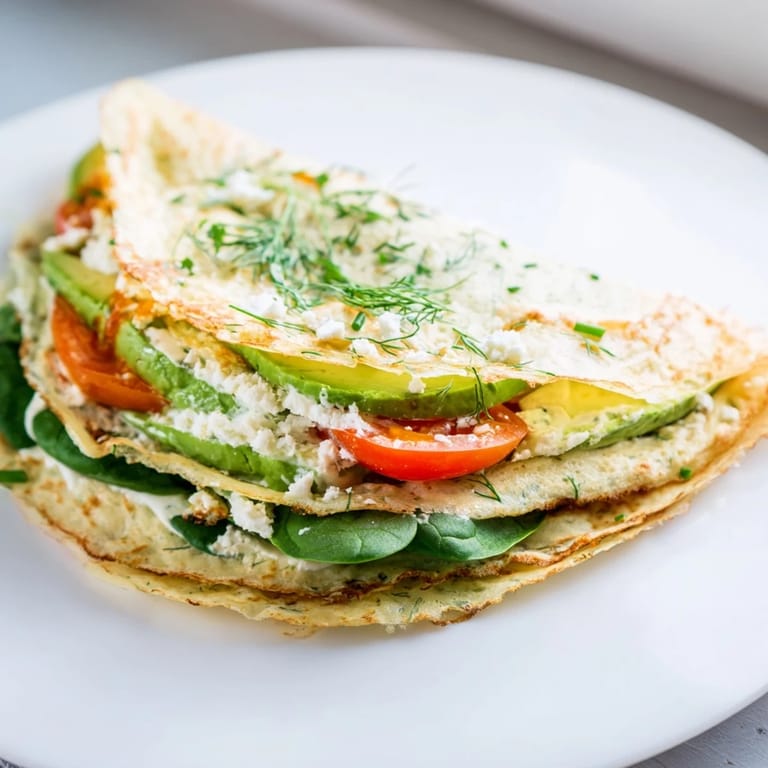
- Lay the finished crepe on a plate, arrange your fillings in a line down the center, then fold or roll it up. The warmth of the crepe will soften any cold fillings slightly and bring everything together.
 Pin It
 I remember serving these to my dad, who'd always claimed he didn't like eggs for breakfast. He ate three, barely talking, just making small sounds of approval. He asked me to teach him how to make them, and now when I visit, he has the crepe ingredients waiting by the stove. It's become our quiet ritual, better than any long conversation.
Sweet Versus Savory
The magic of this crepe is that the egg base is neutral enough to work either direction. For savory, I usually stick with smoked salmon or ham, fresh herbs, and maybe some sliced tomato or avocado. For sweet, berries and a drizzle of honey transform the same crepe into dessert. I've even made them for lunch with leftover roasted vegetables and a scatter of feta, proving they belong at any meal.
The Blender Advantage
Using a blender instead of whisking by hand changes everything about this recipe. The mechanical action incorporates more air, so your crepes emerge almost fluffy rather than dense. It also means zero lumps, which sounds simple until you've struggled with a fork and a bowl. Clean-up is just one blender pitcher instead of multiple bowls, which matters when you're cooking before seven in the morning.
Filling Ideas That Work
The best crepes I've made started with whatever was already open in the fridge. A handful of leftover roasted vegetables, some cream cheese, a few slices of deli turkey—everything works because the crepe is sturdy enough to hold weight but tender enough to let fillings shine. I've learned to think in layers: protein, something fresh, something with texture, then herbs or a sauce for moisture.
- Prep all fillings before you cook the crepes; assembled crepes sit better than waiting crepes.
- If using cheese, tear it into small pieces so it distributes evenly rather than creating thick patches.
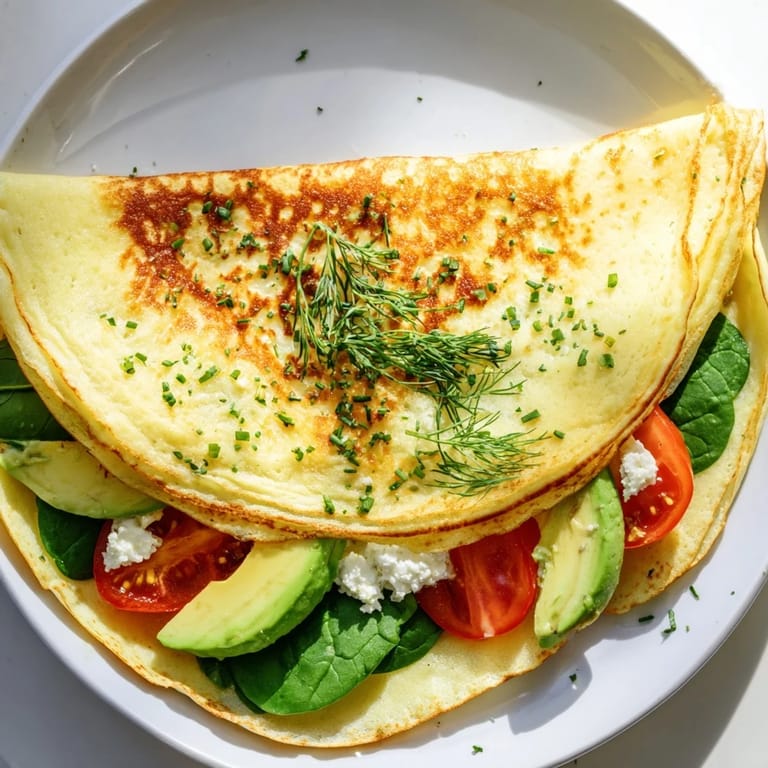
- Fresh herbs scattered on top right before serving taste brighter than mixed into the filling.
 Pin It
 These crepes have become my answer to a dozen different mornings and situations. They're uncomplicated in a way that feels luxurious rather than lazy.
Recipe Questions & Answers
- → How do I make the egg mixture frothy?
Blend eggs with water or milk on high for 30–45 seconds until the mixture becomes very frothy. This ensures a light, airy texture.
- → What cooking technique ensures a thin crepe?
Pour half the egg mixture into a hot skillet and tilt it to coat the bottom evenly in a thin layer. Cook until edges lift easily before flipping.
- → Can I customize the fillings?
Yes, choose from savory options like spinach, smoked salmon, and feta, or sweet alternatives such as berries and yogurt for versatile servings.
- → Are these crepes suitable for low-carb diets?
Yes, the main crepe is protein-rich and low in carbohydrates, especially when fillings avoid high-carb ingredients.
- → What kitchen tools are needed?
A blender for frothing the eggs, a non-stick skillet for cooking, plus basic utensils like a spatula and knife.